Why Paul Sciuto bet Monterey One Water’s name on reuse
Serving around 285,000 people along California’s central coast, Monterey One Water now meets close to 60 per cent of the Monterey Peninsula’s potable demand from recycled sources, among the highest of any community in the world. Its executive officer, Paul Sciuto, renamed the agency to embed a One Water philosophy and branded its flagship project Pure Water Monterey. He talks to Tom Freyberg from Aquatech Online about why plain words beat acronyms, and the operational headache of diversifying input streams.
Reuse and the acronym illness
It’s not very often that a water utility boss talks about the importance and power of messaging and brand. In fact, in my 16 years of interviewing water CEOs, I don’t think one has openly discussed it.
Then again, there are very few utility leaders who renamed and rebranded their entire organisation around water reuse. Paul Sciuto is brutally honest about the communication challenges plaguing the water business.
“The water sector has a language problem – actually, I think we have an illness with acronyms,” he laughs.
He’s not wrong, especially when it comes to wastewater treatment. MBR, MBBR, MABR, AD are just a few acronyms involved in a complicated process that is challenging to communicate to a broader audience.
As the executive officer of Monterey One Water, Sciuto’s deliberately provocative diagnosis is from a leader who has spent a decade stripping jargon out of the way his utility talks to the public. The alphabet soup that fills industry conference slides, he argues, means little to the customers a utility exists to serve.
The mindset partly comes from his previous job at the South Tahoe Public Utility District – “the only downside is the acronym is STPUD or ‘stupid,’” he jokes.
“The 70s called and they want their name back”
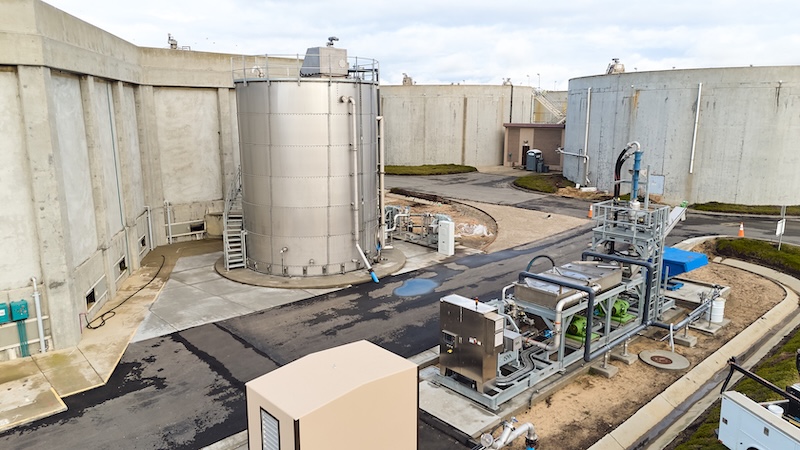
Sciuto arrived at the utility in 2014. At the time, it was known as the Monterey Regional Water Pollution Control Agency, which serves around 285,000 people in northern Monterey County. This was a name that had served the company well through more than four decades of wastewater service and 16 years of recycling wastewater for agricultural irrigation. However, as much as the new general manager respected the past, he knew it would need to evolve to be fit for the future.
At the time, the organisation was embarking on its first indirect potable reuse scheme, so Sciuto wanted the organisation name and brand to embody this. His pitch to the board – 10 elected officials – several of whom were attached to the old name, did not begin diplomatically.
“The 70s called and they want their name back,” he told them during a general manager’s report, in what can only be described as a ballsy approach. “There was dead silence, even though I was trying to be somewhat humorous.”
Naturally, rebranding and renaming any organisation, especially when it is well established, isn’t an easy task and can cause division, particularly among long-time, established stakeholders who don’t like change.
“I felt like the lone fish swimming upstream,” he says of the early resistance, both inside the organisation and among partner agencies. The objection was almost existential, with some staff commenting that it was a wastewater agency, so ‘why are we doing this water stuff?’
Rather than impose a replacement, Sciuto invited participation in the process across multiple levels. They ran a facilitated process over several months that pulled in board members, executives, managers, supervisors and line staff to shape the name, logo and tagline together. And in keeping with the ‘One Water’ approach now more common in the North American market, Monterey One Water was born.
And the inevitable kickback? Sciuto encouraged it, calling it a “storming process” from the staff or board that is “useful and it helps to get people off their entrenched position, and then draw them in and let them start having some ownership”, he adds.
A decade on, the buy-in shows up in unexpected ways. Monterey One Water staff buy their own Monterey One Water gear, including buying clothes and having them embroidered. For Sciuto, that pride is the point in building a brand beyond simply providing water and wastewater services.
“I personally want to protect our brand,” he says. “I want all of our employees, and our customers and stakeholders and partners, to be proud of what we are.”
A career in two worlds
If branding is an unusual preoccupation for a water utility chief, Sciuto’s route into the job helps explain it. Across 37 years in water, wastewater and recycled water, he has worked both sides of the industry: starting at a wastewater utility in the San Francisco Bay Area, becoming a minority partner in a 15-person consulting firm in Oakland, moving to a larger engineering firm, then crossing back into the public sector at South Tahoe as assistant general manager before arriving at Monterey. He has both public and private experience, a dual perspective that now shapes how he leads.
The private sector, he argues, carries a higher tolerance for risk and a faster metabolism, qualities he has tried to import into public utility management. Public structures have “historically been slow, bureaucratic”, he says. “I think we can accelerate.”
Branding the product
The naming discipline that reshaped the agency was applied, with equal care, to its flagship scheme. Pure Water Monterey was a deliberate choice, Sciuto says, grounded in research rather than instinct. The utility drew on WateReuse Association focus-group work into words that reassured people – such as pure. It’s safe, simple language that an ordinary customer, not a water professional, would trust.
“Pure water – they’re normal words,” he says. “It’s not some tech jargon.”
To build public confidence, the utility took mayors and community figures on tours of Orange County’s long-running groundwater-replenishment project, which the general manager compliments as a “showcase”. The lesson he drew was as much about vocabulary as treatment.
At almost exactly the same time, San Diego arrived at its Pure Water San Diego project. “My understanding is they decided on that name about a week after we did,” he says, suspecting shared consultants rather than coincidence.
Lightning fast, by water’s standards
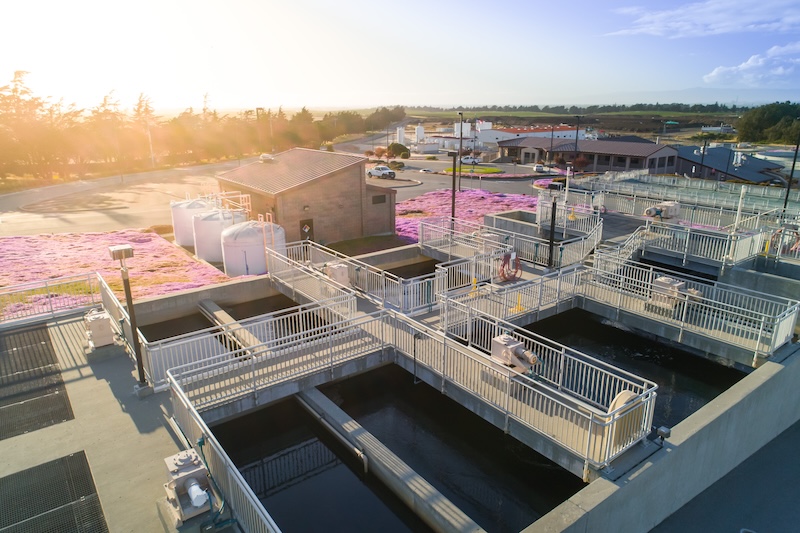
From notice of preparation to the first drop of water, Pure Water Monterey took seven years. To get indirect potable water projects up and running, at scale, in that timeframe is praiseworthy. “Some people will be like, wow, what took you so long?” Sciuto says. “But in this industry, that is lightning fast.”
He puts the pace down to risk appetite and a willingness to run tasks in parallel rather than in sequence. “Things don’t have to be at 95 or 100 per cent to continue,” he says. At one point he asked his board for permission to go out to bid before the project’s loan had been secured. “With the understanding that if things went sideways, I’d lose my job,” he says.
The bet clearly paid off. The result is a level of reuse few utilities can match. Recycled water now meets close to 60 per cent of potable demand in the area.
Diversified water feedstock: a strength or operational headache?
What sets Monterey apart is not only how much water it recycles but what goes into the mix. Alongside municipal wastewater, the utility draws in stormwater, agricultural drainage and industrial wash water from the Salinas Valley produce industry. As the expression goes, necessity is the mother of invention, and the starting point in Monterey was scarcity.
“Frankly, we ran out of water,” Sciuto says. During the growing season, the utility already recycles 100 per cent of its wastewater for agricultural irrigation, under contract, so new sources had to be found. “By found, they were already there,” he says. “It’s just opening your eyes to it.”
Diversity of supply is, on balance, clearly a strength: there’s more wastewater to recycle, as your feedstock, and a buffer against a changing climate. Yet, this must also be a potential operational headache, with multiple sources and water rights all feeding into the mix.
One example: produce operators wash down their equipment between midnight and four in the morning, each using its own proprietary cleaning chemistry, because, as Sciuto puts it, “they want to make sure their bagged lettuce lasts a day longer than their competitors”. While some operators use phosphate, others use chlorine, which means this wastewater often arrives when the plant’s own flows are low; this can lead it to “whack our treatment plant”. One fix here was monitoring and a cut-off: pH meters that can, potentially, shut an intake down before it can do any damage.
Despite the challenges, his advice to utilities eyeing a narrower input stream is simple: “If you’re not looking at other sources, you’re leaving water on the table,” he says.
A circular loop, from landfill gas to brine
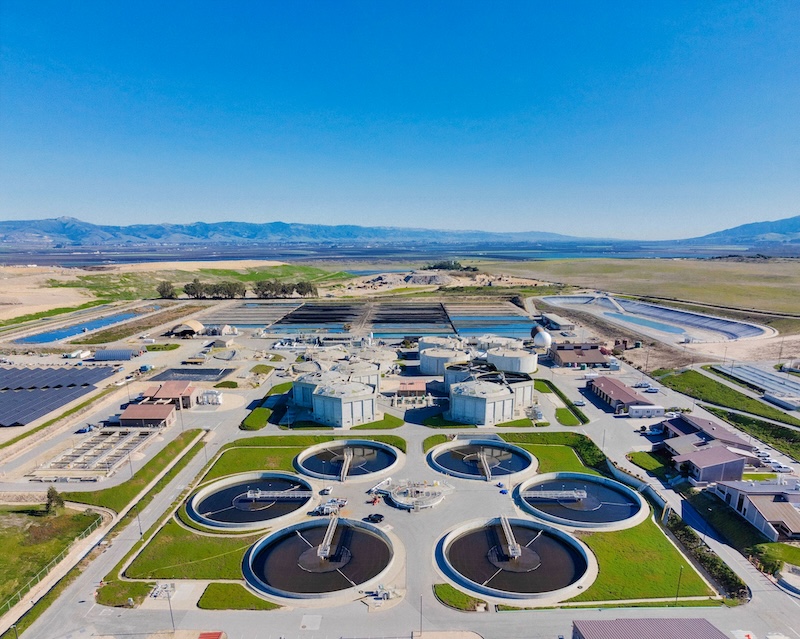
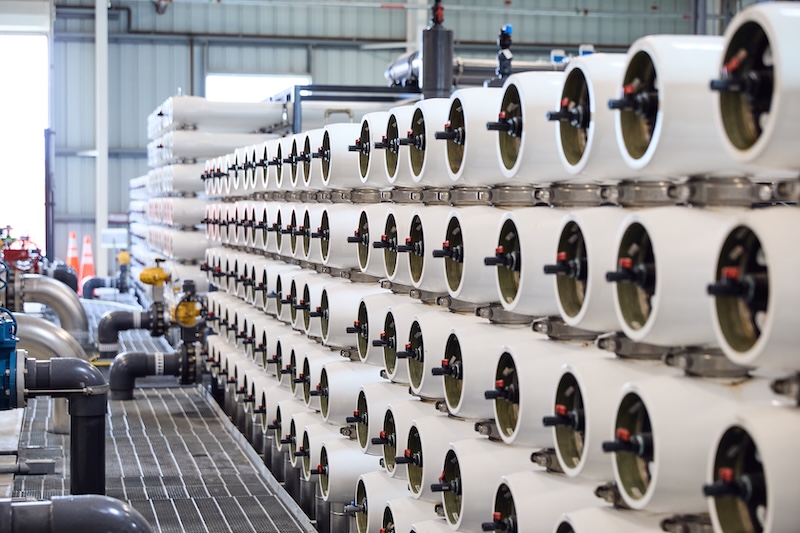
Along the journey, there have been unforeseen impacts that Sciuto has had to navigate. For example, when reverse osmosis membrane treatment was added for indirect potable reuse, it increased the utility’s energy demand by up to 136 per cent.
At the time, in 2020, a UC Davis-published study predicted electricity prices jumping by 11 per cent per year. Suddenly, Monterey One Water was facing a situation that within a decade, such energy costs would have a huge economic impact, and the costs passed onto its consumers.
Like any proactive leader, Sciuto got ahead of the challenge. They say that sometimes the answer to a problem is right in front of you. For the general manager, it was next door, quite literally – Monterey shares a campus with the regional landfill. Sciuto walked over with a vision and two proposals.
“I want to buy landfill gas renewable energy, and I’ll give you a 20-year contract,” he told its general manager, and second, a joint renewable-energy study, “because if we do it together, we’re stronger than if we do it separately”.
Fast forward to today and a direct connection line is now under construction. Once complete, the treatment plant and product-water pumping that drive the reuse scheme will run directly on landfill gas renewable energy, with the rest of the site already around 90 per cent renewable from solar and cogeneration.
Where there’s waste, there’s resource
The joint study hinted that the two organisations could go further: combining gas resources, adding food waste co-digestion, conditioning the biogas, and selling the result back to the grid as renewable natural gas. Add a $4.2 million (€3.7m) grant for food waste processing into the mix, and Sciuto pushed ahead, despite facing some internal hesitation.
“Because we can and I think it’s the right thing to do.”
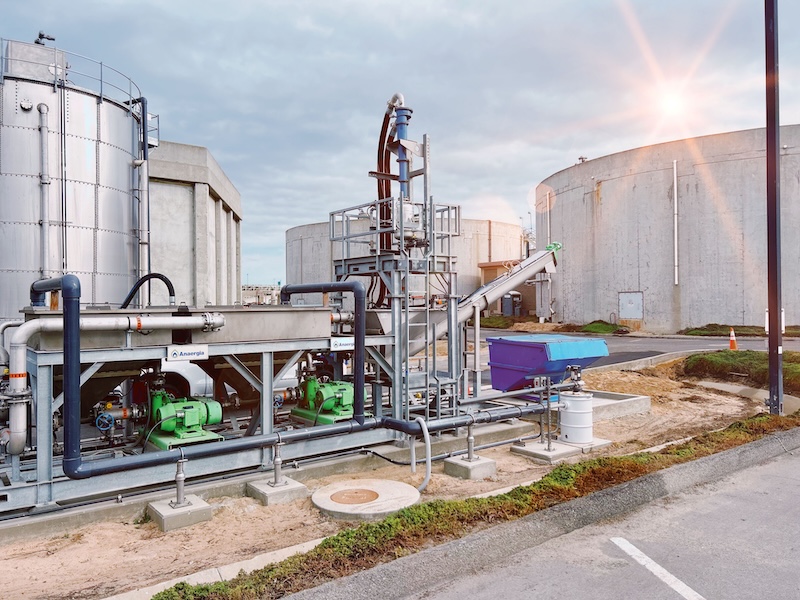
In December last year, the utility brought a food waste receiving station online, upgrading its digesters to take the material and lift gas production. Moving forward, a second phase, currently out to bid, will add biogas conditioning, digester heating and five linear generators. Eventually, there will be multi-fuel units that can even run on ammonia. The thinking is that when California’s tariffs are high, as they are now, the utility will sell renewable natural gas to Pacific Gas & Electric Company (PG&E).
Water (and) energy resilience

When resilience is discussed in water circles, it typically refers to engineering a diversified water mix to help weather storms intensified by climate change. For Sciuto, energy resilience is a big part of this.
For example, sitting at the end of an electrical spur, the utility deals with 12 to 15 outages a year; in 2017, both plant and landfill lost power for six days straight. Generating its own energy insulates Monterey One Water, and ultimately its customers, from both blackouts and price shocks.
When talking about ‘circularity’, Sciuto gets even more animated. In an entrepreneurial fashion, he sees both environmental and economic value in waste. He reels off a list of resources still to be captured like an excited child listing his expected birthday presents: CO2 from conditioned gas sold to the beverage industry or to local farmers who currently truck it in; ammonia and phosphorus harvested as nutrients; biochar produced by pyrolysis to enrich farmland and lock up carbon; heat recovered from warm wastewater and digesters; even brine mining from reverse-osmosis concentrate.
Once started, there’s no stopping him. “I bet there’s 100 more options the next generation of smarter people are going to access,” he says.
It’s not about the size
Monterey One Water joined the Leading Utilities of the World (LUOW) group earlier this year. For a size comparison, Monterey One Water serves 285,000 people; utilities in Tokyo serve 10 million people, in China 30 million and in Brazil, Sabesp serves nearly 30 million.
To many, this could seem like a ‘David and Goliath’ scenario, with Monterey One Water keeping daunting company. Sciuto sees the exchange running both ways. After all, how many other utilities can boast of recycling 60 per cent of their wastewater?
A small agency, he argues, can act “almost like a tech accelerator”, trialling ideas at more than pilot scale with a return its board and customers can accept. “What about all these water sources, what about your branding, how’d you do your outreach?” he says. “That knowledge sharing can be bilateral.”
It is a fitting note for a leader who has spent a decade arguing that water’s hardest problems are not only technical. Monterey One Water bet its name on reuse, and a decade on, the wager looks less like a branding exercise than a statement of intent.
The article is part of a strategic partnership between Aquatech Global Events and the Leading Utilities of the World (LUOW). Previous articles include:
From engineering to executive – How Kishia L Powell is transforming WSSC Water
Breaking water siloes in California and beyond – Joone Kim-Lopez
Share your water story with us
Share your water technology stories with us
Do you have an innovation, research results or an other interesting topic you would like to share with the international water technology industry? The Aquatech website and social media channels are a great platform to showcase your stories!
Please contact our Sr Brand Marketing Manager Annelie Koomen.
Are you an Aquatech exhibitor?
Make sure you add your latest press releases to your Company Profile in the Exhibitor Portal for free exposure.