Nanofiltration removes contaminants for IPR in León
In many ways, the city of León reflects the challenges being faced across much of Mexico. In short, it is running out of water. Currently, 95 per cent of the city’s water supply comes from groundwater sources. However, extraction rates are running at 51 million cubic metres a year more than can be recharged, and its main aquifer has dropped 36 metres over 24 years. Clearly, something needed to change before there is no more water. One project is addressing water scarcity through indirect potable reuse. What marks this project out from other reuse programmes is that it has decided against using reverse osmosis membranes for filtration.
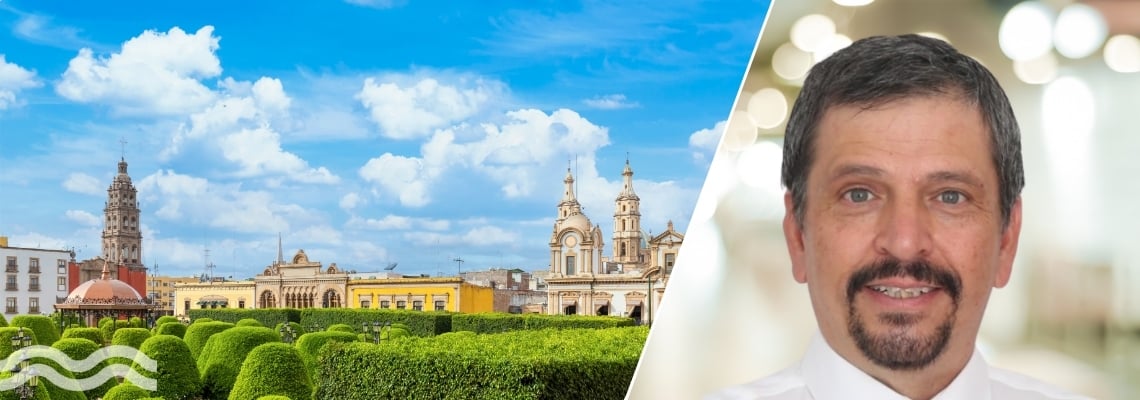
Rafael Zarate is the lead consultant advising SAPAL, León’s drinking water and sewerage provider, on the reuse programme. He spoke to Aquatech Online about the origins of the project, the decision-making process and what it hopes to achieve.
A city in need of water solutions
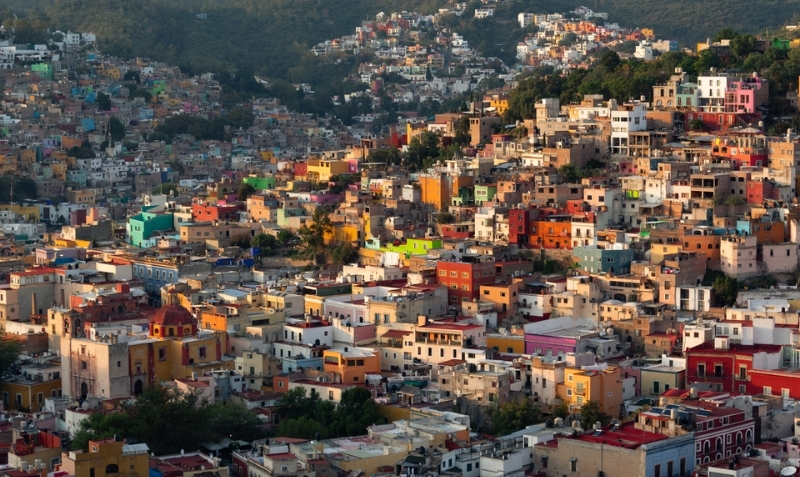
Zarate opens by saying that although he is talking about León’s reuse journey, the conditions that led to it can be applied to any other city in Mexico.
“There will come a time in which we're going to be out of water if we do not take care of the resource and try to make a balance,” he states.
Two years ago, a situation close to home brought this reality a step closer when a reservoir which supplies five per cent of the population with water completely dried up.
“You could drive your car into the centre of the reservoir. It was horrible,” Zarate says. “And we expect, with climate change, that things will be worse. So that's why we decided to look at an alternative source of water, a non-conventional source of water.”
Desalination was not an option, “because we are pretty far from the sea”, and both surface and groundwater faced uncertain futures, “so we decided to go to potable reuse,” he explains.
Finding an alternative and secure water source
Initially, the plan was to access reservoirs in other areas, but this was abandoned. It was at this point, around 2020, that the first reuse pilot began, with water taken from municipal wastewater treatment plants in the city.
“We started piloting with nanofiltration because the quality we needed was enough,” Zarate begins. “But we started studying the results of our permeate, and we found interesting things. We were able to remove more than 50 per cent of the solids.”
This was unexpected, as filtration was not supposed to remove any salt material.
“So, we decided to scale, to upgrade this small pilot plant to a bigger one.”
In terms of scale, the initial pilot produced one litre per minute, “laboratory scale,” Zarate explains. The next stage involved producing 10 litres a second, which Zarate describes as a ‘decent size’, but still very much a pilot.
To take the next step, Zarate and SAPAL visited places in the US that were already running reuse programmes.
“We went to Orange County, we went to Wichita Falls, we visited the facilities, we talked with the people, we found the regulations they have in California and in Texas,” Zarate explains.
Reuse without reverse osmosis
One thing all of these plants had in common was that they used reverse osmosis as the final stage. But this was not an option for SAPAL’s reuse programme.
“For us, going to reverse osmosis is not affordable. It's too expensive in terms of construction and operation,” Zarate explains. “So, we went deeper into nanofiltration.”
This involved a visit to the WaTER Institute at Rice University in Houston, USA. The institute is part of the Nanotechnology Enabled Water Treatment Centre (NEWT) headed by Rice University, with participation from Yale University, Arizona State University, and Texas University.
“We found that in some pilots, they were able to remove contaminants of emerging concern at high levels,” begins Zarate. “And I mean, they were pretty good removals compared with reverse osmosis. So, we started making some progress with 10 litres per second nanofiltration.”
A further visit took them to the KWR Water Research Institute in the Netherlands.
“We found that we were able to remove PFAS in an order of above 90 per cent. So, we found that the nanofiltration was able to fulfil our requirements, not in terms of our own regulations, because we don't have regulations.”
This is a situation that Zarate expects to change under the Presidency of Claudia Sheinbaum. However, to steer the project, it was decided to use Texas’ reuse regulations as their goal.
Scaling the pilot and future objectives
Following visits to the US and the Netherlands, the decision was taken to upscale production to 60 litres per second, “which is a decent amount of water”.
“We found the same consistent results in terms of the removal of contaminants of emerging concern,” begins Zarate. “And from this, we decided to go to the final stage, which is going to be 400 litres per second.”
The ambition is to reach 400 litres per second by the latter half of 2026. Once achieved, the project will produce enough water to supply 20 per cent of the population, instead of the five per cent currently supplied from the reservoir. This will lead to an eventual recharging of the aquifer, with extractions falling below what is taken.
Water reuse on an industrial scale
One of the main objectives is to facilitate reuse on an industrial scale. To do so involves collaboration, for example with NEWT and with the KWR Institute. Zarate and his team have also worked with the University of Catalonia in Spain: “We developed a model to show how the discharge into the reservoir was going to affect the water.”
They found that this would always have a positive impact “because the water in the discharge is better than the water in the reservoir.”
It also became clear that the technical aspects of the project were not the only factors that needed to be taken into consideration.
“Once we had cooperation from the authorities, we found that both social acceptance and the economic factors were equally important,” Zarate explains.
Financing water projects
Projects like this don’t come cheap, but Zarate explains that León has succeeded where other cities in Mexico have struggled for one particular reason.
“We have invested €100 million in this project,” he says. “And all these resources came from the water utility, from the rates. And that gave us the freedom to do whatever we want. It is our money. Of course, it was a risky bet, but it has proved a successful investment.”
Other cities are exploring or have explored potable reuse projects, like Guadalajara and Monterrey, but have struggled with gaining credit without national regulations in place.
Importance of social acceptance
Often, the biggest barrier to reuse projects is not the technology or even finance; it is social acceptance. As Zarate asserts, even if you produce water, if you have no clients, the project will be a failure.
A notable example of the importance of social acceptance was the failed Toilet to Tap project in San Diego, which was rejected by potential customers.
“They wasted 10 years,” suggests Zarate. “Right now, they have the Pure Water project, which is amazing, but they could have started it 10 years ago, but they didn't because of this social acceptance.”
Coincidentally, the reservoir that dried up proved to be a catalyst in the general public accepting reuse as a solution to water scarcity.
Located in central León, the Palote Dam reservoir is more than just a large water storage facility; it is central to metropolitan life.
“It’s like Hyde Park in London,” Zarate explains. “This is our Hyde Park. It's a place where people go and meet on the weekends. We have festivals like the International Balloon Festival; we have a lot of activities. So, when it was totally dry two years ago, people were really concerned.”
SAPAL is a trusted utility, so when it announced that it was working on the indirect potable reuse project, “people said, wow, okay, let's do it.”
And knowing that this type of project was being used in California and Texas, and with the results from testing at KWR in the Netherlands, gave people the confidence they needed to trust that reuse was safe.
Piloting a solution for other cities to follow
As mentioned earlier, many cities will be looking at the project in León as inspiration, but also as some form of validation or permission to proceed. Zarate explains that without regulations, banks are reluctant to invest in reuse projects.
“I'm a consultant. I'm working with the federal government to create this new regulation. And this initiative was because of the president. She's a scientist and a smart woman. She knows that this can be a solution.”
León is also proving that costs may not be the barrier that many would presume.
“With the nanofiltration process we are applying, we can save half the money you need to invest if you were to use reverse osmosis.”
This, he states, will make reuse affordable for many other cities in Mexico and further afield.
“I have talked with people in the United States; from a small city in California that wants to go ahead with potable reuse, but hasn’t got the money for reverse osmosis.”
Does Zarate feel a responsibility to share what their experiences with the world? Zarate agrees:
“We want to be open and show people what we're doing, because we feel that responsibility to share.”
Getting the right nanofiltration solution
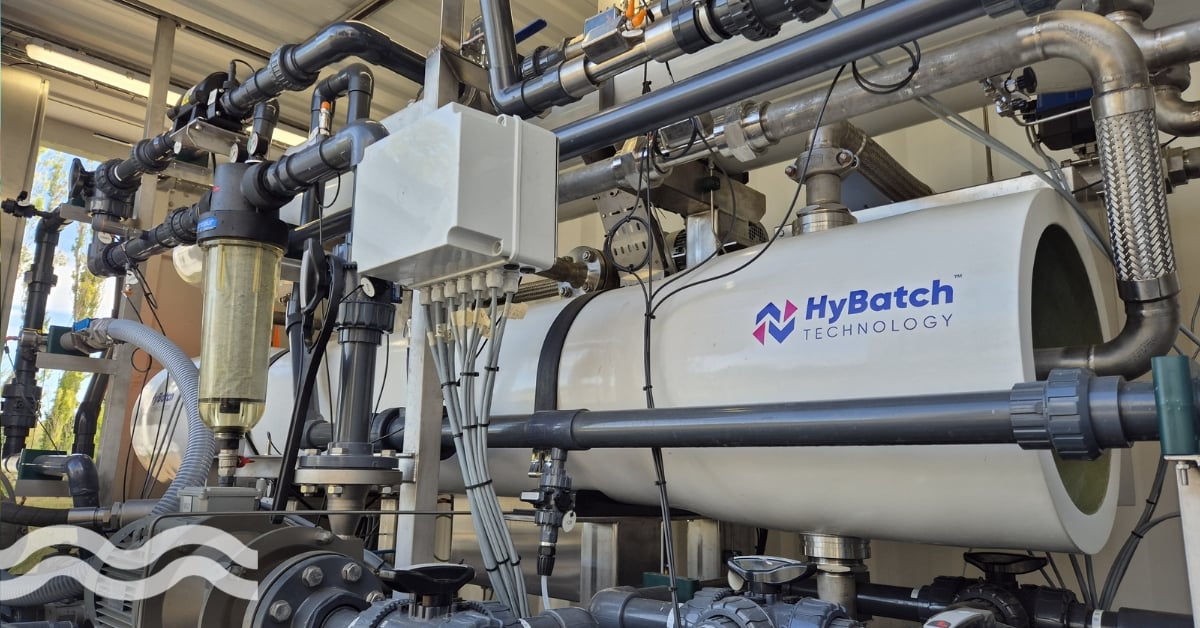
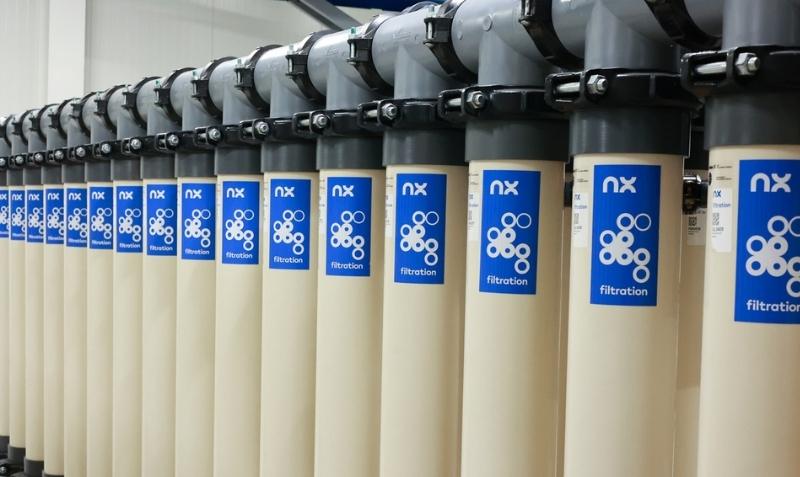
After testing various technical solutions, Zarate and SAPAL settled on NX Filtration’s hollow fibre nanofiltration membranes, which offer low fouling and removal of organics, including PFAS, and salinity.
“We tested other nanofiltration membranes, but they were not able to remove PFAS in salts.”
Nanofiltration is one part of the reuse process. Water also passes through ozone, UV, chlorine, and activated carbon stages.
Reuse starts with a pre-treatment process in the wastewater treatment plant, followed by primary clarifiers in the primary treatment stage.
“Then we go to a sequential batch reactor, an SBR, and then into a 20-micron filtration,” begins Zarate. “And of course, the SBR includes the biological process. We have nutrient removal. We also have the secondary clarifier in the same SBR.”
One reason that the project chose NX Filtration’s membranes is that there is no need to use an ultrafiltration stage before nanofiltration.
“You can go directly to 20 micron.”
The next stage is ozone.
“In the SBR we have Invent equipment technology from Germany with the SBR and also the tertiary filtration. Then we go to the next filtration, Ozone from Wedeco/Xylem, and then we pump the water to the reservoir.”
One unexpected addition to the treatment process was dissolved air flotation. This was required because of algal blooms in the reservoir. These have the potential to remove some pharmaceuticals, but they can also release harmful substances, such as mycotoxins.
“So, we improved the water treatment plant with dissolved air flotation, which means we can remove 98 per cent of the algae without killing them, because if you kill the algae, they're going to release the toxins. And after dissolved air flotation, we go to filtration. Then we go again to ozone, activated carbon and then chlorine.”
He adds:
“The most important stage is, of course, the nanofiltration.”
“And that's why we're totally sure we are going to supply high-quality water at half the cost of reverse osmosis,” asserts Zarate.
Currently, the treated water is supplied to the tannery industry, which consumes approximately seven per cent of the city’s water supply.
What lessons have been learned from the project so far?
At present there are no plans to push beyond 400 litres a second.
“I think the reservoir has that limit,” Zarate states. “Otherwise, it will become direct potable reuse, and we're not ready for that yet. 400 litres per second will give us the freedom to stop extraction from wells and will allow us to become sustainable.”
He considers other future scenarios:
“Maybe we have another reservoir we can use to start another project.”
Should utilities or consultants in other cities be reading, in terms of the challenges faced so far, Zarate believes there are six to consider:
Technology: “We solved our problem with nanofiltration, which was huge, to say you can use that instead of reverse osmosis.”
Economic: “You need to have money. I mean, 100 million euros is not a small amount of money, not even for us.”
Finance: “Not every utility in Mexico has the ability to invest such money. You need to find credit.”
The fourth is regulation; the fifth is legislation.
The sixth is acceptance, both political and social: “We have the support of our mayor. Our politicians are promoting the project, which is important. We were ‘lucky’ that our reservoir ran dry because that made people conscious of where their water came from. And that it had run dry. The social acceptance, I think, was the most successful.”
Share your water technology stories with us
Do you have an innovation, research results or an other interesting topic you would like to share with the international water technology industry? The Aquatech website and social media channels are a great platform to showcase your stories!
Please contact our Sr Brand Marketing Manager Annelie Koomen.
Are you an Aquatech exhibitor?
Make sure you add your latest press releases to your Company Profile in the Exhibitor Portal for free exposure.