Hybrid solution offers reuse efficiency benchmark
Partnerships and collaborations between companies, utilities and local governments are going to become increasingly important in the fight against water scarcity across Europe in the coming years.
No longer is working in silos an option, as the realisation that water problems are multi-faceted, multi-regional, and inter-linked with other concerns, becomes part of the critical thinking behind regulations and movements such as water stewardship.
Combining expertise can also help to identify challenges and promote innovations that lead to real-world testing and eventually implementation.
In Béziers, a city in southern France, two water companies are piloting a hybrid solution that they hope will set a new benchmark for water reuse efficiency in a municipal wastewater treatment plant.
Tim Naughton, co-founder and technical director of Salinity Solutions, and Flavia Zraick, water reuse discipline manager at the Engineering & Construction entity of SUEZ, talked to Aquatech Online and explained why the pilot is important and how the HyBatch™ technology addresses two major challenges in municipal wastewater reuse.
Batch reverse osmosis for reuse

Supported by ADEME (The Agency for Ecological Transition), a French government initiative promoting innovation in the water sector, the pilot is being hosted at the Béziers wastewater treatment plant in southern France, which is operated by SUEZ.
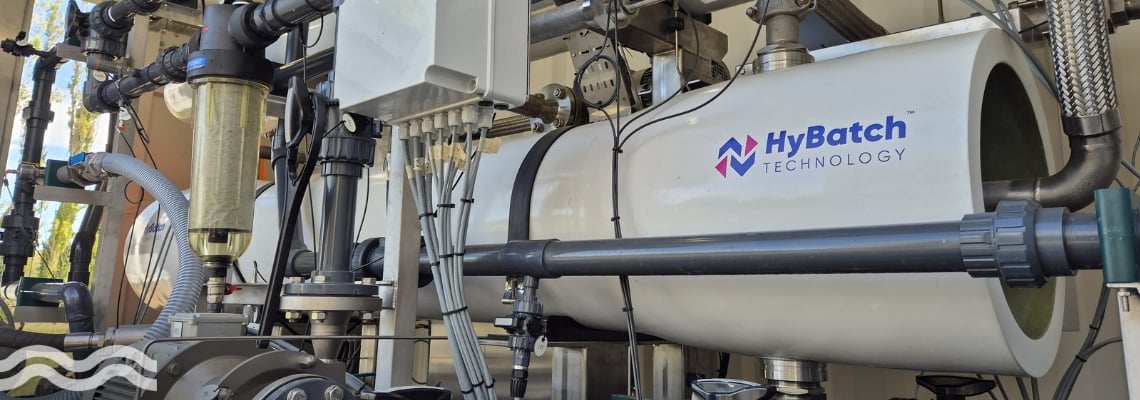
Salinity Solutions’ HyBatch technology is being tested under real-world conditions as part of a hybrid batch reverse osmosis solution for municipal wastewater non-potable reuse. Its piston-driven pressure exchange process recycles feedwater multiple times until a targeted recovery rate is achieved.
There is an increasing interest in high recovery reverse osmosis solutions – Zraick
Compared to conventional RO systems, which have an average recovery rate of 85 per cent, HyBatch has demonstrated rates of 90–95 per cent. It is designed to control pressure based on salinity levels, rather than exert a constant pressure throughout.
Salinity Solutions state that this can reduce energy consumption by as much as 50 per cent. It also helps limit scaling, which means fewer chemical cleanings are needed, extending the lifespan of the membrane, leading to improved environmental impact. Overall, this results in reduced operating costs for both industrial and municipal reuse.
Next-generation water reuse solutions
Naughton explained that the pilot emerged from a shared objective between the site operator and technology partners to demonstrate next-generation water reuse solutions that can significantly increase recovery while reducing energy use and operational complexity.
HyBatch RO was selected because it directly addresses two recognised challenges in municipal wastewater reuse: limited recovery from conventional RO and rising energy and brine management costs – Naughton
Zraick added that SUEZ and Salinity Solutions began discussions in 2019. At the time, the hybrid batch RO technology targeted lithium concentration. As cities and industries around the world face growing pressure from water scarcity, there is an increasing interest in high recovery reverse osmosis solutions. The partnership was established to adapt and scale the technology for municipal wastewater treatment.
The pilot is expected to run into 2027, allowing performance to be assessed across different seasonal and operational conditions.
How will the hybrid system be deployed at the plant?
The pilot will be delivered as a containerised, modular system, enabling rapid installation with minimal disruption to existing operations, which feature a traditional three-stage RO solution.
As Naughton points out: This approach also demonstrates how the technology could be scaled or replicated at other municipal facilities.
The Hybrid Batch Reverse Osmosis technology deployed in Béziers provides substantial benefits for wastewater reuse in terms of water, energy and chemical savings – Grégory Tesse
Our objective is to reduce operating costs for treatment processes, enabling local authorities and industrial players to deploy technologies essential to preserving water resources.
What is the success criteria for the pilot?
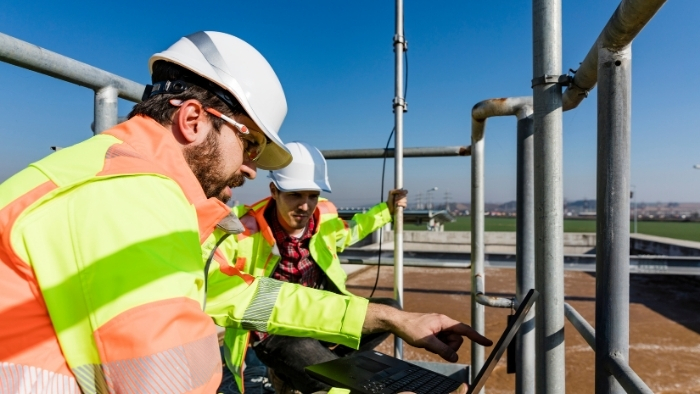
Water quality monitoring is a core component of the pilot. Parameters being tracked include:
- Conductivity/salinity
- Periodic sampling for organics removal
- Clean in place (CIP) frequency
- Reduced chemical dosing
- Concentration of specific ions
HyBatch is being integrated into an existing municipal treatment process alongside a traditional three-stage RO system, which has been running since 2024 to establish baseline conditions.
We aim to set a new benchmark for advanced wastewater treatment worldwide – Naughton
Success in the current pilot will be assessed against criteria including recovery rate, energy consumption, operability, integration, membrane performance and reduced chemical use.
- Achieved recovery rate
- Specific energy consumption
- Stability and operability
- Ease of integration
- Membrane performance
- Reduced chemical dosing
Economic benefits being evaluated include reduced energy consumption, lower brine handling volumes, reduced chemical use and lower treatment costs per cubic metre of reused water.
According to Zraick, success means achieving high recovery rates, energy savings and reduced chemical use without compromising water quality or membrane integrity.
Gaining global recognition
The plant has been nominated in the Municipal Reuse Project of the Year category at the Global Water Awards, highlighting its role in advancing wastewater reuse.
Currently, only around four per cent of wastewater is reused globally, while demand for water is expected to rise significantly by 2050.
Moving from 80–85 per cent recovery to 90–95 per cent may sound incremental, but it represents a transformative step in reducing pressure on freshwater resources.
Writing on LinkedIn, Mathieu Delahaye, SUEZ’s deputy director of strategic development, explained why the project was so important in a global context. “Recovering more water from wastewater is no longer a ‘nice to have’… it’s becoming a necessity,” he said.
We are still in the very early stages of wastewater reuse becoming a major water resilience strategy globally. Currently, only approximately four per cent of wastewater is reused globally. However, as Delahaye pointed out, around half of the world’s population experiences water scarcity for at least one month every year, and water demand is expected to increase by 20–30 per cent by 2050.
“Every additional percentage of recovery matters: producing more water from the same resource means reducing pressure on rivers, aquifers, and drinking water systems,” he added. “Moving from 80–85 per cent recovery (conventional RO) to 90–95 per cent may sound incremental… but it’s actually transformative.”