Scarcity in Europe is driving innovation in the reuse market
Water scarcity is already an issue for European countries, but it is likely to be an increasing problem in the coming decades as drought conditions become more frequent and widespread. As the problem increases, the pressure on freshwater and groundwater sources will intensify, and governments will need to find alternative water sources to meet rising demand.
European regulations aim to encourage water reuse from wastewater sources. According to the EU, more than 11 per cent of the continent’s population is affected by water scarcity and one billion cubic metres of treated urban wastewater is reused annually, but it is still under-deployed. At current levels, European countries could be reusing six times more treated wastewater.
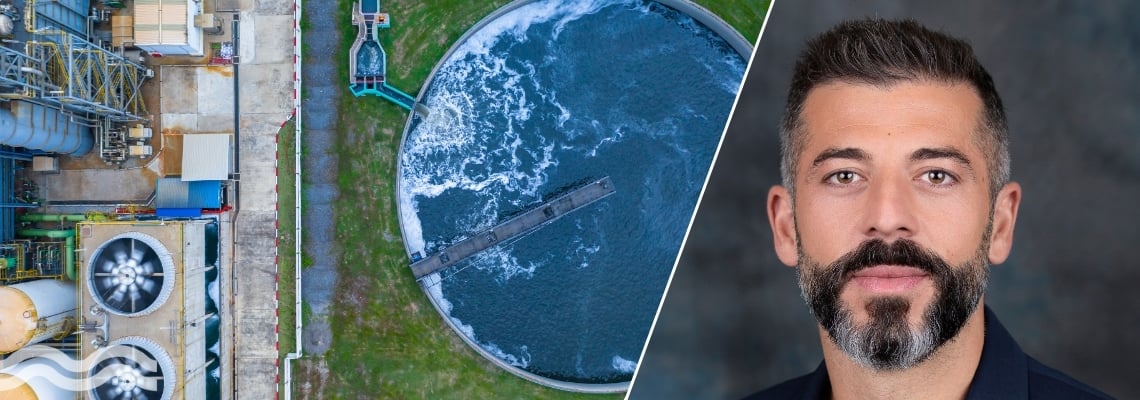
Aquatech Online talks to Daniele Strongone, general manager, AWC, to find out more about the current situation and what lies ahead for reuse in Europe.
Why is water reuse important for water security in Europe?
Strongone believes that water reuse is one of the most important developments in the future of water treatment.
“It allows us to produce high-quality water, including drinking water quality, from a renewable source while requiring significantly less energy than alternatives such as desalination,” he tells Aquatech Online.
“As water scarcity increases and environmental regulations become more stringent, both direct and indirect water reuse will become essential for municipal and industrial applications.”

Why will it become increasingly so over the next decade
Over the next decade, Europe is likely to see a major acceleration in water reuse projects.
“A good example is France,” Strongone says. “I recall when I used to live there in 2015-2016, water reuse was extremely limited and, in many practical situations, almost impossible to implement due to regulatory barriers.”
In 2023, France introduced new legislation and simplified authorisation procedures to actively promote the reuse of treated wastewater as part of its national Water Plan/ This plan featured ambitious targets to increase water reuse projects across the country.
“This shift reflects a broader European trend,” he adds. “Water is no longer viewed as a resource that is used once and discharged; it is increasingly being seen as a valuable asset that must be reused and managed in a circular way. In my view, water reuse will become one of the key pillars of sustainable water management for both industry and society.”
What part do regulations play in treatment innovation?
Opportunities created by water reuse regulations extend across the whole value chain, Strongone explains.
“As governments introduce stricter water management policies and promote water reuse, the demand for advanced treatment technologies continues to grow. More water is needed, and in many cases, higher-quality water is required for industrial processes, agriculture, and even potable reuse applications.”
Membrane technologies are often at the heart of these treatment schemes.
“What is particularly interesting is that the same ecosystem that has driven the growth of desalination over the last few decades is also ideally positioned to benefit from the expansion of water reuse,” he says. “This includes EPC contractors, membrane manufacturers, speciality chemical suppliers, engineering consultants, energy recovery system providers, and digital solution companies.”
As Strongone explains, water reuse represents a natural extension of the desalination industry's expertise.
“The sector already possesses the knowledge, technologies, and operational experience required to deliver high-quality water from challenging sources,” he says. “As water scarcity becomes a more pressing issue worldwide, I believe we will see significant growth opportunities for all companies involved in membrane-based water treatment, not only in desalination but increasingly in water reuse applications as well.”
What innovations can we expect in water reuse technology?
“I am particularly excited about technologies that combine sustainability with efficiency improvements, because I believe that is where the future of the water industry lies,” begins Strongone. “For me, innovation is not only about developing new products; it's about achieving better results while consuming fewer resources. This includes developing more effective speciality chemicals that allow us to use lower dosages, designing membrane systems that can operate at higher recoveries to maximise the value of every cubic metre of water withdrawn from the environment, and improving infrastructure to reduce water losses during treatment and distribution.”
Increasing the integration of digital tools, automation, and predictive technologies that help optimise system performance and resource consumption throughout the entire water cycle will also be crucial.
Looking ahead, Strongone believes the industry will move away from treating individual processes as separate challenges and toward a much more holistic approach.
“The future is about connecting water reuse, desalination, distribution, treatment, and resource recovery into a true circular economy model, where water is continuously reused and managed as a valuable resource rather than consumed and discarded,” he says. “Those technologies and solutions that help us improve efficiency, reduce environmental impact, and close the water loop are the ones that excite me the most.”
What is happening to maximise membrane performance?
Over the last decade, significant advances have been made in both anti-scaling and anti-fouling solutions, allowing us to solve challenges that were often considered unavoidable (or even impossible to address) just a few years ago.
“We are currently living through one of the most exciting periods in the history of membrane pretreatment and cleaning technologies,” Strongone asserts. “The industry's ultimate objective is clear: maximise reverse osmosis (RO) system recovery while reducing total operating costs. In a world where water scarcity is increasing and financial performance is under constant scrutiny, every additional percentage point of recovery matters.”
Historically, challenges such as gypsum scaling were often considered extremely difficult, if not impossible, to remove from RO membranes, while biofouling was widely accepted as an inevitable part of operating a membrane system. While the industry has always had tools such as antiscalants, cleaners, and biofilm control agents available, today's technologies allow us to push performance far beyond what was previously possible.
“One of the most significant breakthroughs has been the development of silica disruptors,” Strongone says. “These solutions effectively help operators ‘break the glass ceiling’ by managing much higher silica concentrations than previously possible, allowing RO systems to operate at significantly higher recoveries even in extremely challenging groundwater applications.”
Another development he is particularly excited about is the emergence of truly super-concentrated antiscalants.
“By reducing product volumes by factors of 10 to 15, these technologies dramatically lower transportation requirements, storage needs, packaging waste, and carbon emissions, while also reducing overall operating costs,” he begins. “For me, the future of anti-scaling and anti-fouling technologies is not only about improving membrane performance: it's about enabling more sustainable, more efficient, and more economically viable water treatment systems.”
Will the need for increased reuse drive growth in the membrane market?
Increasing water scarcity, tighter environmental regulations, and the growing need for water reuse and resource efficiency are likely to drive growth in the membrane market over the coming years.
“From a technology perspective, I expect continued innovation in membrane materials, pretreatment solutions, and system design, all focused on improving performance while reducing energy consumption and environmental impact,” Strongone says. “Sustainability will increasingly become a key driver of innovation across the entire industry.”
More importantly, he asserts the membrane market will play a central role in the transition toward a circular water economy.
“Historically, water treatment has often been viewed as a series of individual processes. In the future, we will increasingly look at the entire water cycle as an integrated system, where water is continuously reused, recovered, and optimised, rather than consumed and discharged.”
Corporate sustainability (ESG) goals are also likely to drive innovations in the membrane market.
“I see a growing connection between the membrane industry and corporate ESG strategies through the concept of Water Positive programs,” he states. “As Water Positive initiatives continue to gain momentum, companies are increasingly looking beyond water consumption reduction and focusing on creating measurable water replenishment and conservation benefits.”
He continues: “Technologies that increase RO system recovery can generate quantifiable water savings, effectively creating additional water availability within a watershed. This positions the membrane industry as a key enabler of corporate water stewardship programs and long-term ESG strategies.”
In that context, the membrane industry becomes much more than a supplier of treatment technologies. It becomes a strategic partner helping multinational corporations achieve sustainability objectives, strengthen their ESG performance, and contribute to long-term water security. I believe this intersection between water technology, circular economy principles, and corporate sustainability will be one of the most exciting growth areas for our industry over the next decade.