Mexico: Water sustainability needs to be a strategic priority
Mexico City’s relationship with water has become worldwide headline news in recent years. Beyond the capital city, water scarcity has affected, or continues to affect, approximately 35 million people, with prolonged and severe droughts, inadequate infrastructure, and poor governance among the many issues affecting both the volume of available clean water and equitable access.
Major investments in water infrastructure have followed since former Mexico City mayor Claudia Sheinbaum was elected the country’s 66th president in 2024. Not only infrastructure and investment followed Sheinbaum’s inauguration. The president remodelled the country’s entire relationship with water, enshrining access to clean water as a human right into national law as part of the National Water Plan 2024-2030.
Fast forward two years and major infrastructure projects are well underway, as well as a wide range of other projects designed to secure water security across the country. In 2025, Aquatech Online talked to Tamara Luengo, the founder of Aqueducto, a comprehensive consultancy firm specialising in water resource management, about the need for sustainable practices in Mexico’s water management.
In this wide-ranging interview, we discuss the current challenges and opportunities for water management in Mexico, as well as the unique perspective she will bring to the advisory board of Aquatech Mexico.
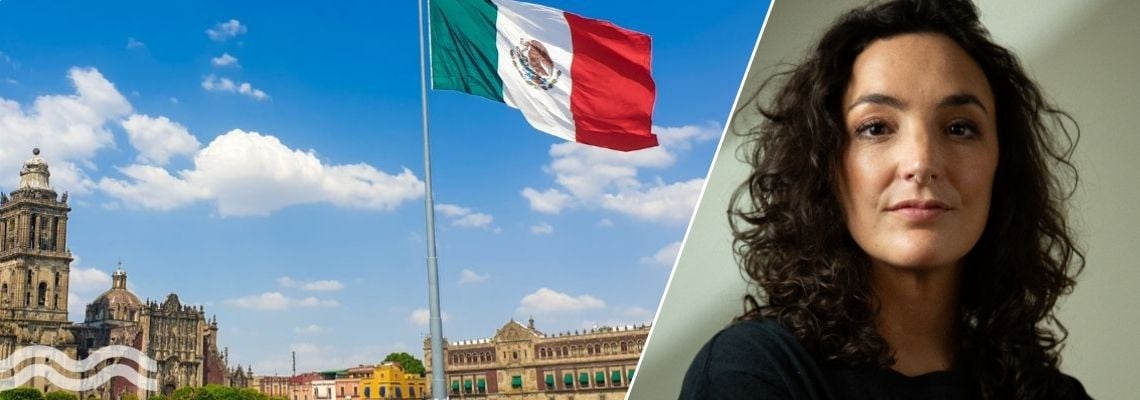
How did your interest in the water sector begin, and what motivated you to build your career in this industry?
“Since childhood, I have felt a deep admiration for water. Swimming lessons quickly became a safe space for me, a place of connection with what I now consider my greatest teacher: water.
Years later, during my studies in civil engineering, I was introduced to the vast world of water management. I was struck by the scale of the projects: large wastewater treatment plants serving entire cities, kilometres of pipelines, and highly powerful pumping systems.
I was fascinated by the resourcefulness, science, and creativity applied to managing water, and through it, supporting community well-being and ecosystem balance.”
From your experience, what have been the most valuable lessons you've learned while working on water-related solutions?
“One of the most valuable and challenging lessons has been understanding, from my engineering background, that infrastructure alone does not solve problems. While it can be a powerful catalyst for change, for example, in providing water access to communities, it requires a broader ecosystem to be effective in the long term.
Public policy, community participation, social trust, and financing mechanisms are all essential components. This realisation transformed my perspective as an engineer and allowed me to approach water challenges from a more holistic and integrated standpoint.”
What distinguishes AQUEDUCTO’s work within Mexico’s water ecosystem?
“At Aqueducto, we aim to be, as our name suggests, a ‘bridge for water’ (the name translates to aqueduct): connecting needs and opportunities with the solutions and technologies required to address the country’s most pressing water challenges.
Our approach is inherently holistic. We understand that technical solutions must always be complemented by legal and regulatory considerations, as well as financial viability and organisational capacity. Through a strong network of specialised partners, we provide tailored solutions to a wide range of water-related needs.
Understanding that Mexico’s water crisis is not a resource crisis, but a management crisis
Our work spans a wide range of projects, including water planning, technical and infrastructure challenges, as well as entrepreneurship and innovation initiatives
However, our most significant contribution lies in promoting a paradigm shift: understanding that Mexico’s water crisis is not a resource crisis, but a management crisis. From this perspective, we have supported companies and organisations in transforming how they manage, allocate, and use water, moving toward more sustainable and efficient practices.”
What do you see as the most urgent challenges currently facing the water sector in Mexico?
“One of the most pressing challenges is the implementation of recent reforms and updates to Mexico’s regulatory framework, including their effective execution and the strengthening of institutional capacities required to enforce them.
Additionally, there is a critical need for a paradigm shift in water awareness, particularly within the private sector. Many companies have yet to fully recognise that the continuity of their operations is at risk if water sustainability is not treated as a strategic priority.”

Which technologies, practices, or approaches do you believe will shape the future of water management?
“In the short term, smart metering and data management will be key enablers for all types of water users to transition toward sustainability. Data is one of the most valuable assets today, and it has enormous potential to improve efficiency in water management.
Looking ahead, I envision, and we are already beginning to see, a future where we harness the infinite intelligence of nature to address water and environmental challenges. A future where fungi, algae, and bacteria become leading agents in water and waste treatment; where infrastructure is designed around natural systems; and where biotechnology plays a central role in human development.”
What does it mean for you to join the Aquatech Mexico Advisory Board?
“It is a great honour to be considered for the Aquatech Mexico Advisory Board. I have followed this event with admiration for several years, and I am truly grateful for the opportunity to contribute.
I also see this as a chance to bring a fresh and younger perspective, one that opens the door to new solutions, emerging voices, and innovative approaches to water management.”
What themes or priorities do you hope to bring to the table as part of the board?
“Entrepreneurship and innovation are key priorities for me. I would love to see Aquatech Mexico evolve into a hub for water innovation that fosters the internationalisation of Mexican and Latin American talent, while opening pathways to new markets and approaches.
I am also interested in strengthening the Aquatech Award as a powerful international showcase that can effectively boost solutions, investments, and technologies, and position itself as a global reference in water innovation.”
Why are spaces that bring together industry, experts, and the public sector important for advancing water-related issues?
“We need greater coordination among stakeholders, but above all, we need empathy. These spaces help build the trust, listening, and institutional collaboration required to drive meaningful action, investments, and partnerships to address the water crisis.
They also enable the exchange of ideas in an open and constructive way, while providing technical knowledge that helps democratise the understanding of water.”

What key conversations do you believe should be encouraged in technical forums like Aquatech Mexico?
“Two topics stand out as particularly critical. First, Mexico’s water regulatory framework, which is currently undergoing significant changes, is essential for understanding both the current context and the pathways toward water sustainability.
Second, innovation and nature-based solutions. It is crucial to deepen the understanding that these approaches are not out of reach, but rather represent the state of the art in redefining our relationship with the planet.”
On a personal level, what inspires or motivates you to continue driving initiatives within the water sector?
“I firmly believe that water is an instrument of peace, not a source of conflict or war. In the times we are living in, we need more people thinking, creating, and innovating in the water sector to build the peaceful future our world urgently needs. That vision of ‘water for peace’ is a powerful source of motivation for me.”
What would you like to see the industry achieve over the next five years?
“I would love to see Mexico achieve a successful case of a restored and living urban river within the next five years. This would require strong financial, political, social, environmental, technological, and infrastructural efforts, along with deep coordination among stakeholders.
Such a success story would represent a major milestone for the sector and serve as tangible proof that what may seem impossible today can, in fact, be achieved.”

Beyond the numbers: why Aquatech Mexico has become essential for the water industry
Water, innovation, and sustainability: A strategic vision for Mexico’s future
Nanofiltration removes contaminants for IPR in León

Aquatech Mexico 2026: A decade of driving critical water solutions