Solving real-world problems with a research framework
With an interest in studying environmental engineering and with a close connection to industry, Francisca Sousa Braga knew she wanted to do something meaningful and to make a positive contribution.
“In retrospect, there may have been some youthful optimism in that choice, but it turned out to be the right one, and I’ve never regretted it,” she tells Aquatech Online.
“Looking back, I realise that I’ve always been interested in water and the environment. From a young age, I was very engaged in water-related activities such as swimming and surfing, and being a scout also played an important role in shaping my connection to nature and environmental responsibility,” she adds.
Her time in the scouts also left her with a foundational principle that has guided her studies and career.
“It was Robert Baden-Powell’s (founder of the Scout movement) principle of always leaving a place better than you found it.”
Braga is currently an industrial PhD student. By the time you are reading this article, she will have defended her thesis.
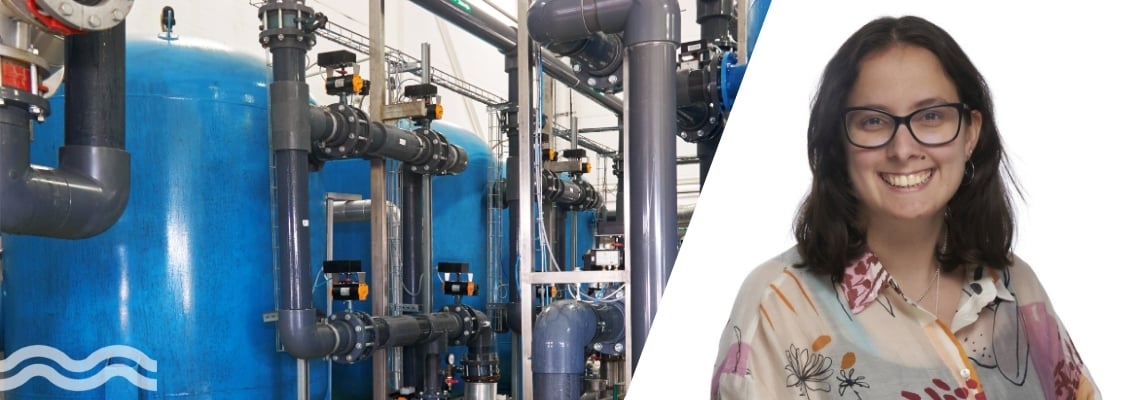
Working at the interface between academia and the professional world
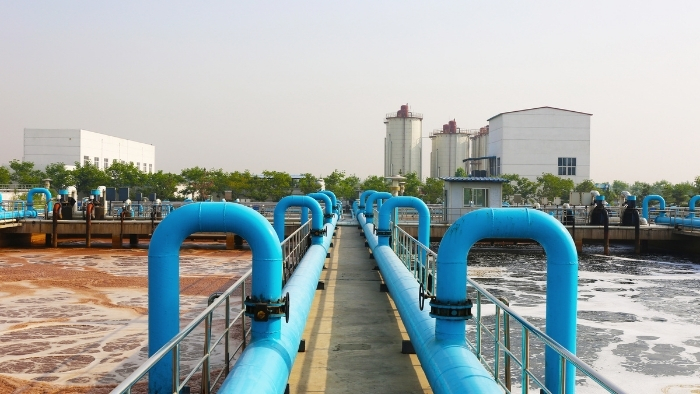
Although her background is in research, she believes what distinguishes her work is her close connection to industry.
Being an industrial PhD places me at the interface between academia and the real world, allowing me to act as a bridge between the two.
“I find this particularly rewarding, as it enables me to focus on solving real, practical problems while still working within a strong research framework,” she explains, before adding: “My main research focus is on the centralisation of wastewater treatment systems, on using model-based approaches to support wastewater treatment systems in coping with future demands for efficiency and performance.”
A career in water was not necessarily something she had considered before she attended university.
“When it came time to choose what to study at university, I was interested in several subjects and wasn’t completely sure which path to take,” she says. “Environmental engineering stood out as a way to do something meaningful and make a positive contribution.”
It was the influence of one of the academic staff who made the case for water.
“My specific focus on wastewater developed a bit later in my studies, mainly through the influence of a professor (who later became my master’s thesis supervisor),” Braga explains. “He showed me how complex and fascinating wastewater processes are, and how much potential there still is to learn, improve, and innovate in this field.”
Researching the water-energy nexus
Braga’s PhD project is in collaboration with Danish utility Skanderborg Forsyning, the Technical University of Denmark, and VIA University College.
“I already knew I wanted to pursue a PhD, and the opportunity came when Skanderborg Forsyning approached me with the idea of focusing on the water–energy nexus, specifically on heat recovery from wastewater,” she begins.
“At the time, I found the topic extremely interesting and highly relevant, particularly in a Nordic context, and well aligned with the increasing requirements for energy neutrality driven by European regulations.”
I came to understand how valuable these interdisciplinary areas are for the water sector.
Being an industrial PhD means working with more stakeholders than in a traditional academic PhD, which can be challenging because it requires balancing diverse perspectives, expectations, and priorities. However, as Braga confirms, it can also be very rewarding.
“It has allowed me to view topics such as heat recovery and centralisation from multiple angles and better understand how research can directly support real-world decision-making.”
While wastewater-related topics were introduced during her master’s course, it was during her PhD that an interest in the water–energy nexus and modelling developed.
“Through this work, I came to understand how valuable these interdisciplinary areas are for the water sector, especially in supporting better planning and decision-making,” she says.
Developing a transferable framework for utilities
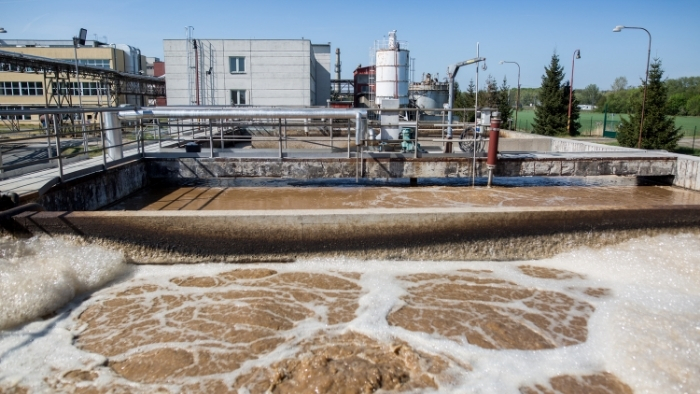
Braga shared some of the highlights of her research so far.
“One thing I’m particularly proud of from my PhD is that we were able to develop a framework that is transferable to other utilities facing similar challenges in the water sector, such as ageing infrastructure and increasingly strict climate and energy requirements,” she explains.
“While the specific results of the methodology will naturally differ from case to case, the framework itself can be adapted and applied across different utilities, making it a useful decision-support tool beyond the original project.”
What challenges in the water sector does research need to address?
Braga believes that one of the biggest challenges right now, on a sector-wide level, is the growing mismatch between water availability and demand.
“Climate change is intensifying droughts, floods, and variability, while population growth, urbanisation, and industrial and agricultural demand continue to increase,” she says. “This sets severe pressure on existing infrastructure and water management approaches that were designed for more stable conditions.”
Another major challenge is ageing infrastructure.
“Many wastewater systems are reaching or exceeding their design lifetime, yet investment is often delayed due to high costs, fragmented responsibilities, and political constraints. This increases risks to water security, public health, and ecosystems,” she adds.
Over the next few years, the nexus between water and energy systems faces a major institutional and planning challenge, according to Braga.
“Water and energy systems are often planned, regulated, and financed separately,” she begins. “In the coming years, integrating these sectors, through shared data, joint scenarios, and coordinated investments, will be essential, but difficult to achieve within existing governance structures.”
Working with other young water professionals
As a young water professional herself, Braga knows the importance of supporting others at the beginning of their careers in the sector. She is on the International Water Association’s (IWA) Young Water Professionals steering committee and is a member of Young Water Professionals Denmark.
“Even though these roles are voluntary and can sometimes feel like a second full-time job, they truly mean a lot to me,” she begins. “As an international student living in Denmark, I quickly realised how important networking and connecting with peers is. That’s why I joined Young Water Professionals Denmark.”
Young professionals are both capable and have a meaningful voice.
Initially, her involvement was limited to attending events such as national conferences and regional meetings.
“Over time, however, I felt motivated to contribute more actively to the network, so in 2022, I applied to join the board,” she explains. “I then spent two years as secretary and two years as chair. It is a fantastic experience, allowing me to help grow the organisation and demonstrate to the Danish water sector that young professionals are both capable and have a meaningful voice.”
Through this involvement, Braga also became active in organising international webinars and other initiatives.
“This led me to apply for a position on the IWA Young Water Professionals Steering Committee two years ago. This committee represents YWPs globally within the water sector. It has been an incredibly rewarding experience. Currently, I contribute to the career-building role, supporting young professionals in their career development and integration in the water sector.”
What does the future hold for your career?
One thing is clear: Braga wants a future career in the water sector.
“I truly appreciate how dynamic the sector is and how much opportunity there is to continuously learn from and share knowledge with others,” she explains.
“I would like to keep contributing to the water sector at a global level and to be able to share my perspective and experience. I don’t have a specific role or position in mind; what matters most to me is doing what I enjoy, learning from people, engaging in research, and helping others.”