Policy recommendations put data at the heart of EU water reforms
For two decades, Europe’s Water Framework Directive has governed how water sources are protected on the continent. With a new digitalisation action plan for water on the horizon, an EU-funded water data management project has released a policy paper highlighting how data can be turned into a strategic asset that can unlock smarter and more sustainable governance across all EU member states.
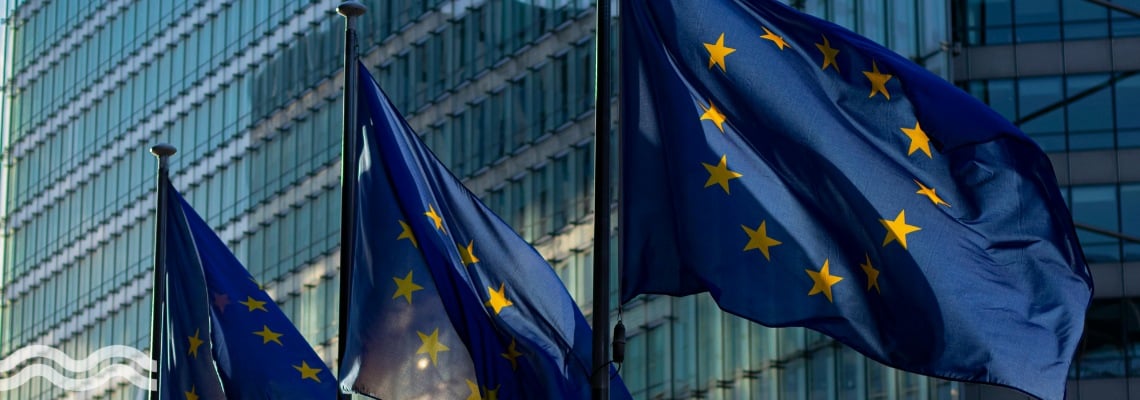
What is the Water Framework Directive?
The Water Framework Directive (WFD) is Europe’s main law that protects water in the continent. Its key objectives require member states to use River Basin Management Plans (RBMPs) and Programmes of Measures (PoMs) to protect and, where necessary, restore water bodies to ensure that they reach ‘good’ status, and to prevent deterioration. Good status means both good chemical and good ecological status. Among its aims, the WFD is concerned with reducing and removing pollution and ensuring that there is enough water to support wildlife, while also time as human needs.
What is the WATERVERSE project?
WATERVERSE is an EU-funded project aimed at developing a Water Data Management Ecosystem (WDME) for making data management practices and resources in the water sector accessible, affordable, secure, fair, and easy to use.
Its aims to improve the usability of data and the interoperability of data-intensive processes, with the intention of lowering the entry barrier to data spaces, enhancing the resilience of water utilities and boosting the perceived value of data and, therefore, the market opportunities behind it.
The project will:
- Actively engage end-users and stakeholders to assess the main gaps and challenges the water sector must overcome to effectively be part of, and contribute to, quality European data spaces
- Identify, extend, and integrate a wide set of data management tools to implement the WDME, based on FIWARE Building Blocks, and comprising tools and methods to ensure the security and energy efficiency of the whole WDME
- Set up and demonstrate the WATERVERSE WDME in a real environment with relevant and diverse case studies involving water sector stakeholders from six countries (Cyprus, Spain, Germany, the Netherlands, United Kingdom, Finland)
- Set clear and measurable indicators for assessing the FAIRness of data in water-related data spaces
- Ensure the viability and sustainability of the WATERVERSE WDME, as well as its replicability, scalability and business applicability.

Why does the WFD need a greater focus on water data management?
Gerasimos Antzoulatos, senior research associate at Information and Technologies Institute/Centre for Research and Technology Hellas, and WATERVERSE EU project member, told Aquatech Online: “For more than two decades, the EU’s WFD has set the ambition of achieving a coherent, sustainable water policy across Europe. Yet, one of its biggest challenges lies not in the vision itself, but in the way water-related data is managed, shared, and used.”
He added: “A stronger focus on water data management (WDM) is essential if the WFD is to remain effective, enforceable, and future-proof.”
According to WATERVERSE EU, current data practices in the water sector are fragmented and inconsistent. Different members collect information using diverse methodologies, formats, and standards, making it difficult to integrate or compare results across borders and sectors.
This ‘fragmentation’ undermines the WFD’s goal of building an EU-wide framework.
Antzoulatos explained WATERVERSE’s approach: “The Water Data Management Ecosystem (WDME) developed by the WATERVERSE project offers a practical solution: a federated approach where datasets remain with their owners but can be shared through common interfaces in a trusted and secure environment.”
He added: “By adopting recognised standards such as ETSI NGSI-LD API, DCAT-AP, and FIWARE Smart Data Models, WDME makes cross-sector and cross-border data interoperability possible without forcing disruptive structural changes.”
Fresh approaches needed for complex challenges
The policy paper makes clear that the urgency for better water data management is heightened by the growing complexity of water challenges, brought on by climate change, droughts and floods, pollution, and the degradation of natural resources. This demands timely, granular, and reliable data.
“Without robust management systems, the WFD cannot fully support adaptive, evidence-based policy decisions,” explained Antzoulatos. “Another obstacle is the limited reusability and interoperability of existing datasets. Too often, data remains siloed, under-shared, and disconnected from EU-wide systems. Aligning water data with the FAIR principles (Findable, Accessible, Interoperable, and Reusable) extended with MELODA5 dimensions (Reputation and Dissemination) can unlock the value of what already exists, avoid duplication of monitoring efforts, and enhance both the quality of data and metadata.”
Data management can be a springboard for innovation
Improving data management can be a driver of innovation; high-quality, interoperable datasets form the foundation for advanced digital tools, such as AI-driven models, digital twins, and early-warning systems.
These innovations, says Antzoulatos, can strengthen governance, support the European Green Deal, and boost resilience in water-dependent sectors, ranging from agriculture to energy and industry.
He adds: “WDME ensures that the entire data lifecycle, from collection and harmonisation to processing and visualisation, is supported, empowering stakeholders to apply tailor-made solutions to their specific needs.”
WATERVERSE EU’s message is clear that WDME should be the backbone of modern water policy to enable the WFD to move closer to its vision of a sustainable and secure water future for Europe.
How can the WFD successfully adopt innovation?
Antzoulatos explained that the successful adoption of innovation depends on three interconnected dimensions:
- Having the right tools: technological solutions and interoperable standards that enable seamless data management and sharing
- Knowing how to use them: capacity building so that water authorities, utilities, and municipalities can operate digital systems effectively
- Wanting to use them: stakeholder engagement and motivation, so that end-users and decision makers recognise the benefits and trust the solutions.
If one of these dimensions is missing, the impact of the others is weakened. For example, advanced tools are of little value without the skills to operate them, and technical knowledge alone is not enough without buy-in from stakeholders.
What does the policy brief want to achieve?
According to its authors, the policy brief is a first step in the ultimate goal of helping to turn clear, evidence-based information that translates project outcomes, such as those from WATERVERSE, into practical actions that support the objectives of the WFD.
“The policy paper distils complex research into a few simple, actionable recommendations that show how better water data management can strengthen governance, improve compliance with the WFD, and build resilience against climate and societal pressures,” Antzoulatos said.
He added: “Next, we aim to follow up by working with stakeholders to detail implementation pathways and propose policy instruments (financial, legal, and coordination measures) that can accelerate uptake. We hope the brief will set the innovation machine in motion: defining clear goals, guiding investment and regulation, and ultimately helping Europe achieve the WFD’s ambitions for water sustainability and security for its citizens and communities.”
What are the policy’s key recommendations?
WATERVERSE EU has put forward four key policy recommendations:
- Integrate the WDME into national systems: encourage member states to adopt WATERVERSE tools to harmonise data models and improve WFD compliance monitoring and reporting
- Standardise data practices: promote the use of common standards, FAIR metrics, and Smart Data Models across the EU to ensure cross-border data interoperability
- Foster stakeholder engagement: institutionalise multi-stakeholder forums to align data-driven innovation with local needs and regulatory targets, reinforcing citizen engagement
- Support digital capacity building: equip water authorities with the skills and infrastructure needed to operate advanced water management systems, expanding the EU Water Acquis to include digital governance.
Antzoulatos said that stakeholders recognise the urgency of advancing water data governance and see the WDME as a concrete step toward building interoperable water data spaces.
He said: “Utilities, in particular, are already taking action: some are redesigning their internal structures, creating roles such as innovation managers and strategy designers to accelerate digital transformation. They are also asking for more detailed guidance on how to prioritise investments and adapt procurement strategies to implement WDME-related tools.”
This momentum, he added, shows that the sector is not only receptive but eager to continue innovation in water data management, with policymakers increasingly involved in shaping the next steps.
What are the next steps for WATERVERSE and the WFD?
For the WFD to be a success, EU policy needs to place continued emphasis on water data governance and provide the right enabling conditions. This could offer targeted technical support for digital water systems, ensuring financial instruments that help utilities and authorities invest in innovation, and establishing a clear legal and procedural framework for procurement. Collaboration between all stakeholders will be vital to allow innovation and WDM to be shared and scaled in real operational contexts.
Antzoulatos said: “Now, it is up to the WFD and the wider policy framework to ensure that these solutions can be adopted widely, helping Europe achieve water resilience and deliver long-term benefits for its citizens.”
Equally important is the integration of WFD objectives into other Green Deal strategies, including the EU Biodiversity Strategy 2030, the Zero Pollution Action Plan, the Farm to Fork Strategy, and the Climate Adaptation Strategy.
He added: “The conclusions and feedback derived from these activities should inform improvements to the application of the WFD, support the refinement of future guidelines, and underpin the design of new funding instruments to cover this activity. In this way, the WATERVERSE policy brief can contribute to a more coherent and effective application of the WFD.”