Water-resilient cities in todays changing context
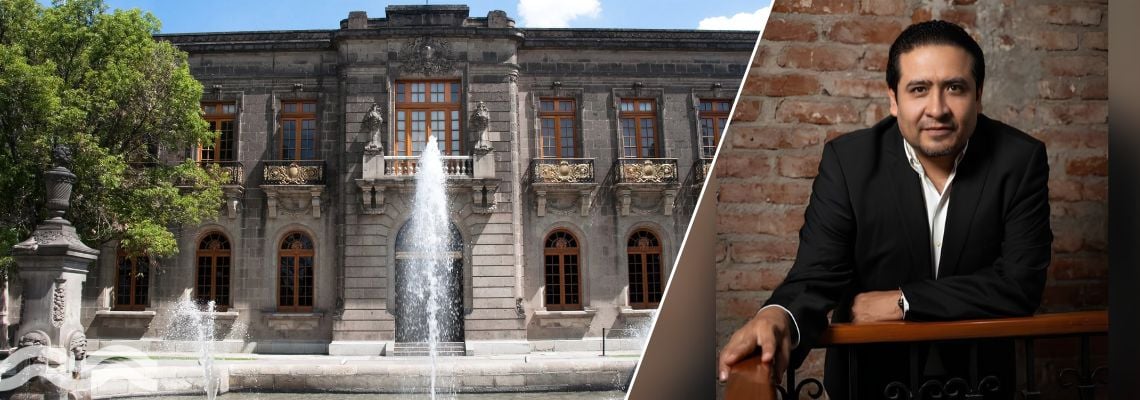
In this article, Hugo Roberto Rojas Silva, a water management specialist, former Executive Director of ANEAS, and long-standing member of the Aquatech Mexico Advisory Board, shares his thoughts on what cities in the Global South need to do to become more resilient in the face of climate change.
Climate change challenge for resilient cities
“In recent years, we have witnessed a significant shift in historical hydrometeorological patterns around the world. Climate change continues to remind us, with growing urgency, that it is a lasting reality.
“Many cities across the globe have been challenged by prolonged droughts, intense localised rainfall, and, indirectly, by pandemics and disease outbreaks. The common denominator is the adverse impact on populations and the increasing pressure placed on governments at all levels.
“As these atypical phenomena have become more evident, developed countries have generally been better equipped to respond. They already had the necessary infrastructure, functional public service management systems, trained and specialised personnel, and meteorological monitoring networks capable of providing both real-time and historical data.
“These advantages have enabled them to anticipate many impacts and implement preventive measures effectively. Equally important, they have had access to the financial resources required to invest in resilient infrastructure and emergency response systems.
“Even so, these countries continue to face challenges in predicting and responding to rapidly intensifying events. Tropical storms can now escalate into Category 5 hurricanes within hours, tornadoes are occurring in areas not traditionally considered at risk, and rainfall events are causing unprecedented flooding. Recent examples include the floods in Valencia, Spain, and San Antonio, Texas, as well as severe drought conditions that have contributed to increased wildfire risks in California.”
Additional resilience challenges facing the Global South
“If such challenges affect highly developed nations, what can be expected in countries of the Global South, where cities often lag in the development of basic infrastructure (largely due to budgetary constraints and economic limitations)?
“At a time when coverage of water-related services appeared to be expanding, many cities now face insufficient water availability to meet demand through existing distribution networks. This reality forces us to return to the source and recognise the urgent need to invest in preventing the overexploitation of aquifers and surface water bodies, while also reducing pollution that further diminishes available supplies.
“Similarly, as wastewater collection coverage improves, it becomes evident that treatment plants often lack adequate operational capacity or must comply with stricter regulations and lower permissible discharge limits in response to emerging contaminants. This creates a new wave of investment requirements.
“Latin American cities, in particular, have struggled to separate wastewater collection systems from stormwater drainage systems. Where separate systems do exist, they are frequently overwhelmed by volumes far beyond their original design capacity, resulting in floods that generate major economic losses and pose serious risks to public safety.”
The challenge of matching investments to rainfall averages
“According to hydraulic engineering principles, infrastructure sizing is traditionally based on historical rainfall averages. If an extreme event occurs only occasionally, there is generally little justification for major increases in investment. What we are witnessing today, however, is a growing recurrence of these previously rare events. This trend is placing increasing pressure on existing infrastructure. In short, we are seeing non-recurring events become the new normal.
“This challenge also emerges within the context of past investments in large-scale wastewater conveyance systems. Today, as water reuse becomes one of the key solutions to addressing scarcity, we recognise the need for a different type of infrastructure, including dedicated reclaimed-water distribution networks, commonly known as purple pipe systems.
“In response to droughts, many cities have also had to promote changes in building infrastructure and household equipment, including rainwater storage tanks, cisterns, and water-efficient fixtures. These adaptations are particularly challenging because most urban areas were not originally designed with these needs in mind.
“As if these challenges were not enough, shifting geopolitical dynamics have introduced additional uncertainty. Climate change itself, along with its causes and consequences, is increasingly being questioned in some political spheres. Progress once made in international cooperation, including technology transfer, financial support, and technical collaboration, has reached a turning point as governmental unilateralism gains momentum.”
Geopolitics and the need for hydrodiplomacy
“Geopolitics and prevailing economic models add another significant variable. Economic systems influence resource flows and place pressure on natural capital stocks. We are witnessing a renewed trend toward protectionism, trade barriers justified by national security concerns, and policies that prioritise domestic interests above global cooperation.
“For this reason, it is imperative to preserve and strengthen non-governmental spaces for international collaboration and participation. Only through cooperation can water gaps be reduced. Water systems are interconnected across the planet, and their management requires collective responsibility.
“Hydrodiplomacy offers a valuable pathway forward. UNESCO defines hydrodiplomacy as the application of negotiation, mediation, and diplomatic methods that enable stakeholders to identify common interests, achieve mutually beneficial solutions, and prevent conflicts with potential economic, environmental, or social consequences.”
A new generation of infrastructure and resources
“A new generation of water supply and wastewater collection networks is urgently needed, along with dedicated systems for stormwater collection. Stormwater requires a different treatment approach and can serve specific purposes that help communities cope with periods of drought and water scarcity.
“Public administrations must be capable of managing public resources efficiently, including designing infrastructure with a long-term vision and integrating the most advanced technologies available. Above all, they must be able to adapt to changing conditions and to the challenges that cities are already facing and will continue to face in the future.”
Citizen responsibility is crucial to water-resilient cities
“Citizens also have an essential role to play: We must learn to establish a more responsible relationship with nature and understand how our actions contribute to urban water challenges. Questions surrounding solid waste management, compliance with regulations governing the separation of wastewater and stormwater systems, and reductions in household water consumption are all areas in which we must take greater responsibility.
“These actions will move us closer to achieving water resilience within the broader framework of climate resilience.”
About Aquatech Mexico is the leading platform for innovation, knowledge exchange, and business connections in the water sector, bringing together professionals, companies, and decision-makers from across Mexico and Latin America. Organised by RAI Amsterdam and Informa Markets, the event connects the global water community and promotes sustainable solutions for today’s water challenges.
Join us in Mexico City from September 7-9, 2027, for the next edition of Aquatech Mexico.