Collaboration will be key to the future of water stewardship
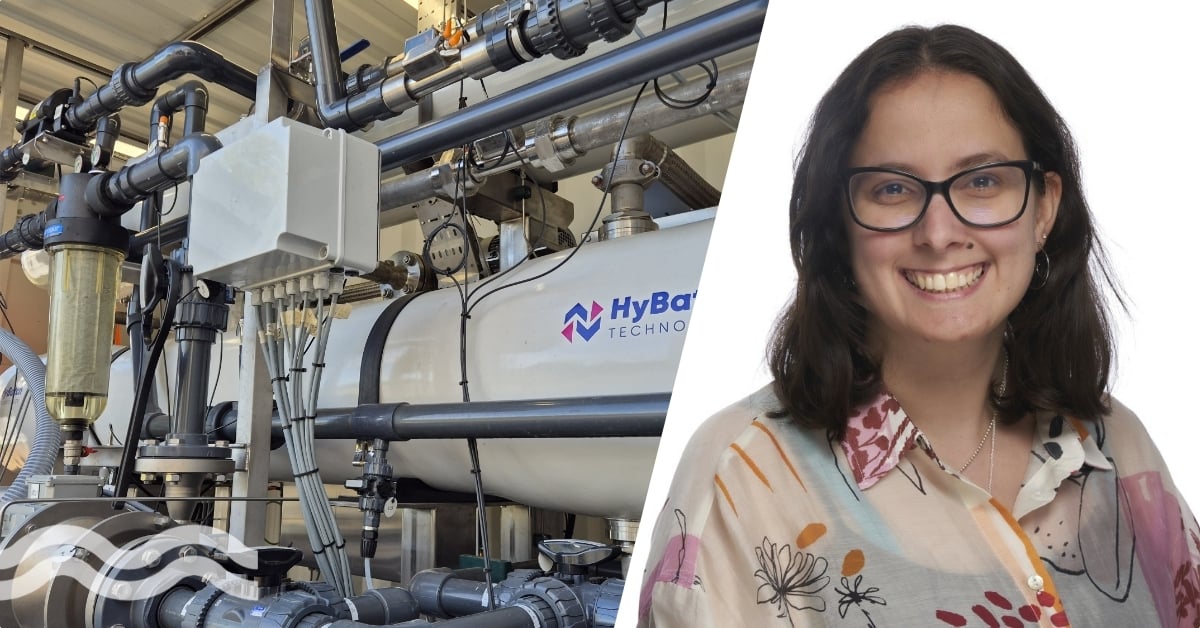
Global consumer goods company Unilever began its water stewardship journey in 2021, building on sustainability goals dating back to 2015. In this article, Lourens Meijer, Unilever’s Global Water Stewardship Lead, talks to Aquatech about the company’s water goals, the challenges involved in conserving and replenishing water, and the challenges involved in conserving and replenishing water, and how water stewardship may evolve over the coming years.

Water stewardship at Unilever

Meijer oversees the implementation of the company’s external water stewardship commitment, which, broadly, is to implement water stewardship programmes in 100 per cent of Unilever’s water-stressed factories by 2030.
As of 2025, the company reports on 29 factories that have water stewardship programmes in place. These are spread across its Foods, Home Care, Beauty and Wellbeing, and Personal Care business groups.
“It started in India,” Meijer explains, “and we have since applied our experiences there to some of our other factories around the world. Some of these factories... our factories operate in water-stressed locations.”
Unilever’s programmes are aligned with guidance from the Alliance for Water Stewardship (AWS) which means each of Unilever’s 30 factories covered by the programme is assessed against a wide range of standards that help the company understand water use and impact, both on site and in the local catchment.
“We’re assessing our stakeholder relationships,” begins Meijer, “and how much water we are saving in our factories, but also quantifying how much we replenish and comparing that with how much we consume.”
The growing urgency water stewardship
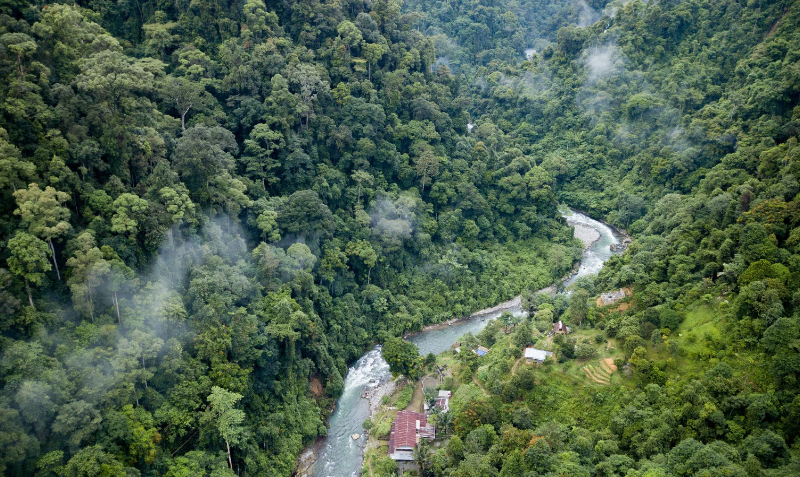
Water stewardship standards and guidance have continued to develop through organisations such as the Alliance for Water Stewardship, WWF and the World Resources Institute. At the same time, changing weather patterns, prolonged droughts and increasingly severe heatwaves are requiring companies to think more carefully about how they use and manage water.
Operational resilience is a key consideration.
“Some of our factories are facing significant water stress,” Meijer explains. “Declining groundwater levels can pose a risk to our business, as well as to the communities and ecosystems that depend on the same water resources.”
Companies are also responding to an evolving regulatory environment. The European Union is implementing water-reuse requirements, while other countries are introducing or strengthening regulations governing water use, discharge and treatment.
Visible corporate commitments can help build momentum by encouraging other organisations to examine their own water impacts and raise their ambitions. Unilever hopes that sharing its experiences and progress can contribute to this wider movement.
The future of water stewardship is already here
Collaboration between organisations operating within the same catchment will become increasingly important.
Collaboration between organisations operating within the same catchment will become increasingly important.
“We have conversations with peers that are looking for positive impact in the same basin,” Meijer explains. “That can create opportunities to work on joint projects with shared implementation partners. By working together, it may be possible to develop larger and more effective projects.”
Meijer hopes that the growing willingness of companies to collaborate will expand and hopes this desire for corporations to collaborate snowballs to include non-consumer-facing companies, local governments, etc.
No single company can create resilience across an entire basin on its own, that doesn't change the basin level resilience, right?” he explains. “Others really need to come together; it needs to go several tiers further, but I do think the field will develop more and more.”
He is clear that this needs to happen sooner rather than later.
''Floods and droughts have been affecting communities and businesses for some time'' he adds. “And we might not have the luxury to work on 2050 targets; we have to move now so that we can face next year's drought situation.”
These pressures will also encourage companies to improve water efficiency, replenish water where appropriate and strengthen relationships with the communities that share the same water resources.
Water efficiencies in factories
Meijer points out that the direct operational water footprint of companies such as Unilever can be relatively small compared with water use upstream, particularly in agriculture, and downstream during product use.
“Ultimately, achieving water savings at scale requires us to consider agriculture and downstream water consumption,” he explains. “But it is also important to look inside our own factories and reduce water use. We need to run water-efficient operations.”
Reducing factory water consumption can also deliver wider benefits, including lower energy use, reduced treatment requirements and more efficient use of materials. Better monitoring, leak detection, process optimisation and improved understanding of factory water balances can all help identify opportunities.
However, there will usually be a minimum amount of water required for production.
“For example, where water forms part of a product, that volume cannot simply be eliminated,” Meijer explains. “Technology and process improvements can reduce losses and improve efficiency, but there will always be a baseline amount of water needed to manufacture certain products safely and to the required quality.”
The Business Case challenge for water stewardship
One of the biggest challenges for stewardship is making the business case for water.
''Water is relatively cheap until it becomes unavailable'' Meijer begins. “So the business case to invest in water-saving technologies or even difficult to demonstrate.
Companies therefore need to consider the wider value of water-related investments. This can include the true cost of water, associated reductions in energy and treatment costs, improved operational resilience, rising water and wastewater-treatment costs, and increasingly stringent permitting requirements.
Considering these wider benefits can help companies move beyond the immediate price of water and recognise its strategic importance to operations, communities and long-term business resilience.
The link between water stewardship and innovation
AWS defines four key elements of water stewardship:
- Water challenges affect entire catchments, not only individual water users.
- Water challenges can include scarcity, flooding, seasonal variability, poor water quality, inadequate access to sanitation, weak water governance and ecosystem degradation.
- Engaging with other water users and stakeholders is essential to coordinating effective solutions.
- Water stewardship is a journey of continual improvement, supported by stronger relationships and a deeper understanding of the catchment.
Collaboration and innovation will be vital to the success of current and future water-stewardship projects. Catchments are large, and their challenges are complex. Companies, communities, governments and other water users therefore need to work together to support sustainable water management over the long term.
“It is important that we make connections, create trust and inspire one another,” Meijer concludes. “An event such as Aquatech can act as a catalyst by bringing people together to showcase their work, challenge one another and learn from different experiences. It is a place where innovation, practical action and thought leadership can come together.”
Share your water story with us
Share your water technology stories with us
Do you have an innovation, research results or an other interesting topic you would like to share with the international water technology industry? The Aquatech website and social media channels are a great platform to showcase your stories!
Please contact our Sr Brand Marketing Manager Annelie Koomen.
Are you an Aquatech exhibitor?
Make sure you add your latest press releases to your Company Profile in the Exhibitor Portal for free exposure.