Water at the heart of eu climate resilience framework
You would be forgiven for thinking Europe was awash with water regulation and guidance, and that its place was already assured at the heart of the Union’s policy and decision-making processes. But during her State of the Union address (September, 2026), EU President Ursula von der Leyen announced that member states would soon be working under a new European Water Initiative.
Water and climate policy interlinked
Water was not the main focus of the address; this was reserved for the EU’s response to the summer’s extended heatwave episodes and increasing periods of drought. To tackle the ongoing climate crisis, von der Leyen announced a package of measures, including a European Framework for Climate Resilience, setting up a Climate Insurance Alliance and developing a European Heatwave Plan.

“We will present a new framework for climate resilience next month,” von der Leyen announced. “We will identify 100 of the most vulnerable territories in Europe. And we will assess the risks – and at which level they should be managed. This will give us a whole-of-society approach – all the way through to the local level where adaptation matters most. And it will aim to make Europe the champion in adaptation technologies – a huge emerging market.”
We will put forward a new European Water initiative. Because water is precious
Asserting that “There can be no repeat of this summer”, von der Leyen linked climate and the risk it poses to water and food security.
“We know the risks of water scarcity for our farmers, energy and supply chains. Yet, European pipes lose almost one in every four litres, mostly through leakage. What a waste. So, we will put forward a new European Water initiative. Because water is precious. For our industry – and for our food security,” she said.
On this note, the address noted: “Crops need water to grow, while livestock need it to survive. Entire harvests depend on it. This is why we will make proposals to improve risk management and address the insurance gap.”
Resilience and the Water Framework Directive
In announcing a new European Water Initiative, von der Leyen added weight to her World Water Day statement, back in March.
“We will also deepen our collaboration with our Member States and global partners towards effective global water governance and an ambitious outcome at the 2026 UN Water Conference,” she announced.
“Through the EU Water Resilience Strategy, we are stepping up action to protect freshwater ecosystems, improve water efficiency and accelerate innovation and investment in sustainable water management. Together, we can strengthen water resilience and make safe and affordable water a reality rather than a distant aspiration or a broken promise. And we can ensure that water is the platform for sustainable development, gender equality, economic resilience and long-term stability for all.”
The protection of water resources is an environmental priority, an economic necessity, and a matter of strategic security
A month after the President announced the new Initiative, European Oceans Commissioner Costas Kadis said that it would “complement the European water resilience strategy”. Without adding too much detail, he added that it aimed to “accelerate actions to address water scarcity and climate risks”.
Speaking at a conference in Cyprus, he warned: “Europe can no longer take water for granted.” He added that water scarcity is “emerging as a key strategic priority… the protection of water resources is an environmental priority, an economic necessity, and a matter of strategic security.”
He added: “The fires, droughts, and phenomena of water scarcity recorded during the summer highlighted the urgent need to strengthen Europe’s resilience, as water is essential for people, for agriculture, for energy, for industry, and for ecosystems.”
Industry reaction to the proposed European Water Initiative
Aqua Publica Europea, the European Association of Public Water Operators, issued a response following the address. It welcomed the announcements, but cautioned: “Turning these announcements into action will require a coordinated, collective and comprehensive mobilisation of social, economic and political resources.”
“While we welcome all initiatives aimed at addressing the challenges facing the water sector, it will be important to understand how the announced measures will fit within the European Water Resilience Strategy unveiled just one year ago, as well as within the existing regulatory framework. Predictability, policy coherence and alignment between funding mechanisms and ambitions are key to success.”
The group also cautioned that “ensuring the sustainable use of water resources and preparedness to mitigate climate change will require efforts across all uses”, and warned that “achieving a water-resilient future will require us to look beyond urban water consumption”.
EurEau welcomed the publication of the Climate Resilience Framework. Oliver Loebel, EurEau Secretary General, stated: “We hope this timely new strategic framework will adopt a holistic approach to climate risks. Prolonged droughts also trigger higher pollutant concentrations in our water bodies. This means the remaining water resources might not be available for use without extra treatment, thus exacerbating water quantity problems.”
Reflects the reality facing water services across Europe
The group welcomed the recognition “that water is fundamental to Europe’s industry and food security” and that the fact that it “reflects the reality facing water services across Europe”. The group also welcomed the fact that water and water security are being placed higher on the European political agenda.
Loebel added: “Water services are essential to Europe’s security, prosperity and competitiveness, and resilient infrastructure is fundamental to ensuring that water remains available when and where it is needed.”
While climate change and pollution are having a huge effect on resilience, EurEau noted that ageing infrastructure and increasing demand are putting growing pressure on Europe’s water resources and the assets that deliver essential water services.
Leakage was featured in the State of the Union address and EurEau’s statement agreed that ‘reducing leakage is an important part of improving water efficiency and resilience’, but highlighted that this requires sustained investment in Europe's ageing water infrastructure.
“Leakage is not simply water being wasted,” Loebel said. “It is a sign of the enormous infrastructure challenge facing Europe, a challenge that we have been highlighting for many years. Europe’s water services providers invest approximately €52.5 billion in infrastructure annually, but much of this investment is needed to address pollution mitigation, climate resilience and security. This leaves less funding available for the modernisation and renewal of networks.”
Financing the modernisation of Europe’s water networks must be part of the equation, the group added. Both EurEau and Aqua Publica Europea agreed that the Polluter Pays Principle must be upheld and enforced to help pay for Europe’s resilience strategies.
“Europe needs a water policy that connects healthy water resources with resilient infrastructure and sustainable investment,” EurEau’s statement concluded. “We welcome the Commission’s ambition and look forward to working with the EU institutions to turn this political priority into practical action for citizens, businesses and the environment.”
Climate resilience and water security planning
At the time of writing, the President has provided very few details about the European Water Initiative, e.g. what it will cover, what it will set out to achieve, or even how it links to other recent policy announcements on resilience, reuse and wastewater.
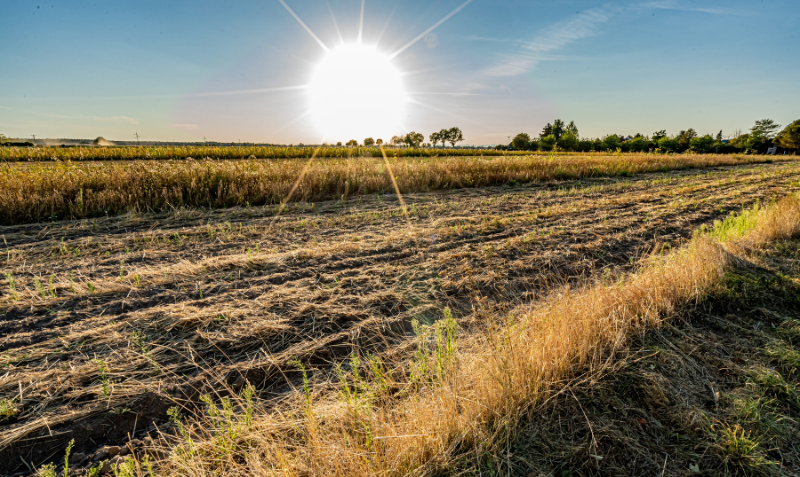
In the communication notice, the Commission says the European Water Initiative will build on the 2025 Water Resilience Strategy and the Ocean Pact, and would prioritise water efficiency, nature-based solutions and natural water retention, reuse, and drought and flood resilience.
Water security and critical water security infrastructure is one of 13 key policy areas identified in the Climate Resilience framework regulation proposal. However, water is crucial to many of the other areas identified, such as critical energy systems, public health, food security, crisis preparedness and response systems, and also Ecosystems and ecosystem services and biodiversity.
Preparations for the proposed Climate Resilience Law would require each member state to carry out national climate risk assessments by mid-2029, including at subnational level where relevant, and strategic plans by 2030. If adopted, drought, flood and supply risks would enter a binding planning cycle for national authorities. The European Environment Agency would produce the EU-wide assessment a year earlier, by 30 June 2028. Both would be repeated every five years.
Europe’s climate resilience depends on its ability to manage water
Water Europe responded to the announcement of the European Water Initiative and Climate Resilience proposals, recognising that they ‘explicitly recognise water security as a European priority’, adding: “The test will be whether they accelerate investment and implementation before the next drought or flood.”
The organisation believes a resilient Europe needs investment in digital as well as physical infrastructure: “These developments must support the delivery of a Water-Smart Society and of the Water Resilience Strategy. Assessing water risks should lead to measurable improvements in water efficiency, leakage reduction, safe reuse, ecosystem restoration and digital water management. Linking national resilience plans with river basin management plans, clear responsibilities and credible financing will be essential to turn planning into implementation.”
To achieve this, the European Water Initiative will need to build on the Digitalisation Action Plan for the Water Sector: “Europe’s climate resilience depends on its ability to manage water. The framework must now help turn that recognition into a Water-Smart Society.”
Water Resilience Investment Accelerator
Water groups continue to encourage the EU to press home the Polluter Pays Principle as a means of funding resilience projects. Another method of attracting investment in sustainable water management and resilience projects was launched by the EU alongside the Climate Resilience proposals.
The EU Water Resilience Investment Accelerator is a flagship action under the Water Resilience Strategy. It will be delivered by Green Assist, an advisory initiative under InvestEU, funded by the LIFE programme, and will support 20 pilot projects on natural water retention, clean water and water efficiency. It will bring together investors, solution providers and sectors facing water-related challenges. It focuses on innovative business models and projects with creative funding approaches, particularly private funding. The accelerator will promote these innovations, with the aim of speeding up investment in the field.
Climate and water initiatives will require additional sources of funding if Europe is to become resilient in the face of water-related shocks like long periods of drought or floods.
EU forecasts suggest that an extra €23 billion per year, or 0.1 per cent of EU GDP, is needed to close the current funding gap. The Accelerator is one method to attract greater levels of private investment to help build a more resilient Europe.
Which areas will the accelerator cover?
According to the EU, the accelerator will cover three thematic areas:
- Water efficiency and smart water solutions: Supporting innovative solutions that improve water efficiency, reduce losses, and promote more efficient and circular water use.
- Nature-based solutions for water resilience: Promoting nature-based approaches that strengthen climate adaptation, water retention, biodiversity and long-term resilience.
- Clean water solutions: Advancing technologies and systemic approaches to improve water quality, reduce emissions and support cleaner industrial systems.
Particular attention will be given to projects led by EU-based start-ups and small and medium-sized enterprises (SMEs), as well as EU-based farmers and local authorities. The aim is to support effective, scalable and locally driven water resilience solutions that can be replicated across Europe.
How will the Resilience Accelerator work?
The accelerator aims to:
- Give visibility to innovative financing solutions and good practices from successful projects, to encourage their uptake and replication across the EU.
- Draw on existing EU advisory instruments to help projects attract private finance and implement innovative financing models. The objective is to make these projects more bankable and more attractive to investors.
- Strengthen links between solution providers and potential beneficiaries to improve access to the financial sector.
- Draw lessons from the accelerator to help close the investment gap in water resilience.