Essenstial Guide: Taking desalination to the ocean
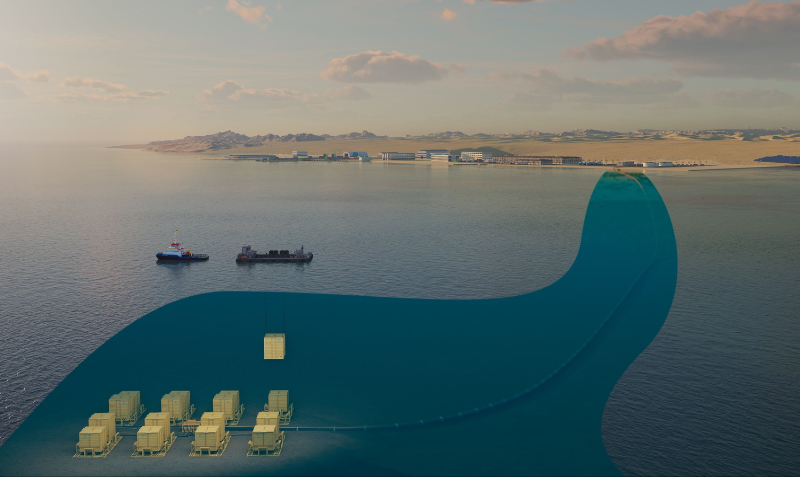
Can subsea desalination ease the world’s water woes? At the beginning of 2026, the UN declared that we have moved beyond a water crisis and are now living in a water-bankrupt world. Many countries have turned to desalination to ease the pressure on freshwater supplies, but it’s not always a viable solution. With ocean-based saltwater a potentially abundant source, another solution is gaining traction: subsea, or ocean-based, desalination, where modular, offshore systems use the natural hydrostatic power of the waves to drive the reverse osmosis process.
In this Essential Guide, we explore the need for alternative sources and the reasons why subsea desalination, in all its forms, might become a valuable part of the world’s clean water portfolio.

The need for alternative water sources
At the beginning of 2026, the UN released a damning verdict: the world has moved beyond a water crisis and into a state of global water bankruptcy. The message could not have been clearer. Many regions were experiencing persistent shortages, and water systems were not expected to return to historical baselines without significant action.

Kaveh Madani, Director of the UN University Institute for Water, Environment and Health, declared that ‘normal is gone’, and that bankruptcy was defined by both insolvency and irreversibility.
His choice of financial terminology to describe the world’s water problems was purposeful. He referred to insolvency as ‘withdrawing and polluting water insolvency and irreversibility and safe depletion limits’, and irreversibility as the ‘damage to key parts of water-related natural capital, such as wetlands and lakes, that makes restoration of the system to its initial conditions infeasible’.
But like financial bankruptcy, this is not the end of the story. “It is the start of a structured recovery plan: you stop the bleeding, protect essential services, restructure unsustainable claims, and invest in rebuilding,” he noted.
Recovery requires alternative water sources
Recovery requires collaborative action, transnational initiatives, and funding, but most of all, the world needs solutions with real-world and lasting impact.
Taking action is imperative: according to the World Resources Institute, one quarter of the world's population faces extremely high water stress each year, using up their entire available water supply. Half the global population live under highly water-stressed conditions for at least one month a year.
Water resources are facing greater competition than ever, thanks to growing demand from industry, agriculture, and human needs, while freshwater sources are shrinking, and the climate change impacts are being felt worldwide: 2025 was one of the driest years for rivers in 35 years, following seven years of abnormal river flows; it was also one of the three warmest years on record, and although slightly cooler than 2024 and 2023 (the record holders), the past 11 years have been the warmest on record.
Turning to desalination to ease the water crisis
Sometimes, solutions are staring you in the face. At least, one part of the solution. Approximately 71 per cent of the world’s surface is covered by water, with more than 97 per cent found in seas and oceans. Samuel Taylor Coleridge, writing in 1834, perhaps had this on his mind when he wrote The Rime of the Ancient Mariner, in which he lamented: “Water, water, everywhere, Nor any drop to drink.”

Desalination is not new; indeed, the salt trade made use of one method, way back in the ancient world. Then, the idea was to evaporate water to collect salt. Aristotle wrote about collecting the condensed evaporation of salt water to drink.
While the first large-scale desalination plant was built in 1930, at Aruba in the Netherlands Antilles, the early plants all used a variant of the same distillation process first described in fourth-century BC Greece.
Today, it is an advanced industry that is used around the world to provide fresh, clean water for industry, agriculture and domestic use. For countries with high demand and a shortfall in available resources, desalination offers a vital source of clean water.
The Gulf States rely heavily on desalination, having a per capita average of natural freshwater of 120 m3, which is far below the UN baseline for water scarcity of 500 m3.
Between them, the six Gulf states produce 40 per cent of the world’s desalinated water capacity, running at 7.2 billion m3 a day, roughly 122 m3 per capita per year. The estimated total installed capacity is said to be higher.
The problem with land-based desalination
Land-based desalination is becoming increasingly important critical infrastructure. It is now a mature technology and can be located in coastal areas, near areas of high demand, such as industrial parks, data centres and residential areas. Resource recovery adds another element of commercial opportunity to land-based plants, and efforts are being made to reduce costs and environmental impacts.
However, land-based desalination is not without problems. For a start, they require a significant amount of land. An average-sized plant could require anywhere between 25 m3 and 200 m3.
Subsea desalination addresses three important challenges - Blanca
The largest are on a different scale entirely: the Ras Al-Khair Power and Desalination Plant, located 75km NW of Jubail, Saudi Arabia, is capable of producing 1,036,000 m3/day. Its construction included 3 km-long discharge pipes, an intake dredged channel with two 1.4 km-long rock breakwaters and a seawater intake pumphouse, while civil and building works covered a total area of over 55,000 m². Obviously, this is not an option for every country or region.
High energy use, heat and carbon emissions, and brine disposal are also concerns, regardless of the plant’s size or output capacity.
What is subsea desalination?
Non-land-based desalination is a clunky term, but it best describes the fact that sea-based solutions come in all shapes and sizes. Some are based on the seabed, some float on the surface, and they all look quite different from each other. However, certain factors are held in common: they use natural wave energy to power reverse osmosis systems and pump clean water to the shore.
Taking the process offshore removes the need for large coastal land use. It also reduces the energy required to generate clean water by as much as 50 per cent compared to land-based plants.
As Borja Blanca, CEO at Aqua Advise, told Aquatech Online: “Subsea desalination addresses three important challenges facing conventional seawater reverse osmosis (SWRO): energy consumption, environmental impact, and the availability of suitable coastal land.”
Subsea desalination is usually delivered in modules, which also makes it scalable to meet needs. They are ideal for islands and coastal areas that have space constraints and sensitive ecological environments.
By moving the technology deep underwater, desalination also becomes more resilient to climate events like storms, floods, and wildfires, as the pods are much less likely to be disturbed deep in the ocean.
A deeper dive into the benefits of subsea desalination
Conventional land-based desalination requires large, fixed coastal developments that use high-pressure pumps to create the pressure needed for reverse osmosis to occur. They also discharge highly concentrated brine into shallow, ecologically sensitive coastal waters.
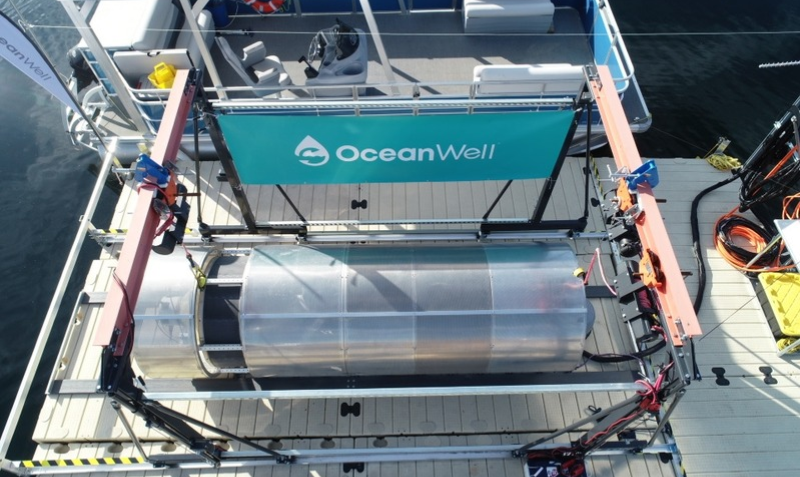
Robert Bergstom, CEO of OceanWell, explained that his company’s solution reduces energy consumption by 40 per cent compared with conventional systems by using the natural hydrostatic pressure found in the ocean: “In shallow pilot testing, our system achieved approximately 1 kWh per cubic meter of water treated. Pairing lower-energy desalination with increasingly renewable electricity can further reduce the footprint.”
One major advantage of subsea desalination systems is their scalability. Traditional desalination projects often require substantial upfront capital, long construction timelines and significant coastal infrastructure.
Systems can expand as demand grows rather than requiring one large upfront build - Bergstrom
“OceanWell’s modular design is central to scalability,” adds Bergstrom. “One pod can produce up to one million gallons of freshwater per day, and systems can expand as demand grows rather than requiring one large upfront build.”
For island-based communities and businesses with limited space or delicate ecosystems, the ability to produce water from sea-based desalination strengthens security and improves public health. It also reduces the need for costly water imports, which rely on trucks, ships, or ducted infrastructure for transport.
Lars Munkoe, chief growth officer at Exowave, adds that the “distributed infrastructure” associated with sea-based desalination avoids “the cost and vulnerability of centralised water networks”, which make the solution ideal for smaller, and even off-grid communities that cannot afford traditional desalination.
Subsea desalination forms part of broader strategy
Subsea desalination should be seen as another entry into the portfolio of additional water sources, rather than a replacement for traditional desalination.
“Subsea desalination is not needed because conventional SWRO cannot produce freshwater efficiently,” asserts Blanca. “It is needed because certain locations demand a different balance between energy efficiency, environmental footprint, land availability and infrastructure costs.”
And as Bergstrom explains, it can add to a broader regional water-management strategy. “At scale, it could potentially serve a broad mix of municipal and industrial customers: in addition to supplying drinking water for coastal communities, it could provide reliable water for manufacturing and other water-intensive industries, such as data centres and beverage production, in regions where traditional supplies are increasingly constrained.”
Beyond municipal drinking water, subsea desalination could be particularly relevant for other applications, such as coastal refineries, tourism developments, and military outposts.
Adressing environmental concerns of subsea desalination
Munkoe points out the energy costs of traditional desalination, which he says “relies heavily on grid electricity or diesel-powered generators, creating high operating costs and carbon emissions”.
He adds that it operates quietly, without the large pumps, motors, generators, and energy recovery devices required by conventional systems.
One concern surrounding traditional desalination is the effect of intake and outflow, especially brine discharge, on coastal ecosystems.
Bergstrom says that OceanWell has been designed to be environmentally responsible. “Our LifeSafe™ intake system is designed to minimise marine impacts, using fine 0.5 mm screens and low intake velocities to help protect marine organisms without any chemical pre-treatment,” he explains. “The outflow has a much lower salinity concentration and is dispersed through risers into deep-water currents, where it rapidly diffuses to ambient ocean salinity.”
No chemicals are required for treatment; it is fully mechanical - Bergstrom
Subsea systems also require fewer chemicals, if any, because of the low microbial load at the depths they operate.
Bergstrom explains: “At 400m deep, the system operates in the aphotic zone, where only one per cent of sunlight permeates. This prevents photosynthesis, meaning the feedwater is much cleaner. This means no chemicals are required for treatment; it is fully mechanical. This is important for both membrane longevity and ocean health.”
This depth offers ocean-based desalination another advantage, as Blanca explains: “The main advantage of subsea desalination is its potential to produce freshwater with less energy and a smaller coastal footprint, while benefiting from more stable deepwater conditions.”
Other potential benefits and future use
Reducing reliance on shared resources is another benefit of modular, sea-based desalination systems. For example, OceanWell, which produces the Water Farm 1 system, is based in California, which relies heavily on water supplied by the Colorado River system. Negotiations have been ongoing and fractious between the seven US states that depend on the river for water, with reservoir levels remaining at record lows for many years and demand growing.
It can reduce its reliance on Colorado River allocations - Bergstrom
“Once Water Farm 1 is completed, there is potential for a water exchange with Nevada and Arizona to alleviate Colorado River shortages,” explains Bergstrom. “If Southern California gains access to a new, reliable freshwater supply from Water Farm 1, it can reduce its reliance on Colorado River allocations. That shift would allow more water to remain in Lake Mead and Lake Havasu for delivery to Arizona and Nevada, helping stabilise the region’s strained water supplies without constructing new interstate pipelines.”
What are the best environments for subsea desalination?
Sea-based desalination is particularly well suited to water-stressed coastal regions that need a new, drought-resilient source of freshwater but want to avoid the footprint and upfront scale of a conventional desalination plant, Bergstrom stated.
“The strongest opportunities are therefore likely to be coastal markets facing persistent water scarcity, growing municipal or industrial demand, and constraints on traditional water supplies.”
Sea-based desalination has the potential to become an important part of the future global water supply mix - Munkoe
Ideally, as Blanca explained: “Where deep water is accessible close to shore, coastal land is limited or expensive, and conventional desalination faces significant energy, environmental or permitting constraints. This includes environmentally sensitive coastal areas and locations affected by algal blooms or variable seawater quality.”
Blanca adds that: “Subsea desalination has the potential to evolve from a niche solution for locations with favourable bathymetry into a broader alternative to conventional desalination. However, this expansion will depend on improvements in technology reliability, modularity, maintenance procedures and overall economics.”
Main challenges
Some of the main challenges for the expansion of subsea desalination include: the complexity of engineering and installation, environmental and regulatory scrutiny for what is still a novel technology; repairs and maintenance; current capacity limitations.
“The principal challenge is operational reliability and maintenance,” states Blanca. “While RO membranes are well established, servicing them underwater introduces considerable complexity. Membrane cleaning, replacement and equipment retrieval must be designed to minimise offshore intervention costs and production downtime.”
Perception also presents a challenge. “From a commercial perspective, subsea desalination must also overcome limited operating references, higher perceived technology risk and the difficulty of securing conventional performance guarantees,” Blanca adds, who sums up the technical challenges.
“The greatest challenge for subsea desalination is not proving that reverse osmosis works underwater, but demonstrating that the technology can operate reliably, be maintained economically and deliver freshwater at a competitive cost over a 20–25-year project life.”
Performance depends on local wave conditions - Munkoe
As he explains, the technology's long-term value will depend on demonstrating that the advantages outweigh the additional complexity and risks of operating critical equipment underwater.
Subsea desalination is not a better solution everywhere. Its future competitiveness will depend heavily on local conditions. As Munkoe says, “Performance depends on local wave conditions”. These include water depth, distance from shore, wave availability, bathymetry, maintenance costs and the ability to demonstrate reliable long-term operation.
Bergstrom agrees; OceanWell is targeting locations where the seafloor reaches depths of approximately 400 m, within a few miles of the coastline: “If the required depth is too far offshore, the cost of pipelines and power connections can become prohibitive.”
Case studies: subsea desalination in action
Flocean
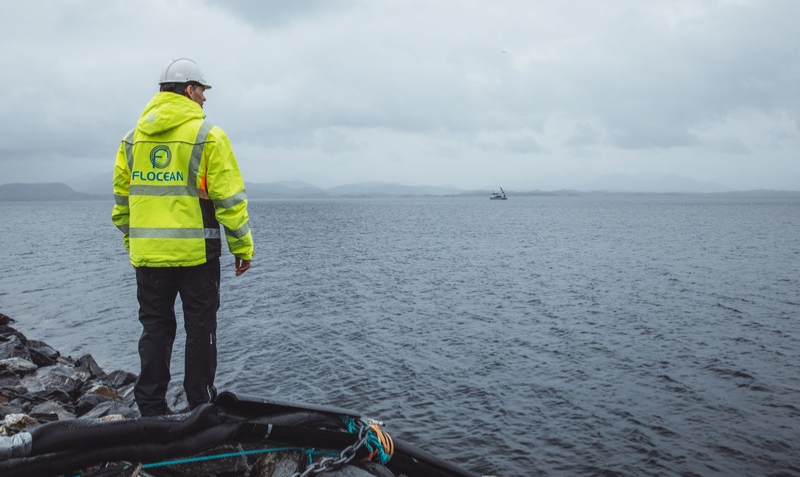
Norwegian company Flocean began commercial operation of its first subsea desalination plant in June 2026. Located off the shore of Mongstad, an industrial complex on Norway’s west coast, Flocean One is producing one million litres of drinking water every day. Operating at 500 m below the water’s surface, the system’s modular desalination pods use the ambient hydrostatic pressure at this depth (40-50 bar), which matches the pressure needed for reverse osmosis, eliminating energy-intensive feed pressurisation. This reduces energy consumption by 40-50 per cent, compared to traditional systems.
Pumps sit on the seafloor where the pressure of the ocean sucks water through the membranes. The ocean provides all of the energy, which goes only into product water, not the entire feed stream.
From here, the clean water travels to shore through a subsea pipeline.
OceanWell
OceanWell is developing Water Farm 1 in Santa Monica Bay in partnership with Southern California water agencies. It is designed to deliver 10 million gallons of freshwater per day and scale in phases to up to 60 million gallons per day. The current goal is first water by 2030, pending feasibility and the regulatory pathway being developed with California agencies.
Water Farm 1 is an important step toward proving that subsea desalination can become a reliable, utility-scale source of freshwater and advancing the technology toward broader commercial deployment. Meanwhile, OceanWell is working toward ocean testing and a larger Pacific Ocean demonstration.
Santa Monica Bay is a prime location for the technology. The bay reaches a depth of 400 m just a few miles offshore, allowing the company to run a pipeline from its pods to existing coastal water infrastructure at a relatively low cost.
Internationally, the company is also working with Eau d’Azur, the public utility managing water and sanitation services in Nice, France, to conduct a first deployment study of OceanWell’s subsea water farm technology in France.
OceanWell’s goal is to develop 15 water farms worldwide over the next decade and create a new, climate-resilient water supply to help alleviate water scarcity.
Ocean Oasis
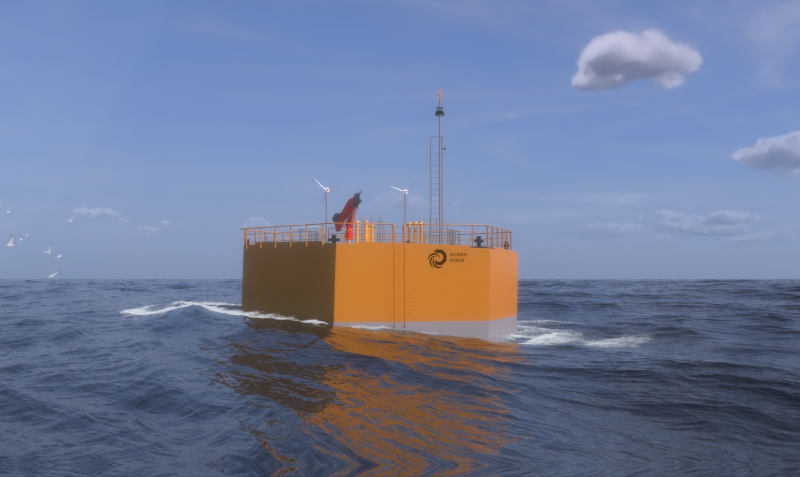
Ocean Oasis uses wave power to drive desalination. Rather than operating on the seabed, Ocean Oasis offers a modular solution consisting of free-floating buoys that are moored to the sea floor.
Wave power is harvested through the relative motion between a large body of water in the central moonpool and the buoy. This relative motion pressurises prefiltered seawater, driving a conventional reverse osmosis desalination process. Water is led to shore using a standard pipeline on the seafloor.
Once installed, the buoy is fully autonomous and uses no chemicals or other harmful substances. Brine is discharged in relatively deep water where it is quickly dispersed.
The company has piloted its system off the shore of Gran Canaria and is in the process of developing its first commercial deployment in partnership with the public water utility of Gran Canaria. Once up and running, it is expected to supply 2,000 m³ of fresh water per day to approximately 15,000 people.
Exowave
Exowave’s ExoMare uses wave energy converters as mechanical pumps, continuously capturing wave motion and converting it into hydraulic pressure. It is designed for distributed freshwater production in the small-to-medium capacity range of <50 m³/day.
Unlike some subsea desalination operators, the reverse osmosis stage still happens onshore. Pressurised seawater is delivered directly to the onshore reverse osmosis unit through a subsea high-pressure hose (landfall). This approach eliminates the need for conventional high-pressure pump systems and energy recovery devices.
Electricity is only used for system monitoring, controls, communication, and valve actuation, which means an ExoMare-20 system producing 20 m³/day typically consumes less than 100 watts of electrical power.
ExoMare operates as a distributed desalination system with relatively small flow rates. The moderate volumes involved simplify brine management compared with large industrial desalination plants. Brine can be safely returned to the sea in accordance with local environmental regulations.
ExoMare states that it offers an unparalleled levelised cost of water as low as €1.5/m3 for this market segment for zero-emission desalination. Its wave energy converters are installed in shallow waters near shore (3m to 5m deep), which supports low installation cost and easy access for maintenance, compared to offshore installations.
The company is preparing the installation of ExoMare-04 (nominal 4m3/day) in Sicily, with other water-scarce areas in the pipeline.
Subsea desalination: Adding to the water source portfolio
The future for subsea desalination is certainly exciting, as Munkoe neatly summarises:
“The long-term vision is compelling: oceans cover more than 70% of the Earth's surface and contain both an immense water resource and a vast, untapped source of renewable energy,” he said. “By combining both resources in a single solution, sea-based desalination has the potential to become an important part of the future global water supply mix.”
Blanca does not expect it to replace conventional land-based desalination. “Both technologies will coexist, with subsea desalination gaining market share where its particular advantages translate into better economics and environmental performance.”
Before adding: “Ultimately, its success will be determined less by what is technically possible underwater and more by whether it can deliver freshwater more competitively and reliably than the alternatives.”