Viewpoint: Jennifer Möller-Gulland
Water risk needs to be taken seriously; we all know that. But what if we aren’t measuring and assessing risk correctly? What if we base our policy and investment decisions on risk assessments that are incomplete and inaccurate? And if we are, what can we do to ensure our water risk assessments are both meaningful and accurate?
According to the WWF, the percentage of the global population exposed to high water risk is likely to increase from 17 per cent (2020) to 51 per cent by 2050. So, half of the world’s population will be exposed to high water risk in just over two decades.
The impact on global GDP is also significant. In 2020, 10 per cent of global GDP was exposed to high water risk. By 2050, the WWF predicts that almost half of global GDP will be exposed (46 per cent).
Aquatech Online talks to Jennifer Möller-Gulland, water risk expert at the Water Security Collective, about water risk and why it is often misunderstood in corporate decision-making.

Abstract concepts that are already having a huge impact
“It is almost incomprehensible to imagine what 2050 would look like if those figures become reality,” Möller-Gulland begins. “This is why I am passionate about working towards addressing water risks. I want to help prevent those scary scenarios from happening.”
One of the big tasks when trying to address water risks is turning what can seem an abstract concept into something people can relate to.
For companies, the reality is already being felt. According to a survey conducted by CDP in 2018, 69 per cent of listed equities (listed via CDP) were already feeling the effects of exposure to water-related risks. The two major reported impacts were higher operating costs (26 per cent) and plant/production disruptions leading to reduced output (25 per cent). Eight per cent were already experiencing disruptions to their water supply.
“These effects were reported in 2018, two years before the WWF baseline. Now, imagine what these figures would look like in 2050,” says Möller-Gulland. “Companies are taking action by incorporating water risk assessments into their operations, supply chains, sustainability strategies, and more. These assessments help them to understand their exposure to water risk, which then drives strategies designed to identify and mitigate risk.”
Another study by the CDP (2020) makes clear that the cost of not mitigating water risks is five times more expensive than taking action - $55 billion to take action; $301 billion to do nothing.
Cities are also experiencing the effects of water risk exposure: Tehran, Jakarta, Sao Paolo, Cape Town, Montevideo, and Mexico City have all faced Day Zero, or worse.
First, the good news, but then…
“It’s important to note that this has been happening when exposure to water risk is considered low on a global scale,” begins Möller-Gulland. “The good news is that governments and companies are taking water risk far more seriously than 10 years ago,” Möller-Gulland explains.
“With more awareness of water risk, and with more companies pledging to take action, we have seen the growth of accountability frameworks, like CSRD in the EU, CDP, Alliance for Water Stewardship, etc. These reveal what companies are doing.”
However, the quality of action will depend on the quality of the assessment.
“In many cases, water risks are being assessed too narrowly or incorrectly. Key risks are being overlooked. Global tools are being used beyond their intended design.”
The result: decisions are being made based on an incomplete understanding of risk, which leads to investment mistakes and the root causes of water risk not being addressed.
“I believe there are three key reasons why water risks are often misunderstood in corporate decision-making processes.
- We mistake water stress for water risk
- Water risk tools can inform but also mislead decision-makers
- Water risks only drive action when they are framed for decision-makers.
Reason 1: Water stress does not equal water risk
Möller-Gulland believes that a false assumption undermines most water risk assessments: “The view that equates assessing water stress with risk is incorrect,” she states. “You can see why it feels reasonable because it is easy to understand, and it is widely used and accepted. There are global tools that make it seem easy to quantify and compare high-level water stress. The data from these tools looks technical, objective, and defensible.”
However, as Möller-Gulland explains, water stress is not a complete assessment of risk. It is only one of many water risk dimensions. “Even when the analysis of water stress looks rigorous, and even where there is evidence for it, you have not measured water risk. By accepting stress as the indicator of risk, you are instilling a false level of confidence and blinding yourself to other risks.”
She gives an example of why water stress is not the complete picture when it comes to risk.
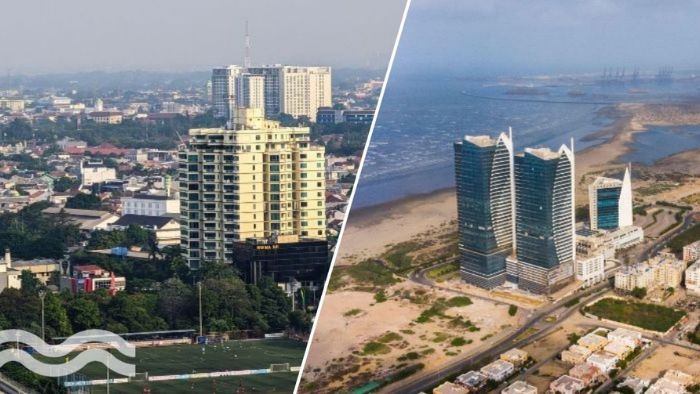
“Take Singapore and Karachi as two examples,” she begins. “If you look at the two cities from a water stress perspective, they are equal. To visit them, you would not think this. Singapore does not feel like it has the same water stress because it is managed differently. Singapore has better water governance, with better infrastructure investments that mitigate water risks.”
Using frameworks to understand risk
It is important to understand the risks, measure them accurately, and analyse them properly. To do this, you need a framework. You need a guide to help you understand risks and exposure, so that you make informed decisions.
“When I started looking at water risk, there were no standard frameworks available to help companies,” explains Möller-Gulland. “Other frameworks, such as those provided by the World Bank, WWF and ADB, were either too general or too specific and hard to use, so I developed the Water Risk Assessment Blueprint to bridge the gap. It offers a step-by-step framework that merges qualitative and quantitative data, which allows the user to efficiently and effectively conduct their own assessment and tailor it to their data situation.”
Understanding the dimensions of risk
Water risks can be assessed across three overall dimensions:
- Physical (resources)
- Infrastructure
- Governance risk dimensions.
Physical – you need to understand water stress metrics; how much water in a basin (for example) is actually usable to meet demand, taking into account factors such as pollution events; and the number of people affected and financial impacts of water-related disasters (both today and predicted in the future).
“One of the main objections I hear is that people can’t assess physical risks because they aren’t hydrologists,” explains Möller-Gulland. “This belief is a key reason why pollution and disaster risk are overlooked and not assessed. You do not need to be a hydrologist or even generate primary data. You can integrate existing data to help you understand exposure.
Infrastructure - you cannot ignore your infrastructure, even if you have plenty of available resources, no issues with floods, drought, or pollution. You still need to have infrastructure that can get water to where you need it. This is often overlooked.
“If you can’t move water to where you need it, that is a big risk. In some cases, it can be the biggest water risk,” states Möller-Gulland. “But how can we assess infrastructure risks across both basin and city levels? I like to assess it across seven dimensions.”
If you can’t move water to where you need it, that is a big risk. In some cases, it can be the biggest water risk
So, for cities, we need to understand:
- Water supply and demand – how much of the city's water demand can be met with formal water supplies, i.e. from the utility (today and in future), how much is lost to non-revenue water, and how much water is actually met with informal water supply, i.e. private boreholes, private water tankers, etc. Informal water supplies are often overlooked, but make a real difference to your water balance)
- Wastewater – how much wastewater is collected and treated - either onsite through e.g. septic tanks and private wastewater treatment plants, or offsite via the sewerage network and centralised wastewater treatment plants
- Critical infrastructure – what is the risk posed by the average age of critical infrastructure (i.e. dams get old and break); the frequency of natural disasters (climate change-related, building in unsuitable places, etc), and the frequency of terrorist acts that threaten critical infrastructure (both nationally and regionally).
“I often hear people say, ‘I’m not an engineer’ as an excuse for not assessing infrastructure risks, but you don’t need to know how to design pipes or water networks,” Möller-Gulland adds. “You need to be able to understand whether these systems work and how they fit into your water risk assessment.”
Governance – According to Möller-Gulland, this is the most ignored water risk dimension. “It often determines the risk exposure even more than physical water risks themselves,” she explains. “This is the difference between Singapore’s and Karachi’s exposure to water risk: water governance determines whether laws are enforced or not, whether infrastructure is built and maintained, whether pollution is controlled, and whether sources are protected. So, two places can face the same water risks but have different outcomes.”
Understanding governance, therefore, is vital to fully appreciating risk levels.
If governance weakens, you miss early warning signs
“If governance weakens, you miss early warning signs,” explains Möller-Gulland. “Strong governance can reduce risks even when physical risks are high; weak governance can amplify risks. We can assess governance across six dimensions. We need to understand:
- The legal and institutional framework – what do the laws cover, where are the gaps, what regulations implement the laws, and how are they enforced (often the biggest risk).
- The level of corruption – there is always some level present, it’s just how much it affects water management.
- Responsibilities and coordination – what ministries are involved in governance, how do they interact, and how effective is the coordination/communication between the national/local/basin level? What about planning documents, land use plans, groundwater plans, etc, how are they coordinated?
- Mobilising finance – is there enough finance, where does it come from, and is it being used effectively?
- Efficiency of public expenditure & Capacity – how capable are the people in the government, in companies, in NGOs, consultants, etc, in managing water and related risks?
“This section can feel overwhelming, but you do not need to be a political scientist. It does not involve political analysis. It comes down to data analysis, assessing how the governance in place can impact decision-making,” Möller-Gulland says, adding: “It does take more time than analysing physical and infrastructure risk, but it is a vital component of water risk assessment.”
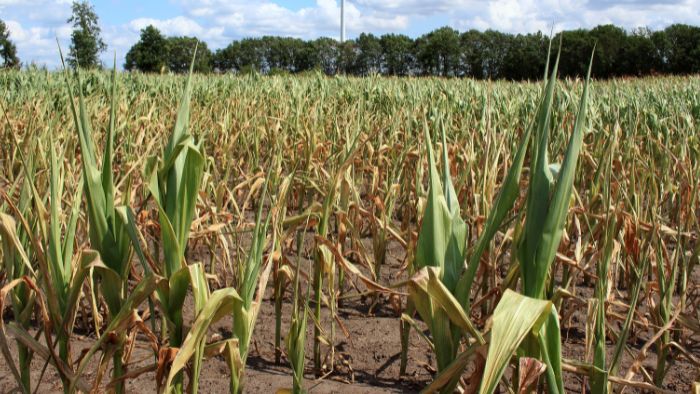
Physical, infrastructure, and governance risks overlap, influence and impact each other.
Water risk tools inform decisions, or mislead them
A range of free-to-use tools is available online. “These have really helped move the water risk conversation in the corporate world. However, they are designed to be used for a first high-level assessment, which means that you can’t use these tools for site-level specifications or to assess risk in a city,” asserts Möller-Gulland.
“They trade breadth for depth. They can’t distinguish between two sub-basin areas with very different risks, i.e. a rural area and a city in the same basin would carry the same assessment. They fail to identify key supply factors such as storage (dams, reservoirs), environmental flows, infrastructure, and large-scale water transfers between basins.”
These have really helped move the water risk conversation in the corporate world
“The most frequent mistake I see in the water space is that consultants and companies only use these tools, and so use them to assess site-specific water risks,” Möller-Gulland says. “This is rarely intentional; they just don’t have a method that allows them to use them as part of an overall assessment.”
Incorrect assessment of risk (supply, infrastructure, governance) can lead to costly mistakes being made by decision-makers – investments, policies, corporate KPIs, etc.
As a water risk assessor, you need to know when and how to use these tools to ensure they accurately inform decisions rather than mislead them.
Water risks drive action when they are framed correctly
Most water professionals are never trained in how to frame decisions in ways that gain decision-makers’ attention. Even the best water risk analysis can be overlooked by decision-makers.
“It is important to reframe how we present risk assessments. We need to contextualise our results and findings, and connect them to wider systems and other risks. The impact of exposure needs to be made explicit because, generally, decision-makers will not care as much about water as someone working in the sector,” Möller-Gulland says, before providing an example.
“Money is always a driver,” explains Möller-Gulland. “A corporation might respond to operational losses or supply issues, whereas a government might respond to GDP, public health concerns, impact on labour, etc.”
It is important to reframe how we present risk assessments. We need to contextualise our results and findings
She adds: “Essentially, you want to understand the client and what drives their decisions. Then you can frame water risk exposure in terms of impact and how it fits into the client’s existing decision-making logic, business plans, aspirations, development plans, etc.”
Möller-Gulland provides a real-world example of this ‘framing’ conversation, which took place in 2021 after a three-year study conducted by the World Bank at the request of the Indonesian government. Indonesia’s economic goal is to be ranked among the world’s top five economies by 2045. To do this, it needed annual GDP growth of 5.7 per cent. The World Bank study, however, revealed that the country was exposed to various levels of water risk and framed the analysis by explaining how it affected the government’s economic ambitions. Rather than growing annually by 5.7 per cent, without addressing water risks, the country’s GDP would fall by 7.3 per cent. In other words, the government would not achieve its goals by ignoring water risks.
So, what do you need to perform a water risk assessment?
To perform an accurate water risk assessment, you need:
- A framework that tells you what to assess, step-by-step.
- You will need to be able to work with and analyse secondary data (that has already been produced by specialists in their field, such as hydrologists and engineers).
- And, you will need to contextualise the evidence and prepare it in a way that decision-makers understand the real-world impact of not mitigating water risks.