Essential guide: Sludge, biosolids and bioresources
A range of processes is required to remove potential health risks, remove water and reduce the volume and weight of sludge to improve both the costs and options for disposal. With the correct treatment, sewage sludge can be transformed from what was considered a waste into a valuable resource and sellable product, also known as biosolids or bioresources.
.jpg?h=400&iar=0&w=1140)
What is sludge? Turning waste into a valuable resource
Sludge contains the organic matter separated from and generated during wastewater treatment. Biosolids are produced once this sludge has undergone treatment to remove pathogens and to create a stable product.
Biosolids can be used as an alternative to manufactured fertilisers to help play a role in soil quality and fertility improvements, as well as stimulate plant growth. As well as the potential production of an agricultural fertiliser, industrial and municipal sludge can be used to produce biogas for power generation.
Biosolids legal regulations
Depending on the country, biosolids must meet strict regulations and quality standards before being applied to land. The treatment and land application practices for biosolids and sewage sludge vary considerably between countries. In some regions, sewage sludge undergoes advanced treatment and land application is common, whereas in other regions, such treatment is unusual, and sewage sludge is disposed of as waste.
Most countries where land application is practised have regulations or guidelines defining the quality levels to be fulfilled for a safe application. These criteria are typically based on heavy metals and pathogen contents and apply to the input materials and/or the final product.
What is sewage sludge?
Sewage sludge is defined as the solid, semi-solid, and liquid residue separated from or created during municipal wastewater treatment. These plants may also receive sludge imports from other facilities, such as household septic tanks or small treatment plants. Due to the enormous volumes of wastewater being treated around the world, this organic waste must be properly managed.
Types of sludge
There are two main types of sludge: primary and secondary.
- Primary sludge is principally the settled solids removed from the wastewater through sedimentation.
- Secondary sludge is principally the biomass created through biological treatment, including activated sludge and trickling filters.
Sludge benefits and concerns
Sludge can be rich in nutrients, including nitrogen and phosphorus. As a result, once treated, this organic matter can be spread onto land as a fertiliser or an organic soil improver.
However, depending on the inputs to the wastewater treatment plant and the processes used on-site, the sludge can also contain heavy metals and poorly degradable trace organic compounds.
Monitoring for these substances and applying a risk-based approach to the use of biosolids on land can help mitigate any problems. Such an approach is set out in Directive 86/278/EEC, and applied across the EU, as one example.
Switzerland, Germany and the Netherlands have restricted the recycling of sewage sludge on land due to concerns about associated risks; instead, incineration of sludge is a common practice.
Wastewater sludge process
Sludge processing, treating sewage sludge for reuse, aims to minimise volume and pathogens, ensuring a stable product for land recycling.
A secondary goal is to produce biogas for energy and recover valuable resources like phosphorus as struvite.
Various treatment methods, including thickening and dewatering, and steps like anaerobic digestion, composting and thermal treatment, are utilised for these purposes.
Stages of the sludge treatment
The sewage sludge treatment process can include thickening, digestion and dewatering processes:
Thickening
A crucial step in wastewater treatment , thickening occurs both before and after digestion and dewatering processes.
According to Suez, thickening reduces sludge volume, optimising conditioning, stabilisation, and dewatering while minimising facility size and operating costs.
Methods such as dissolved air flotation and rotary drum thickening are commonly used, yielding sludge with 2–8 per cent dry solids before dewatering, typically increasing to 20–35 per cent after.
Dewatering
Ahead of the final disposal, the remaining sludge is dewatered. With the sludge still containing high levels of water, it’s very important to dry and dewater the sludge.
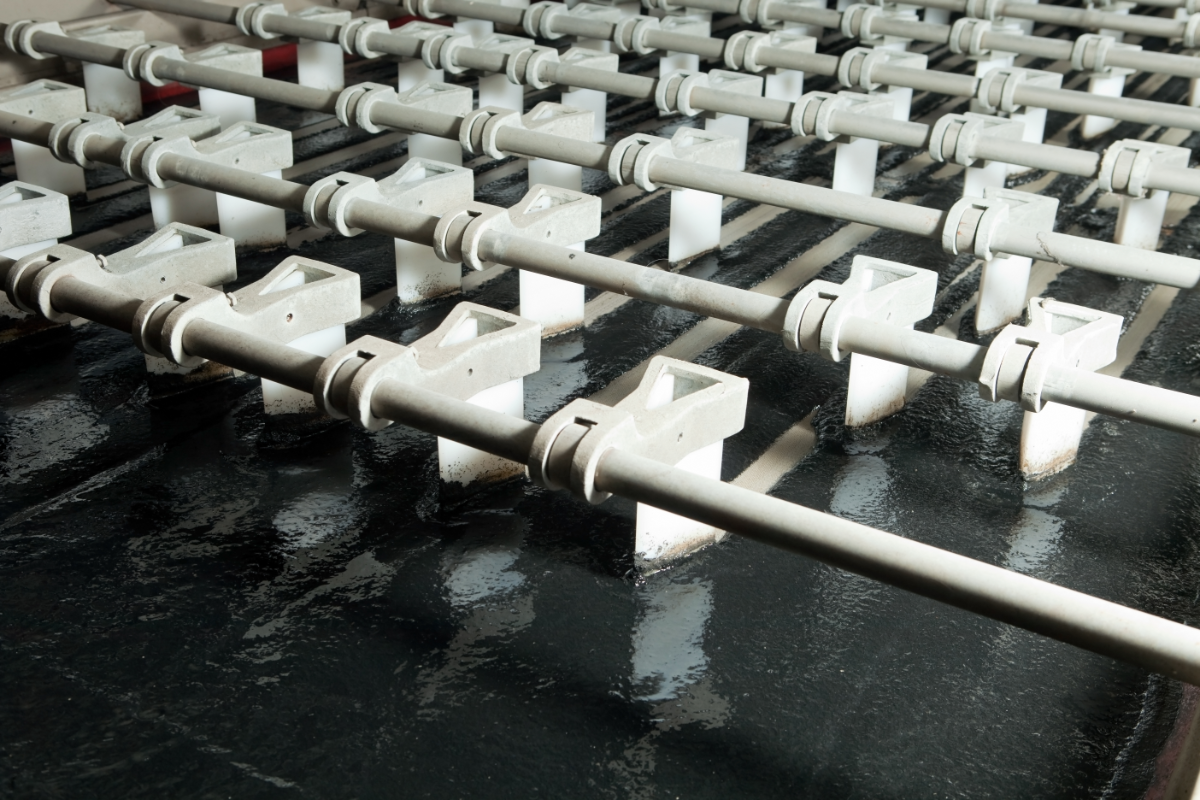
Various processes can be used for this process – sludge-drying beds are a common method, although it can be time-consuming.
An alternative involves solid-liquid separation devices, including centrifuges, rotary drum vacuum filters, belt filter presses, screw-presses and centrifuges.
The centrifuge process enables water retrieval and the easier handling of solid waste in shorter durations, at reduced costs .
Furthermore, to help improve dewatering, flocculation aids can be added – polymers mainly based on polyacrylamide.
Digesting
Anaerobic digestion reduces sludge volume by breaking down biomass without oxygen, yielding biogas.
Anaerobic microorganisms convert organic matter into methane, with mesophilic (36 °C) and thermophilic (50 or 55 °C) options impacting biogas yield.
Sludge pumps: designed and built to be tough
Sludge is pumped between treatment processes and can be conveyed in a more liquid form across a site.
Sludge pumping requires dry or submersible wastewater pumps that are specifically designed to pump liquids with high solids content.
To pump viscous liquids containing various amounts of solid particles, the pumps are designed so that they do not get clogged by the slurry or sludge content.
Furthermore, a high-powered mechanism is essential to pump sludge, as it not only contains corrosive and volatile content, but it is also heavy.
According to Premier Fluid Systems , it’s important to choose the right pump for the right category: settling and non-settling.
For settled sludge, coarse particles form, leading to an unstable mixture. For non-settling sludge, fine particles with low-wearing properties are present.
What are biosolids?
Biosolids is a term used, particularly in the United States, for the product created following sewage treatment that can be used as a soil conditioner.
Biosolids can contain essential plant nutrients and organic matter that can be recycled as a fertiliser, as well as a soil additive.
The Environmental Protection Agency (EPA) defines biosolids as nutrient-rich organic materials derived from treating domestic sewage.
Differences between biosolids and sludge
Differentiating between biosolids and sludge varies by region.
In the US, biosolids are the product of sewage treatment, while sewage sludge refers to untreated solids from the wastewater treatment process.
In contrast, in Germany, sludge is applied to land.
The term biosolids was introduced in the early 1990s to distinguish treated sludge approved for land application.
According to the Australian Water Association , biosolids may contain macro- and micronutrients essential for plant growth.
Using biosolids as fertiliser
Severn Trent Water states that biosolids containing essential crop nutrients such as nitrogen, phosphate and sulphur can supplement or even replace manufactured fertilisers.
EPA-certified biosolids, when applied at regulated rates, have been proven to significantly enhance crop growth and yield in agriculture.
Benefits of biosolids fertiliser
Biosolids improve soil quality by enhancing workability and drainage in heavy soils and increasing water-holding capacity in lighter soils.
In the US, about half of all biosolids produced are utilised on less than one per cent of agricultural land. In the UK, approximately 80 per cent of biosolids are recycled to land.
The future of sludge: What else could sludge be used for?
Royal HaskoningDHV and United Utilities are exploring new sludge-derived materials via the Kaumera biopolymer pilot .
Pyreg recently built its largest factory in Australia , producing biochar from sludge.
Researchers at Nanyang Technological University have demonstrated the potential of using solar power to convert sewage sludge into green hydrogen and animal feed .
The key will be in removing harmful contaminants and regaining public trust.
-Aquatech Online would like the thank Karyn Georges, head of consulting for Isle Utilities in the UK, for her support in producing this essential guide.