Driving innovation through process engineering, modelling and experimental research
Laurence Strubbe has always been fascinated by mathematics and science.
“I enjoy understanding how things work in detail and breaking down complex problems into something logical and measurable. That curiosity naturally led me towards engineering and research.”
At the same time, water has always played an important role in her life.
“Whenever I felt overwhelmed, I would go swimming. Being in the water helps me disconnect from the noise of everyday life, clear my mind, and put things into perspective.”
In that sense, her connection to water is both professional and personal, and perhaps it is no surprise that she has developed a career addressing one of the world’s growing problems: water scarcity.
An educational journey that led to water
Strubbe studied Bioscience Engineering at Ghent University, specialising in Environmental Technology, because she was attracted to the combination of engineering and the living environment.
“I was particularly interested in process engineering and technologies for treating soil, air, and water,” she tells Aquatech Online.
“Of those three, water quickly stood out. It combines so many fascinating biological, chemical, and physical processes, while also having a very direct impact on society and the environment.”
The strong expertise in water research at the bioscience engineering faculty of Ghent University played a role in her choices.
The strong expertise in water research at the bioscience engineering faculty of Ghent University played a role in her choices.
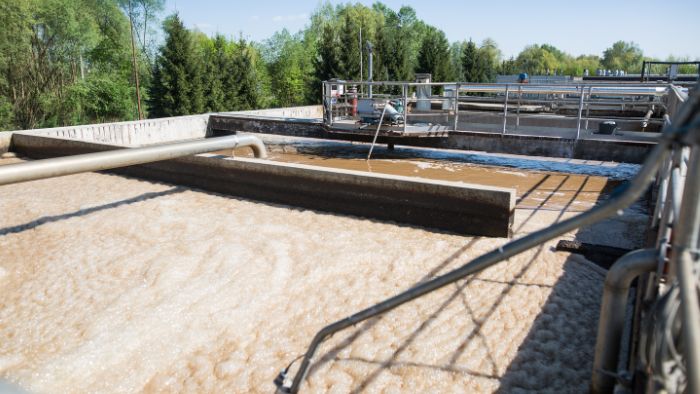
From education to solving real-world water problems
Skipping forward slightly (we’ll step back to postdoctoral research below), following her studies, Strubbe’s career path has led to her role as a researcher in the water team at VITO, the Flemish Institute for Technological Research.
“Our team is based in Belgium, Ostend, near the North Sea, and is a relatively new team, she begins. “We are building a completely new lab and pilot hall, which will be ready this summer.”
VITO’s water team and the new building were established following increased investment from the Flemish government to address one of the region's biggest challenges: water scarcity. Despite being a highly industrialised region, Flanders is one of the most water-stressed areas in Europe, making a reliable and sustainable water supply essential for both society and industry.
“My background is in biological wastewater treatment,” she adds. “I focus on making treatment processes more compact, energy-efficient, and environmentally sustainable, with a particular interest in reducing greenhouse gas emissions such as nitrous oxide (N₂O). My work combines experimental research, mainly through pilot-scale installations, with process modelling to better understand system behaviour and develop innovative design and operational strategies.”
Ultimately, I want to help develop wastewater treatment systems that not only clean water efficiently but also contribute to a circular, climate-neutral future
She has recently become increasingly interested in the link between water and energy. As part of VITO's Water and Energy Transition Department, she explores how wastewater treatment can contribute to a more sustainable energy system and vice versa.
“One topic I find particularly exciting is the integration of renewable energy and green hydrogen production with wastewater treatment. Electrolysers produce high-purity oxygen as a by-product, and I am investigating whether this oxygen can be used to improve the efficiency of biological wastewater treatment while reducing energy consumption and N₂O emissions.”
She continues: “At the same time, I am interested in how treatment plants can operate more flexibly to align with fluctuating renewable energy availability while maintaining treatment performance and minimising their carbon footprint. Ultimately, I want to help develop wastewater treatment systems that not only clean water efficiently but also contribute to a circular, climate-neutral future.”
Young water professionals and leadership
Strubbe was recently selected for the International Water Association (IWA) LeaP Leadership Programme for young water professionals. The programme is organised by the IWA to empower emerging leaders in the global water sector, selecting 12 exceptional young professionals from diverse regions and backgrounds to participate in a year-long journey focused on leadership development, professional growth, and global networking. It proved to be a rewarding experience.
“What made it so valuable was that the learning happened very naturally. Throughout the year, I was surrounded by eleven other ambitious and motivated young water professionals from around the world. Simply seeing how they took initiative, communicated, and stepped into leadership roles made me reflect on my own approach and broadened my perspective.”
Leadership is not about age, seniority, or having a particular title. It is about what you do, how you interact with others, and how you help people move forward together
The masterclasses helped put words and frameworks around things she was already observing, increasing her awareness of different leadership styles and behaviours.
“For me, leadership starts with awareness of yourself, of others, and of the impact you have on the people around you,” she says. “The most important lesson I took away from the programme is that leadership is not about age, seniority, or having a particular title. It is about what you do, how you interact with others, and how you help people move forward together. That insight continues to shape the way I approach collaboration, research, and my role within the water sector.”
Internships and a master’s degree
A defining moment during her studies was an internship at Avecom, a spin-off company founded by Prof. Willy Verstraete.
“Although he was officially retired, he was still actively involved and guided me throughout the internship. He sparked my interest in the biological nitrogen cycle and in research itself.”
Verstraete proved an inspirational teacher, providing Strubbe with a realistic view of innovation.
“I saw how promising research results were discussed with industry for scale-up, but also learned that not every scientific success becomes a techno-economically viable solution. To this day, he remains a mentor whom I can always email or call for advice.”
For her master's thesis at Ghent University, Strubbe worked on mechanistic modelling of reverse osmosis membranes in collaboration with Farys and Tereos.
“I enjoyed combining mathematics with process engineering and using data from a full-scale RO plant. The project strengthened my quantitative skills and confirmed how much I enjoyed using models to better understand and optimise environmental processes.”
This did bring a realisation that she missed the biological aspects that had first attracted her to environmental engineering.
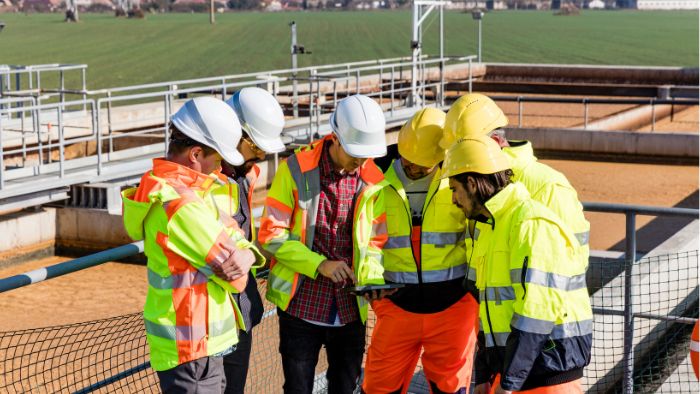
A defining question
“In the final year of my master's, I particularly enjoyed the Advanced Wastewater Treatment course taught by Prof. Eveline Volcke. Her way of explaining biological treatment processes through both mathematical models and physical interpretation immediately resonated with me.”
So much so that Strubbe asked the professor how she could further deepen her knowledge in the field.
“She asked me why I was not pursuing a PhD? I realise now that this was a very defining question for my current career. During my PhD with her, I focused on optimising aerobic granular sludge technology (Nereda) through modelling and experimental research.”
Close collaboration with Aquafin and Haskoning proved invaluable, particularly through long-term contact with Edward van Dijk, now Head of R&D for Water Technology Products.
She asked me why I was not pursuing a PhD? I realise now that this was a very defining question for my current career
“These interactions helped me keep my research connected to practice. At the end of my PhD, Edward brought me in contact with the design team of Nereda to see how my results could be implemented to optimise their current design strategy, which was really rewarding.
During postdoctoral research at Eawag in Switzerland, Strubbe continued to value strong links with practice.
“I interacted closely with Upwater, an Eawag spin-off specializing in N2O monitoring and mitigation. Regular discussions helped shape my research questions, and it was especially rewarding in the end when I presented my overall research outcomes to them: I was told that they would immediately use them to develop a decision tree for N₂O mitigation.”
Challenges lead to career highlights
Strubbe cites the one-dimensional aerobic granular sludge model that she developed during her PhD as something she is proud of.
“The model incorporated the dynamics of the alpha factor, a ‘mysterious factor’ (courtesy of Prof. Diego Rosso) that strongly influences oxygen transfer efficiency but is still not fully understood. I spent a large part of my PhD developing, calibrating, and validating this model.”
There were many moments when it felt like she was not making progress, she adds, “but when it finally started working, it was really rewarding. For the first time, I could use it to test different scenarios and gain insights that were directly relevant to the Nereda design team at Haskoning”.
Seeing those emissions increase made me so happy because it meant I had finally found control handles
Another highlight was her postdoctoral research at Eawag on nitrous oxide (N₂O) emissions from wastewater treatment with great support from Andreas Froemelt and Adriano Joss. Again, the beginning was challenging.
“After more than a year of experiments, my main conclusion seemed to be that N₂O emissions are simply very complex. The breakthrough came when I started identifying operational conditions that could significantly increase N₂O emissions. It may sound strange, but seeing those emissions increase made me so happy because it meant I had finally found control handles and could start systematically testing hypotheses.”
She adds: “From that point on, the research became so much fun, and we were able to gain valuable insights into how to disentangle the different N₂O pathways, a start to develop generalisable mitigation strategies for practice.”
These experiences taught Strubbe that research often involves long periods of uncertainty and frustration, followed by moments where everything suddenly starts to make sense.
“Those ‘aha’ moments, when years of work finally come together and generate new understanding, are what I enjoy most about being a researcher.”
What are the biggest challenges in the sector?
When asked what the biggest challenges are right now in the water sector, Strubbe states that two stand out:
Water is undervalued: “Because clean water is readily available at the tap for a relatively low price, many people do not realise the effort, resources, and infrastructure required to provide it. Wastewater disappears down the drain, discharge largely takes place underground, and treatment is out of sight. Because people rarely see the processes behind it, it is easy to forget the effort and value involved in providing clean water and protecting our environment.”
As a result, she says, the value society places on water does not equal its true worth.
“This can make it difficult to attract attention and investment for water research and innovation. As a researcher, I am writing proposals for new water technologies, but we compete for funding with sectors such as pharma, big tech, artificial intelligence, and other technologies that may seem more visible or economically attractive in the short term.”
As a researcher, I am writing proposals for new water technologies, but we compete for funding with sectors such as pharma, big tech, artificial intelligence, and other technologies that may seem more visible or economically attractive in the short term
Challenges require long-term thinking and investment: “The current geopolitical situation makes this even more difficult, as governments and funding agencies are understandably focused on more immediate concerns. As a researcher, I sometimes feel that long-term sustainability challenges struggle to compete with short-term priorities, even though their impact on future generations may be just as important. Convincing society to invest today in solutions that will secure sustainable water resources for the future remains one of the biggest challenges for our sector.”
What will be the biggest challenges for circular water in the next few years?
“I see three major challenges for circular water in the coming years,” Strubbe asserts.
First, we need governance and business models that make water reuse both practical and economically viable.
“The technology is often available, but implementation requires clear regulations, incentives, and public acceptance. People need to trust reused water, and companies need a compelling reason to invest in circular water solutions.”
Second, micropollutants are becoming an increasingly important challenge.
“New European regulations are correctly putting substances such as PFAS, triazoles, and other emerging contaminants high on the political agenda. Developing cost-effective technologies to monitor and remove these compounds will be crucial for protecting both human health and the environment.”
Third, water reuse does not make pollutants disappear.
“When we recover water, we often generate concentrated waste streams containing salts, micropollutants, or other contaminants. The question then becomes: what do we do with these streams? Finding sustainable and economically viable ways to treat, recover, or valorise these concentrates will be one of the key challenges for making circular water systems truly circular.”
There is always something new to learn
No one can really predict the future, especially long-term, but Strubbe hopes her career will always be connected to water and research.
“What I hope most is that in 10–15 years I will still enjoy my work as much as I do today or even more. One of the things I love about research is that there is always something new to learn, and I look forward to becoming more experienced and continuing to deepen my knowledge.”
She also hopes to help others develop their careers in the sector.
“I hope to play a role in supporting and mentoring younger professionals, just as many people have supported me throughout my career. I genuinely believe in the next generation of water professionals and would like to help them grow, develop confidence, and find their own path.”