Viewpoint: Scaling water impact through collective action
Corporate water stewardship (CWS) is on the rise as companies realise that they need to do more to protect the environments in which they operate. Major global corporations like Apple, Google and Amazon Web Services hit the headlines through replenishment and conservation programmes that fit neatly into their wider sustainability reporting and annual goals. However, watersheds and basins do not belong to one company and often don’t even exist within the boundaries of one nation.
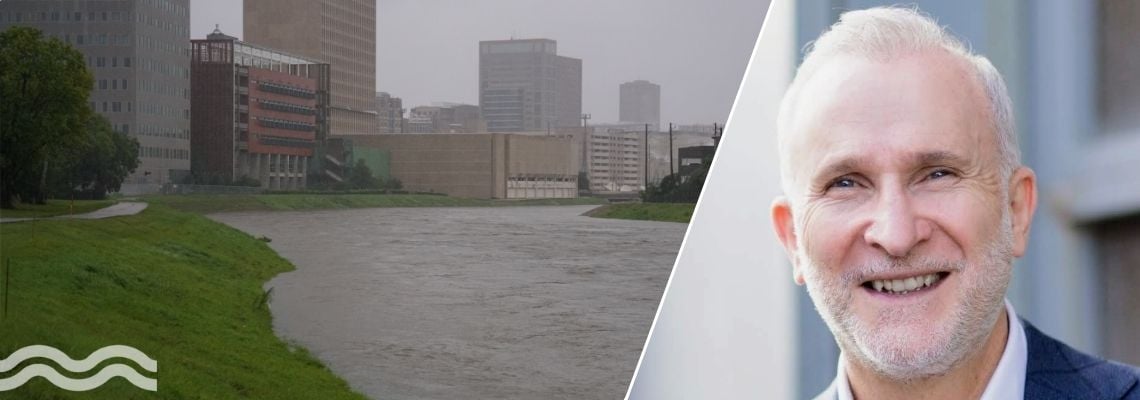
Transnational water basins also involve different communities, industries, ecosystems and both rural and urban environments, so how can we ensure CWS programmes are fit for purpose? Terry Paule, impact investor and aquapreneur at We Grow Water, shares with Aquatech Online his view that collective action is the approach best placed to bring projects, corporations and investors together to ensure CWS programmes have real and lasting impact.
A series of disconnected islands
“For too long, corporate water stewardship has resembled a series of disconnected islands. Individual companies have run projects inside their own operational boundaries and assumed that those isolated efforts would somehow add up to regional resilience. That approach represents a good intention, but it is not sufficient for the scale of the global water challenge. The future requires collective action – where risk and reward are shared, and responsibility extends across entire catchments.”
Collective action unites all stakeholders
“Collective action is not an empty phrase. It recognises the simple reality that a single facility cannot solve catchment-level stress by itself. When stakeholders organise around a shared geography or a common challenge, they stop competing for limited resources and start collaborating to improve the catchment as a whole. That change in perspective transforms how projects are funded and governed.”
Rethinking the economics
“However, making this transition requires a fundamental rethink of the underlying economics. For many years, water initiatives were treated as corporate social responsibility (CSR) items, financed through grants, donations, or single-line items in a budget. Real collective action moves those efforts into the realm of infrastructure and asset development. When multiple stakeholders align, a project becomes more than a cost centre. It becomes a de-risked investment opportunity that can attract long-term capital.
“To bridge the gap between CSR and infrastructure, we must adopt the rigour of a funder’s brief. Institutional investors and strategic stakeholders are not looking for temporary public relations gains. They are, in fact, looking for stable, predictable returns and quantifiable risk mitigation. Moving projects into the asset class category shifts the conversation from how much can be donated to a more structured approach focused on the internal rate of return on this water security asset. This shift is the catalyst that allows projects to scale beyond the limitations of annual grant cycles.”
The central challenge is trust
“Trust remains the key barrier to this transition. How do companies know a project is real, and what is the impact measured across different actors and geographies, becomes a key focus. Data visibility and traceability are becoming the currency of this emerging economy. Capital will not flow to projects that cannot demonstrate measurable and verifiable outcomes that endure over time.
“This is the central challenge in building the digital infrastructure that water stewardship requires. Systems must do more than report what happened in the past. They must aggregate near-real-time data and present a common operating picture that supports smarter decisions today.
“Technology platforms such as Sustainable Water Impact Maps (SWIM) and work performed by organisations like PhiloX are designed to reduce the friction that prevents capital from reaching high-impact projects. Giving everyone from NGOs, governments, consultants, auditors, and solution providers to certifiers and multinational companies access to the same reliable data can create the conditions for coordinated, effective action and a robust ecosystem.”
Practical assessment markers
“When assessing whether a project is scalable and investment-ready, there are three practical markers to consider:
- The first is whether the project is native to the catchment and responds to local hydrological and social realities.
- The second is whether the project produces a clear, verifiable outcome that can be tracked digitally.
- The third is whether there is governance that will outlive an initial pilot phase and sustain operations when the early funding runs out.
“Projects usually fail, not because they lack passion, but because they lack a sustainable financial and operational model that persists beyond a grant cycle.”
The need for a mindset shift
“This approach requires a mindset shift and the discipline of treating water as a circular resource rather than a commodity to be consumed and discarded. It requires the courage to move away from the siloed pilot mentality.
“One common frustration is that organisations often commence these journeys by looking for projects that fit a predetermined corporate agenda rather than listening to the needs of the catchment. True collective action begins with the environment. It requires humility and a willingness to adapt technology and approaches to local conditions rather than forcing local conditions to adapt to a chosen solution.”
Now, we must choose our way forward
“We are at an inflexion point. We can continue to fund small, siloed projects that produce limited, short-term gains, or we can work to build the ecosystem that allows water stewardship to scale. The data tools exist, the investment appetite is real, and the need is urgent.
“What remains is collective will and coordinated effort. Investing in the systemic health of the water cycle will create resilient outcomes that benefit communities, ecosystems, and the companies that depend on reliable water supplies.”