Regulations will boost water innovation in Denmark
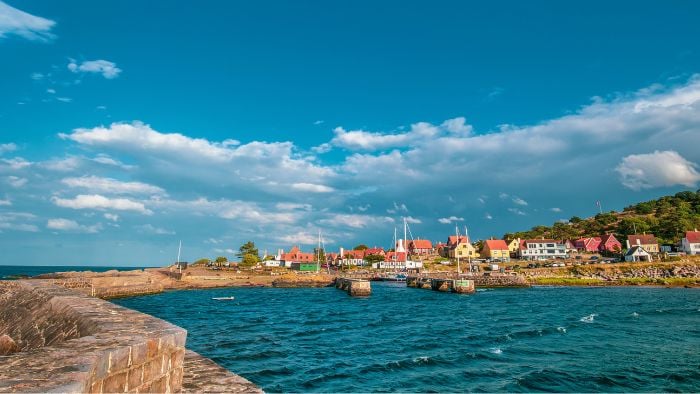
Denmark has a strong relationship with water. You are never far from it, for a start. At no point are you more than 50km from the sea. Not surprising for a country with 444 islands. It is also known for playing a large role in the world of shipping, from the Viking age to the modern day.
It is also not surprising that a country that supports entrepreneurship and is at the forefront of green energy development and sustainable living solutions has a long history of careful water management and innovation. For example, utilities like Aarhus Vand and Skanderborg were early adopters of all the digital revolution had to offer the water industry.
Danish water companies, such as Grundfos, Kamstrup and AVK, have also made a big impact on the global stage, whether through product innovation (pumps, smart meters, valves) or through knowledge exchange with international partners.
Along with France, Denmark is still the only European country to announce a ban on PFAS production and use.
In 2025, the country’s water innovators once again attended Aquatech in Amsterdam, showcasing their latest developments and products in the Danish Pavilion, which has become a recurring event. Like the trade fair, it is becoming bigger with each event. In this article, the organiser of the pavilion, Klaus Kattenhøj, talks to Aquatech Online about the current challenges, opportunities, and innovations taking place in Denmark.
What are the biggest general water challenges in Denmark right now?
In general, one of the biggest water challenges is that we are fighting PFAS and other compounds in our drinking water. PFAS has also found its way into our beer. This PFAS fight is taking place alongside a long-term plan for climate adaptation for all the major cities situated along waterways – just like those in the Netherlands.
Also, we are currently having an election, which is having the effect of people taking their eyes off the bigger picture and losing perspective.
What are some of the biggest challenges faced by water utilities in Denmark?
We take pride in using groundwater for virtually all our water needs. However, it has become clear, now that we can measure much more precisely and we can use digital tools to simulate waterways, that we have not been adequately protecting this vital resource from pressures placed on it from cities, industry and agriculture.
We have tighter controls on what levels of compounds are accepted in our drinking water, with more now considered dangerous. And with the change towards a more service-oriented society, industry and agriculture need more and more a political license to operate.
What about some of the successes?
Our long-term focus on addressing non-revenue water (NRW) and the use of district metered areas (DMA) is making us world-class champions at tackling leakages. This results in most of the water we pump up from the ground actually ending up at the tap.
Delivering cleaner water is one of the main objectives of the Agreement on a Green Denmark initiative. As part of this agreement, agricultural land will be converted into new forest in areas near aquifers and waterways – more protected areas mean less pollution of groundwater. This is a way to loosen the conflict between land and cities and protect our drinking water. More and more, we will see the use of nature-based solutions.
What EU regulations are being focused on the most, and which are driving innovation in Denmark?
The framework directive is slowly being developed locally and solutions found, which will continue to drive water service providers towards even lower NRW targets. We expect a great deal from the Urban Wastewater Treatment Directive (UWWTD), as this will demand existing and new technologies to come forward to reach CO2 neutrality by 2040 and energy neutrality by 2045.
The measurement and removal of methane, nitrous oxide, and CO2 will be part of the solution. Biogas is already a big thing in Denmark, and PtX (power-to-X) plus pyrolysis may be next.
Also, the fourth cleaning step at industrial and at WWTP will generate significant investment into larger and larger wastewater treatment plants (WWTP), so this will also change society into bigger and bigger units. I personally hope that the CO2 credits can stay between the farmers in cooperatives, as we have a strong tradition for this in Denmark; I hope it can prevail.
In Denmark, we have a strong tradition for not just water efficiency but also energy efficiency
In Denmark, we have a strong tradition for not just water efficiency but also energy efficiency. So, the overall EU efficiency agenda is expected to continue driving not just innovation but also volume exports from Danish industry – anything from heat, cooling, insulation, and anywhere where energy is being used at scale.
However, we still haven't ‘cracked the nut’ around data centres’ excess heat being transferred into our district heating system, which would let us get rid of most of our last oil and gas demands. This is a big topic in Denmark, where the Blue Deal has to coincide with the Green Deal.
Improving our resilience against increased rainfall and higher water levels is another topic of discussion in Denmark. We may need to bring experience in from the Netherlands, even though we have some interesting startups here ourselves. Another area for development is helping our water service providers protect themselves against increasing threats from cyber-attacks.
The UWWD will drive us toward producing and consuming more energy locally, via biogas, pyrolysis, etc, but the work has only just begun.
What have been some of the biggest or most interesting tech innovations or water stories in Denmark in the past year or two?
For me, the top three innovations would be:
- The measurement of gases from WWTP, separating these and turning parts into biogas and hence energy.
- Measurement of compounds in our groundwater, the simulation of these, and where we are on our way with the most efficient cleaning technologies.
- A constant but slow trajectory towards a more energy and water-efficient society. As this is a societal move, the gains are very small each year, but it is a movement that not even politicians in transit can stop.