Is space the place to combat non-revenue water?
Non-revenue water is a well-known problem in water distribution networks, with leaks accounting for the majority of losses. Numerous reports state that the average amount of water lost to leaks globally is as high as 30 per cent, with some countries averaging losses of almost 50 per cent.
The reasons are also well-known: ageing infrastructure; vast and poorly-mapped underground networks; a lack of reliable data; access challenges; all of these make leak detection a major challenge.
Losing 30 per cent of your water supply before it reaches customers is a huge issue, not just for utilities, but for governments as well. Population growth and the needs of industry fuel demand that is increasingly hard to meet. It is a problem made worse by shifting weather patterns driven by climate change, with areas traditionally seen as water-secure, like northern Europe, experiencing increased periods of drought and extreme rain. All of which puts extra pressure on supply and distribution networks.
Hope comes in the form of technologies that can help to detect leaks faster and more accurately, saving time, money and, perhaps more importantly, significant volumes of precious water.
Trillions of gallons lost to leakage in the US
Non-revenue water losses include leaks, theft, and inaccurate metering. In the US, a report from Bluefield Research estimated that 6.76 billion gallons of treated drinking water (25.5 billion litres) are lost every day. As much as 87 per cent of these losses is attributed to leaks across a network spanning more than 2.2 million miles.
While this sounds like a large number, a loss rate of almost 20 per cent compares favourably to the global average. However, as the report points out, this equates to €5.4 billion in lost revenue. There is a difference in leakage rate between large utilities (16.7 per cent) and small utilities (>20 per cent), which the report puts down to financial resources, technical expertise, and staffing that come with the advantages of scale.
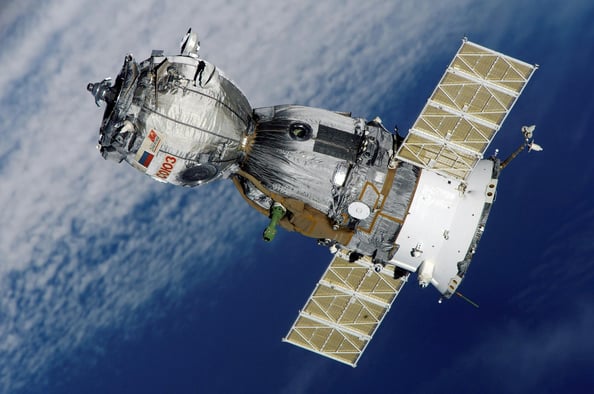
Taking to the skies to help detect leaks
One of the problems identified by the report was the lack of cohesive national regulations and policies targeted at non-revenue water, with many states and districts taking their own approach, such as the use of sniffer dogs to detect leaks.
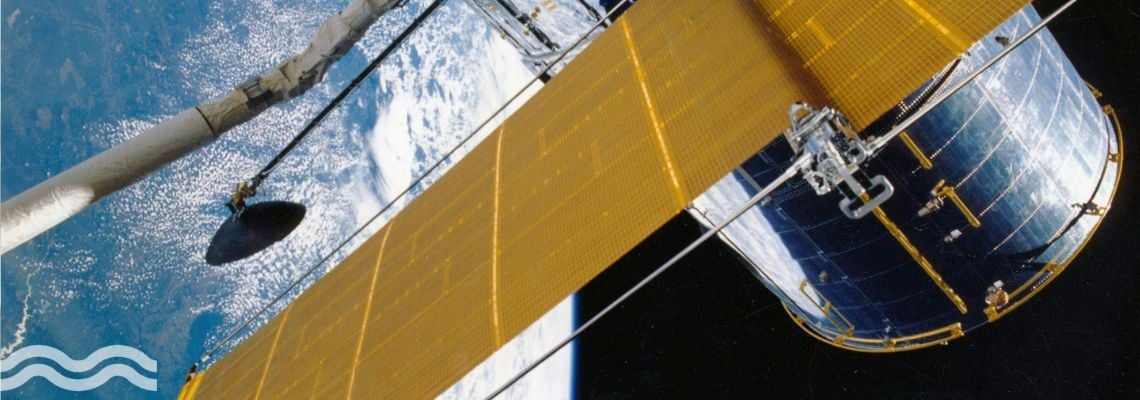
In New Mexico, the state’s environment department is taking a far more technical approach: the use of satellites and AI. While the national average for water loss is 20 per cent, in some rural communities in the state, it can reach as high as 70 per cent. In response, the state government has launched LeakTracer following a successful pilot project in 2025, which took place in five communities and identified 78 verifiable leaks, saving an estimated 345,000 gallons (1.3 million litres) of water every day.
LeakTracer was established in partnership with ASTERRA and McKim & Creed. It uses L-band synthetic aperture radar satellite data and artificial intelligence to detect leaks in rural water systems. This proactive monitoring and detection allows local repair and maintenance crews to make repairs that save water and lost revenue.
The service is provided at no cost to eligible rural communities. Speaking at the launch of the full service, New Mexico’s environment secretary, James Kenny, said: “LeakTracer is a game-changer for New Mexico’s rural drinking water systems, leveraging advanced technology to protect our state’s most critical resource. This program shows how New Mexico is proactively addressing climate impacts that threaten our water security.”
Combining satellite data with smart technology
Leaks become an even greater problem when a country is traditionally water-scarce. When billions are spent on building vast desalination plants to produce clean, usable water, every litre lost to leakage is both a humanitarian and economic loss.
In Sharjah, the third-most populous city in the United Arab Emirates, satellites are being used to track and locate water losses as part of a coordinated effort to detect leaks across a 5,000 km-long network.
As reported by Gulf Today, Sharjah Electricity, Water, and Gas Authority (SEWA) successfully detected and repaired 1,345 leaks in water transmission and distribution networks between March 2024 and May 2025. SEWA combined satellite-based detection methods with on-site acoustic detection techniques, which saved 5,038 million litres of water, equivalent to cost savings of €10.5 million.
Monitoring water from space
Monitoring water flow from space is not a new technology. However, it may become increasingly widespread as digital technologies are developed that can both process the resulting data and combine it with other sources to provide a multi-dimensional picture of how water flows around the world at local, regional and national levels.
As recently reported by Aquatech Online, researchers at the University of Massachusetts Amherst have demonstrated that satellite data can be used to track the volume and quality of water flowing through any river wider than 50 metres.
Confluence, the open-source platform developed by the researchers, is free to use and can help inform water management practices where scarcity is an issue, and where other sources, such as groundwater reserves, are under increasing pressure.
Currently, Confluence pools data from three satellite systems: Surface Water and Ocean Topography (SWOT), a €1 billion satellite mission launched by NASA and France’s Centre National d'Études Spatiales (CNES) to calculate river discharge, or how much water flows through a particular point in a river at a specific time, as well as LANDSAT and Sentinel-2.
With water scarcity becoming an increasing issue, it can’t be long before key stakeholders are producing digital tools that integrate even more satellite data, to include river flow, leak detection, drought, weather patterns, and more, to inform water strategies and stewardship efforts, to ensure any gap between supply and demand can be modelled and adjusted before problems arise.