Essential Guide: Leakage and non-revenue water (NRW)
What is Non-Revenue Water?
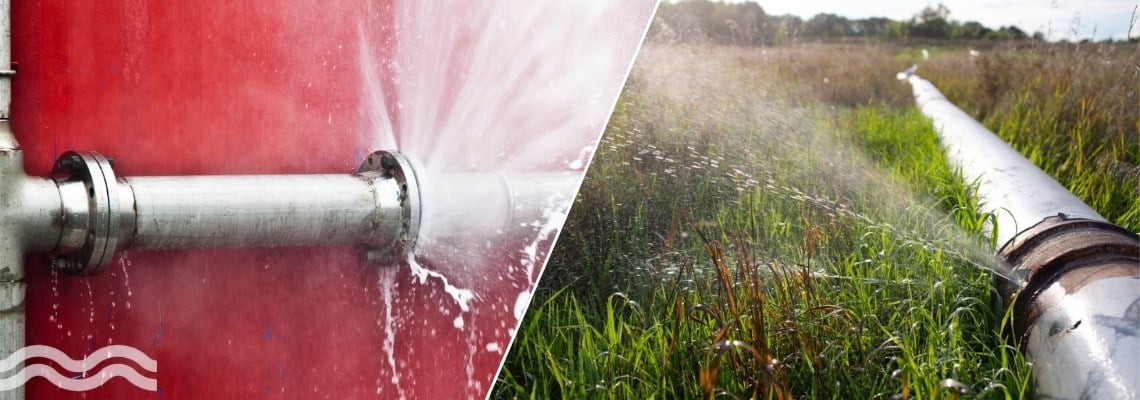
Non-Revenue Water encompasses all water produced by a water utility that doesn't generate revenue. This includes both real losses, such as leaks and physical damages to the distribution system and apparent losses, arising from theft, illegal connections, or meter inaccuracies. The goal for water utilities is to minimise NRW to ensure that a higher percentage of the produced water reaches paying customers.
Key features of water loss
Real losses are a significant component of NRW and occur due to leaks in the water distribution system. Aging infrastructure, corrosion and inadequate maintenance can lead to physical damages and water leakage. Efficient infrastructure monitoring, including the use of technologies such as leak detection systems and pressure management, is vital to identify and address these issues promptly.
Another aspect of NRW is apparent losses, which include theft, illegal connections and meter inaccuracies. Unauthorised water consumption through theft or illegal connections contributes to apparent losses, often occurring through direct tampering with the distribution network or unauthorised tapping into the system.
Meter inaccuracies, whether intentional or due to equipment malfunction, also contribute to apparent losses. Implementing a robust metering infrastructure, regular calibration, and utilising advanced metering technologies can help mitigate this issue.
How to manage leakage and water losses
To manage NRW effectively, water utilities need to focus on monitoring and data analysis. Advanced analytics and machine learning techniques can enhance the ability to identify patterns, trends and anomalies in the water distribution system. This facilitates proactive measures to address issues contributing to NRW. Key performance indicators (KPIs), such as the Infrastructure Leakage Index (ILI) and the Volume of NRW per Connection, play a crucial role in monitoring and evaluating NRW reduction efforts.
In addition to technological solutions, public awareness and community engagement are integral to reducing NRW. Engaging with the community to raise awareness about water conservation and the consequences of unauthorised water use can help minimise apparent losses. Implementing educational programmes for consumers, emphasising responsible water use and encouraging the reporting of any irregularities, can foster a sense of collective responsibility in minimising NRW.
How big is the challenge of water loss?
A significant portion of the water produced by utilities worldwide never reaches consumers due to losses along the distribution chain. This challenge is a pressing concern that impacts the economic viability of water utilities, environmental sustainability and the ability to meet the growing demands for clean water.
According to the World Bank, water losses pose a significant threat to water supply systems globally. In a comprehensive report on water utility performance, the World Bank estimates that in many developing countries, NRW levels can exceed 50 per cent, indicating that more than half of the treated water never reaches consumers. In developing countries, roughly 45 million cubic meters of water are lost daily with an economic value of over US$3 billion per year.
This staggering statistic highlights the urgent need for targeted interventions to address the financial, environmental and social implications of such substantial water losses.
The International Water Association (IWA) regularly conducts surveys and publishes reports on global water loss trends. Both the World Bank and the IWA advocate for increased investment in water infrastructure. Upgrading aging pipelines, implementing advanced metering technologies and adopting smart distribution systems are critical steps in minimising water losses.
Which countries face the biggest water loss?
Historically, several countries have faced challenges with high NRW loss rates, where a significant portion of produced water does not contribute to revenue for water utilities. In many African nations, including Nigeria, South Africa, and Kenya issues such as inadequate infrastructure, rapid urbanisation and water management challenges have contributed to elevated NRW levels.
South Africa’s NRW, for example, is rising to unsustainable levels, with nearly half the water piped through the country’s infrastructure being lost through leaks, theft or non-payment.
According to the latest ‘No Drop Watch’ report, NRW increased from the 35 per cent recorded in 2015 to 46.4 per cent in June 2022, well above the international average of below 30 per cent, while water losses stood at 40.7 per cent.
Similarly, countries in Southeast Asia, like Indonesia and Vietnam, have grappled with NRW problems due to rapid urban growth and insufficient investment in water infrastructure.
In the Middle East, countries like Lebanon and Iraq have faced challenges related to water losses, influenced by factors such as geopolitical issues, infrastructure shortcomings and concerns about water scarcity.
According to UNICEF, Lebanon’s water system is collapsing, and water leaks and losses caused by NRW are a big part of the problem. Water that is unaccounted for due to system losses in Lebanon is estimated at about 40 per cent. This is mostly due to the lack of maintenance and illegal connections as water utility providers can no longer afford essential spare parts for maintenance.
Eastern European and Central Asian nations, including Armenia and Moldova, have also experienced notable NRW levels, primarily linked to aging infrastructure, inadequate investment and inefficient water management practices.
How to detect and fix water leaks?
As we confront the challenges of a growing global population and changing climates, technology has emerged as a crucial ally in the quest to detect and fix water leaks efficiently.
- Acoustic sensors have proven to be invaluable tools in the fight against water leaks, for example. These devices detect leaks by listening for the distinct sound patterns created when water escapes through pipes or infrastructure. These sensors can be strategically placed throughout a water distribution system and, when anomalies are detected, they pinpoint the location of potential leaks. The real-time monitoring capability of acoustic sensors allows for prompt response and intervention, minimising water loss.
- Artificial Intelligence (AI) is also making significant strides in enhancing water leak detection through advanced analytics. Machine learning algorithms can analyse vast amounts of data, including flow rates, pressure variations and historical usage patterns. By establishing baselines and identifying deviations, AI systems can predict potential leaks before they escalate. This proactive approach enables water utilities and municipalities to take preventive measures, reducing the impact of leaks on water infrastructure.
- Satellite technology offers a macroscopic perspective on water systems, allowing for the identification of large-scale leaks or changes in water patterns. Sophisticated satellites equipped with remote sensing capabilities can detect anomalies in soil moisture levels, helping pinpoint areas at risk of leaks. This technology is particularly useful in monitoring vast and remote water infrastructure, providing a comprehensive view of water distribution networks.
- Smart meters have become integral components of modern water management systems. These devices provide real-time data on water usage, allowing consumers to monitor their consumption patterns. In the event of abnormal usage, which may indicate a leak within a property, smart meters can alert homeowners or businesses, prompting swift action to address the issue. By empowering consumers with information, smart metering contributes to a culture of water conservation.
- Finally, in instances where human access is limited or unsafe, robotics and drones offer an innovative solution for leak detection. Remote-controlled devices equipped with sensors can navigate underground pipes or other challenging environments, relaying data on potential leaks. This technology not only enhances safety but also facilitates the detection of leaks in areas that would otherwise be difficult to reach.
Case studies: Which nations have successfully tackled water leaks and how?
Several countries have demonstrated exemplary efforts in curbing wastage and optimising their water distribution systems. As reported in Aquatech in July 2023, Manila Water in the Philippines announced it had managed to reduce its NRW from an inherited level of 63 per cent in 1997 to 12.69 per cent in 2022. This surpasses the World Bank's benchmark of 25 per cent or lower and the 15 per cent in developed countries such as Japan and England.
Singapore has become a global leader in water management. Through its holistic and innovative approach, Singapore has achieved a water loss rate of less than five per cent. The success story can be attributed to the widespread implementation of smart technologies, including an extensive network of sensors and real-time monitoring systems. The country also emphasises public awareness campaigns, encouraging citizens to use water responsibly. Singapore's integrated water management model showcases the power of technology, public engagement, and forward-thinking policies in achieving substantial water loss reduction.
Germany has been lauded for its efficient water infrastructure and proactive leak detection measures. The country has achieved a water loss rate of around seven per cent, which is notably lower than the global average. Germany's success can be attributed to a well-maintained and modernised water distribution network. Advanced leak detection technologies, including acoustic sensors and continuous monitoring, play a crucial role in identifying and repairing leaks promptly. Additionally, stringent regulations and standards for water utilities contribute to a culture of accountability, ensuring the efficient management of water resources.
Australia, a continent often grappling with drought and water scarcity, implemented a nationwide initiative known as the Waterwise Programme. This comprehensive approach aims to reduce water consumption and minimise losses across urban and agricultural sectors. The Waterwise Programme encourages water-efficient practices, implements smart irrigation systems, and invests in infrastructure upgrades. As a result, Australia has made significant strides in reducing water losses, with some regions achieving rates below 10 per cent.
These case studies demonstrate that reducing water losses is achievable through a combination of technology, policy, and community involvement.
The future of NRW and water losses
In conclusion, NRW poses a formidable challenge for water utilities globally, impacting both operational efficiency and financial sustainability. The multifaceted nature of NRW, encompassing real losses from leaks and damages to the distribution system, as well as apparent losses arising from theft and meter inaccuracies, necessitates a comprehensive approach for effective mitigation.
The scale of the challenge is highlighted by alarming statistics, such as the World Bank's estimation that NRW levels in many developing countries can exceed 50 per cent, resulting in substantial economic losses and environmental consequences. Regions facing the most significant water losses include parts of Africa, Southeast Asia, the Middle East, and Eastern Europe, each grappling with unique factors contributing to NRW.
Addressing this global issue requires a combination of technological solutions, data-driven analytics, and community engagement. These technologies empower water utilities to proactively manage their distribution systems, reducing the impact of NRW on both economic and environmental fronts.
As we navigate the challenges of a growing global population and changing climates, the imperative to address NRW becomes even more pronounced. The lessons learned from successful interventions shows the potential for positive change through the concerted efforts of governments, water utilities, and communities worldwide.