
Wastewater to data centres: The new corporate play?
On the face of it, reusing water would always be preferable to using groundwater for cooling data centres. Where water needs to enter the system, the use of potable water has several drawbacks, especially where there is competition with other local users in areas already suffering from water stress.
With water reuse becoming an increasingly popular option in other areas, we explore whether the time is right for treated wastewater to become the key element in keeping data centres cooled and efficient. We also look at some of the key challenges that stand in the way of this being adopted on a wider scale.
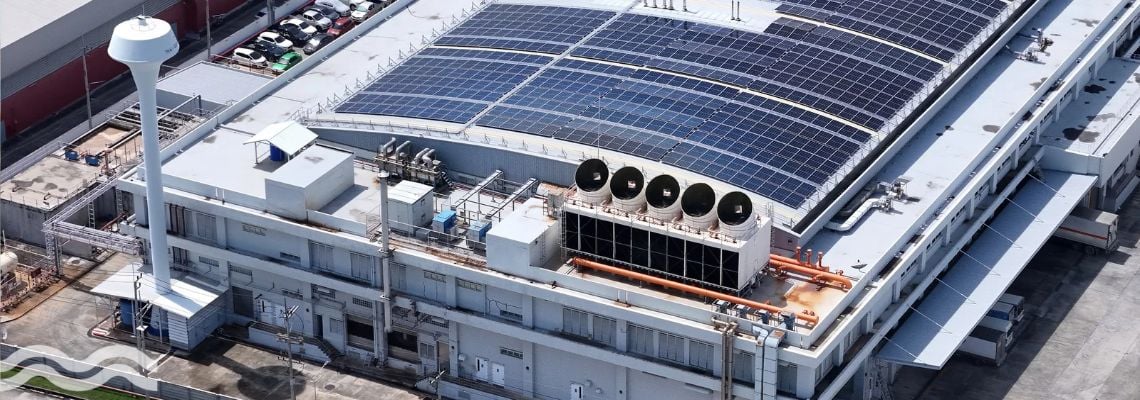
Models of wastewater to data centre supply
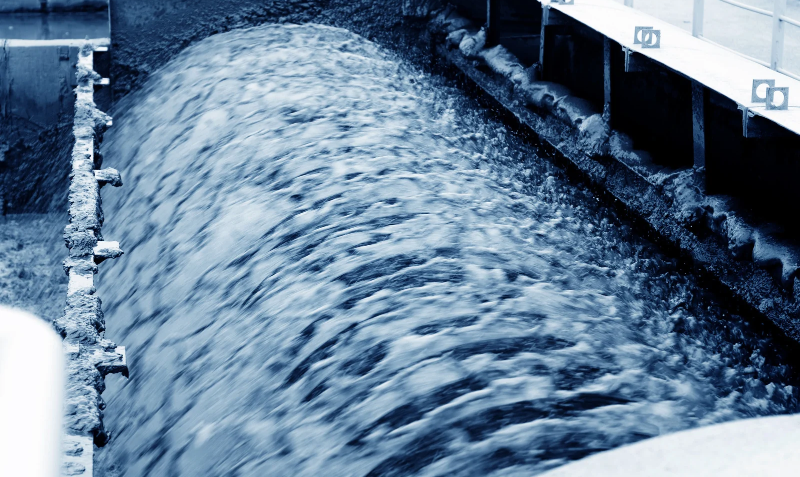
Using treated wastewater to cool data centres is becoming increasingly popular. Each data centre (or cluster of data centres) will use a treatment and delivery system that is best suited to the local environment.
Most systems used are hybrid, where the local municipal wastewater plant performs most of the treatment, but some ‘polishing’ and conditioning take place at the data centre. One example comes from Johor in Malaysia, where Bridge Data Centres uses reclaimed water for operational use in collaboration with Johor Special Water and is collaborating with Indah Water Konsortium and Permodalan Darul Ta’zim.
Although many major data centre operators have begun using treated water from municipal wastewater plants, these have traditionally not been co-located on-site.
In the UK, citing the rising demands of industry and the need to protect potable water sources, Anglian Water’s head of planning, Geoff Darch, told the BBC that any new data centres in the utilities region should be located near existing recycling plants so that they could use reclaimed wastewater, rather than groundwater. Darch explained that the area is water-stressed and that the utility was encouraging the exploration of alternative sources for data centre cooling, as well as other industrial demands.
On-site water treatment facilities
Amazon Web Services (AWS) has gone one step further and brought the process on-site in Mississippi, having signed a deal with Veolia that will see ‘autonomous, innovative containerised treatment systems’ transform effluent from nearby wastewater treatment plants and other available sources into cooling water that meets the quality standards required for industrial cooling processes.
Speaking at the time of the deal, Will Hewes, Amazon’s Global Water Stewardship Lead, said: “Through our collaborative work on AI applied to water treatment, Veolia will be able to further drive innovation and enhance the efficiency of on-site teams, thanks to automated analytics, actionable recommendations, optimised inventory management, and streamlined maintenance.”
He added: “We’re pleased to join forces with Veolia to advance more sustainable water use strategies while helping it pioneer more efficient water treatment solutions for customers worldwide.”
If successful, the modular, containerised design of Veolia’s system may become the blueprint for water treatment facilities that can be deployed at other data centres. It also makes the system scalable to meet the needs of hyperscale data centres, removing the need for groundwater extraction.
Benefits of using treaded muncipal wastewater
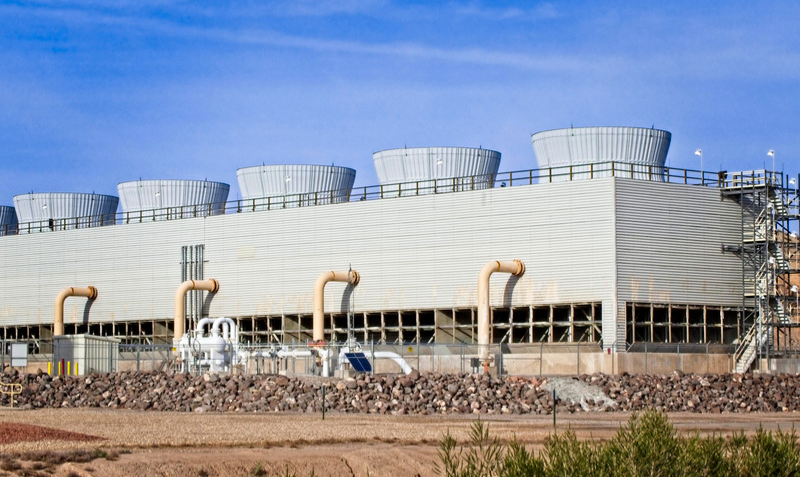
There are several benefits of replacing groundwater with treated municipal wastewater as a means of cooling data centres:
- It reduces local pressures on both fresh and groundwater sources
- By doing so, it increases local acceptance of data centre builds
- Could decrease cost in the long term
- It helps to support circular water economies
- It offers more flexibility over site location.
Reducing pressure on groundwater sources
While modern data centres are becoming more energy and water-efficient, they are still major users of resources that would otherwise be available for local community use, as well as industries and agriculture. Exact figures are hard to come by, but one estimate suggests that in the US, data centres consume approximately 200 billion gallons (757 billion litres) of water annually in the United States alone, with cooling systems accounting for 80 to 90 per cent of that demand.
Google maintains that ‘the aggregate water consumption of data centres is small’, which the company estimates is less than one per cent of the total volume of water that Americans use to water their lawns each year.
Meanwhile, a recent report suggests that more than two-thirds of data centres constructed since 2022 are located in water-stressed regions such as the southwest USA, Saudi Arabia, and India.
Given that these facilities require readily available sources of water, it seems strange to locate so many data centres in areas where stress and scarcity create competition with existing users. But the location is a trade-off: land availability and an abundance of renewable energy (solar, wind) outweigh water reserves.
According to both AWS and Veolia, the facility is expected to reuse more than 83 million gallons (314 million litres) of potable water per year once fully operational. In the context of saving groundwater resources, this would be equivalent to the annual potable water use of approximately 760 homes in the local area.
Increasing local acceptance of data centre build
When data centres compete with local communities, there will be friction. Take away the need to compete, and the cause of that friction largely disappears. At least in theory.
At a time of water stress, when extreme weather events are becoming more frequent, being able to source an alternative water supply can only be seen as a benefit. AWS is not alone in eyeing Mississippi for future data centre development, and water allocation will be at the forefront of local acceptance, with the Mississippi River experiencing problems associated with prolonged drought in both 2022 and 2023.
While drought and flooding affect all rivers, the Mississippi is of vital importance to the wider US (and indeed the world), so it requires ongoing careful management. Across the wider watershed, the river provides drinking water for more than 20 million people in 31 states. A delegation of mayors from the river basin’s states recently declared that protecting the Mississippi was a matter of national security because the system generates nearly $500 billion (€432 billion) in annual revenue and directly supports approximately 1.5 million jobs. Shipping on the river carries 92 per cent of America's agricultural exports, including 78 per cent of the world's exports of grains and soybeans.
It is in this context, with increasing pressure on the wider river system in Mississippi, that new data centres will be built (of course, similar issues and concerns are present across every river basin and watershed) and also why AWS is keen to present on-site wastewater recycling as a means of supporting local water resilience.
Could it decrease long-term project costs?
Building and running an on-site treatment plant would incur significant costs. Water costs are likely to rise, and in places where demand is consistently greater than supply, prices are likely to increase. In some areas of the US, potable water rates for commercial uses, including data centres, have increased by 43 per cent in the past 10 years. Facilities consuming 50-100 million gallons or more annually face water costs exceeding $500,000 (€432,100) yearly. This is before factoring in wastewater discharge fees.
While operational costs might not be at the forefront of the drive to use treated wastewater in data centre cooling, planning for long-term operations might make on-site treatment more economically appealing.
Supporting circular water economies
Treating and reusing wastewater supports a circular water economy. Efficient reuse of water maximises its value and reduces the need to consume potable water. An on-site plant, built to the required standard, can also aid in resource recovery.
Many of the big tech companies are actively involved in water stewardship projects that aim to restore and regenerate natural watersheds. Google has announced plans to fund infrastructure updates to water and wastewater facilities that deliver water to the communities in the areas in which it operates data centres. Not only will the company reuse water from the plants, it has also committed to improving the plants that serve the local communities, who would otherwise be competing for resources.
Flexibility over site location
By removing the need for proximity to groundwater, data centres that reuse municipal treated wastewater also expand the areas in which they can be built. Not only are they no longer competing with other industries and communities for precious resources, they can also be located away from those communities.
Having an on-site treatment plant also offers the data centre operators more control and flexibility over water quality and, potentially, quantity. It also allows for wastewater from the data centre itself to be treated on-site and then reused.
Challenges of using treated muncipal wastewater for data centre cooling
There are, of course, challenges that come with using treated municipal wastewater for data centre cooling:
- It introduces additional treatment requirements
- There will be location and infrastructure costs
- Reliability of supply.
However, building an on-site treatment plant offers the potential to mitigate most, if not all, of the above.
Not all wastewater treatment plants are built the same, and not all of them will be able to supply treated water to a data centre. However, Google is tackling the first challenge head-on by funding upgrades at wastewater treatment plants located near its data centres. AWS and Veolia have gone a step further and factored treatment costs into a purpose-built facility.
Both of these approaches have associated costs, but like many water challenges, collaboration between interested stakeholders could be the way forward. Wastewater reuse requires coordination between utilities, municipalities, and data-centre operators.
As part of the Mississippi deal, AWS will ‘continue to support’ Veolia in developing ‘AI-enhanced solutions to deliver real-time process optimisation, predictive maintenance, and operational intelligence – maximising efficiency and reducing resource consumption across Veolia’s global network of water treatment operations.’ All of these capabilities will be hosted on Amazon infrastructure.
Perhaps this is the way forward for data centres and wastewater reuse? Collaborations that go beyond the site of a data centre and plant, that produce real-world evaluations of technologies and techniques that can be built upon and utilised in other locations and in other contexts.
Reliability of supply is harder to overcome, regardless of where the wastewater is treated. Flows and characteristics of wastewater change by season and location, and increasingly by climatic event. Any treatment system will need to be robust and adaptable enough to account for these changes.
Share your water story with us
Share your water technology stories with us
Do you have an innovation, research results or an other interesting topic you would like to share with the international water technology industry? The Aquatech website and social media channels are a great platform to showcase your stories!
Please contact our Sr Brand Marketing Manager Annelie Koomen.
Are you an Aquatech exhibitor?
Make sure you add your latest press releases to your Company Profile in the Exhibitor Portal for free exposure.