Adoption of deep-sea water harvesting expands to France
Subsea desalination is currently dominated by three companies – two from Norway and one from the US. And while the technology is still in its infancy compared to land-based desalination, more countries have begun exploring the benefits of siting facilities offshore, from the seabed to the ocean’s surface.
France is the latest country to explore the possibility of producing freshwater under the sea, following an agreement signed between US-based water technology company OceanWell and Eau d'Azur, the public utility that manages water and sanitation services in the 51 municipalities of the Nice Metropolis.
From Santa Monica to the Côte d'Azur
This agreement marks OceanWell’s first foray into the European sea-based desalination market, which is currently populated by two Norwegian companies: Flocean, which is close to beginning operations at a full-scale plant off the coast of Norway, and Waterise.
Meanwhile, another Norwegian company, Ocean Oasis, has produced encouraging results off the coast of Grand Canaria, using pods on the surface of the water.
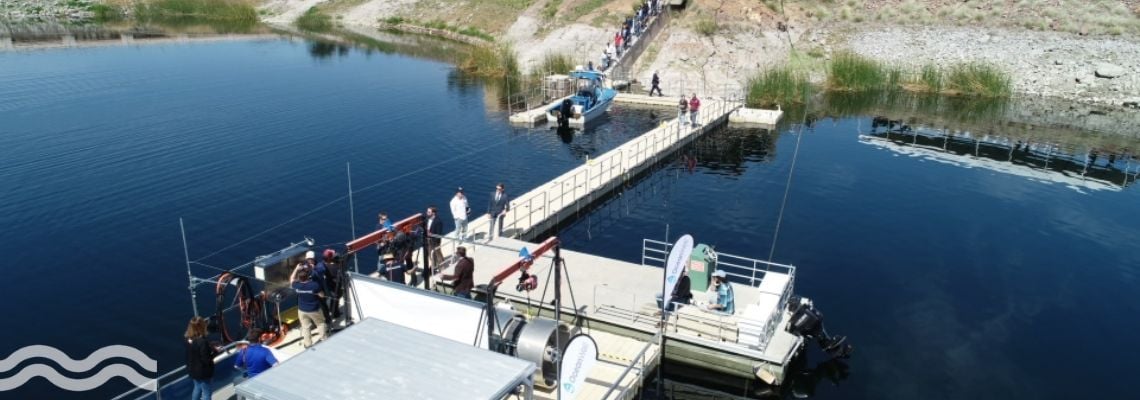
A site visit in California secured the opportunity. Team Nice Côte d'Azur was on a trade mission to the US state in June 2024. The team was impressed with the potential being shown at OceanWell’s Water Farm 1 project in Santa Monica Bay.
Like most of southern Europe, the Nice and Côte d'Azur region of France is facing unpredictable water security in the coming years. The wider Alpes-Maritimes prefecture placed 40 municipalities under drought alert and five on heightened alert during the summer of 2025, despite heavy rainfall in 2024 helping to replenish groundwater supplies.
To facilitate the project, OceanWell has established European headquarters in Nice under the name OceanWell France SAS. Funding support has been made available by the Business Landing program of Métropole Nice Côte d'Azur. The agreement covers all 51 municipalities in the Nice Metropolis.
Diversifying and securing France’s water security
At the time of the announcement, Arnaud Rostan, interim director general at Eau d'Azur, said: “This agreement will give us the opportunity to develop new approaches to diversify and secure the territory’s water supply, major issues in the face of the growing challenges of climate change.”
While no date has been set for the testing to begin, the assessment period will last for 12 months, during which an environmental impact assessment will take place, which will also monitor the local marine ecosystem and site-specific engineering studies. Commercial deployment, pending assessments, is scheduled between 2028 and 2030.
In a statement, Hervé Laubertie, CEO of Team Nice Côte d'Azur, said: “OceanWell's establishment in our territory illustrates the tremendous potential of Nice Côte d'Azur in the Blue Economy. By fostering collaborations with key local players such as Régie Eau d'Azur, we can both stimulate economic growth and contribute to protecting our oceans, a priority for our region and for the planet.”
Robert Bergstrom, CEO of OceanWell told Aquatech Online: “France has been clear that long-term climate resilience depends on protecting freshwater resources while accelerating low-impact solutions that align with EU climate goals. The Nice project sits squarely within that framework by pairing innovative water infrastructure with marine protection and energy efficiency.
He added: “Through our partnership with Eau d’Azur, we are working with a public utility that is actively planning for climate-driven water stress and diversification of supply that reduces the over-dependence on groundwater. Our partnership reflects a shared commitment to safeguarding freshwater reserves, supporting the blue economy, and advancing solutions that are both environmentally responsible and publicly accountable.”
On the decision to open offices in France, Bergrstom added: “Establishing our European headquarters in Nice reinforces our intent to build durable, policy-aligned partnerships as Europe prepares for a more water-constrained future. “
Why subsea desalination is gaining traction
Rather than occupying land with huge energy-intensive infrastructure desalination plants located near the sea, companies like OceanWell are rethinking desalination by taking it to the bottom of the ocean.
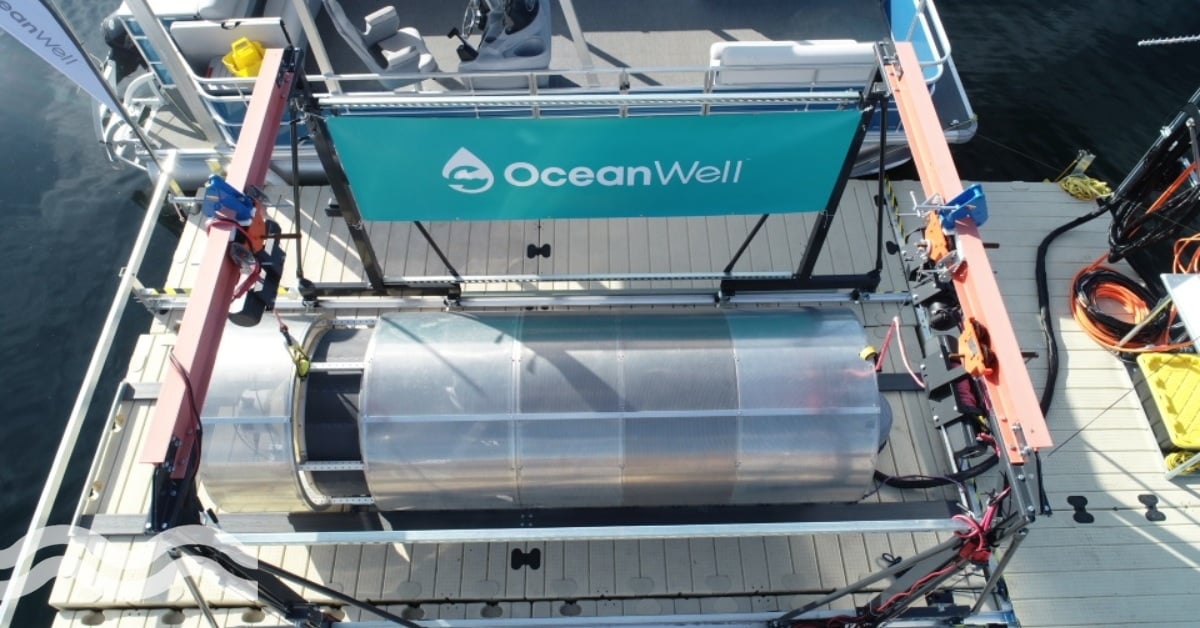
Flocean, Waterise and OceanWell have all developed modular systems that can be deployed at a scale suited to their environment and to local freshwater demands. OceanWell's deep-sea freshwater harvesting technology operates at depths over 400 meters (1,300 feet). By harnessing natural ocean pressure to power reverse osmosis, OceanWell's modular pods can each harvest up to 4,000m3/day of fresh water daily.
By using the pressures that naturally occur in the ocean to drive the reverse osmosis process, deep-sea (or subsea) desalination uses far less energy to produce fresh water than land-based facilities.
Following the agreement between OceanWell and Eau d'Azur, Bergstrom, told the media: "Securing our water future is a global challenge, and it demands solutions that work with nature rather than against it.”
He added: “From California to the Côte d'Azur, our subsea water farms are designed to provide a reliable climate-resilient supply without the environmental cost of traditional desalination. This partnership marks another step toward our goal of delivering sustainable water at scale to coastal communities worldwide.”
The thorny issue of brine discharge
Traditional desalination techniques often have a recovery rate of around 50 per cent. However, Bergstrom previously told Aquatec Online that the Water Farm 1 systems run with a 5 to 15 per cent recovery rate. He said: “The reason we can run the recovery rate so much lower is due to the economics of pressure. For an onshore system, most of their electricity is used to create pressure to overcome the osmotic head, i.e. to push water through the membranes. That is energy-intensive and costly.”
He added: “OceanWell, on the other hand, has access to an unlimited, constant pressure, and it’s free. When you remove that power cost, you can focus on what’s ecologically safe and drop the price of water at the same time.”
Reduced brine concentration is far less damaging to marine life than traditional systems, which can help safeguard bioversity and can help unlock some of the barriers to deep-sea desalination uptake.
Is this the dawn of the deep-sea desalination era?
According to Bergstrom, as well as environmental concerns, one of the main challenges to scaling commercial deep-sea desalination has been convincing investors of its potential. However, it seems that the technology's time may well have arrived.
Norwegian subsea company, Flocean, extended its Series A round of investment to €25.5 million in 2025, helping the company move closer to operating a commercial plant. Speaking to Aquatech Online following the funding announcement, Alexander Fuglesang, Founder & CEO of Flocean, said: “Global demand for freshwater is accelerating far beyond what traditional desalination can deliver. Meeting the scale of this challenge requires going subsea, and this new funding enables us to move faster.”
OceanWell secured €10.5 million in Series A funding to help its solution in 2024.
Waterise has been chosen to supply water to the Jordan Phosphates Mines Company with a deep-sea desalination project in the Gulf of Aqaba.
Investors, utilities, regional governments and private companies have seen the results of pilot projects and have decided that deep-sea (and surface-based) modular desalination plants now offer an important component of both local and regional water security plans.
Bergstrom added: “This shows that subsea water farms are globally adaptable, from California’s drought-prone coast to the Mediterranean. The Nice project demonstrates how this model can serve public utilities, diversify regional supply, and advance the blue economy by creating new jobs and marine stewardship opportunities.”
On OceanWell’s own ambitions, he added: “Our goal is to deploy 15 subsea water farms worldwide within the next decade, creating a new class of climate-resilient infrastructure that operates in harmony with the planet. From our Water Farm 1 in California to Eau d’Azur in France, each site brings us closer to proving that the ocean itself can help secure our freshwater future. This new generation of technology demonstrates that the ocean can and must be protected in that process.”