Why wastewater should never be wasted
For many people outside of the water industry, wastewater is easy to understand – you have water, and you have waste. The former is useful; the second, you hope never to encounter again. Someone deals with it, somewhere, and we can all get on with our lives. Until a pollution event occurs, and then we demand answers.
Within the water industry, and increasingly across industries and municipalities, the waste element is becoming as interesting as the water itself. Waste, after all, contains a multitude of resources. What goes into the water stays in the water and can, in theory, be recovered, processed, and reused. This creates an intriguing circular system that has economic, environmental, and strategic implications in a world where both water and resources are becoming scarcer.
Writing in Resources in Water magazine, Leon Korving, noted that in a world showing signs of ‘de-globalising’, the case for self-sufficiency (of both raw materials, including water reuse, and supply chains) could become a driver of increased investment in resource recovery processes and technologies. In Korving’s joint roles as scientific program manager at Wetsus, the Centre of Excellence for Sustainable Water Technology, based in Leeuwarden, Netherlands, and as owner of Aiforo, a sustainable solutions provider in the use and reuse of water, energy, and resources, he has direct experience of the efforts being made to advance sustainable treatment solutions.
Aquatech Online talked to Korving about the challenges involved in making water treatment a fully circular economy.
The goal of circular sewage treatment
As water becomes scarcer and as costs for treating it rise, there is a pressing need to find ‘circular’ solutions that place water treatment at the heart of a wider ecosystem.
Recovering resources has been a motivation for decades. But the reality has been one of small gains and long innovation. As Korving explains: “For resource recovery, the biggest challenge is the ‘double risk’, the combination of a new technology and establishing a new market for the recovered resource.”
While there is an undeniable case for resource recovery, it requires many factors to align to take even one process to commercial reality.
“The great variety of materials available brings a host of individual technical challenges,” begins Korving. “This is a problem for many resource recovery projects, and since there is no clear policy/driver to become circular, it is a challenge to mature resource recovery technologies.”
Then there are the different waste streams: industrial, sewage, drinking water, desalination, etc. Each one contains many different potential products for recovery.
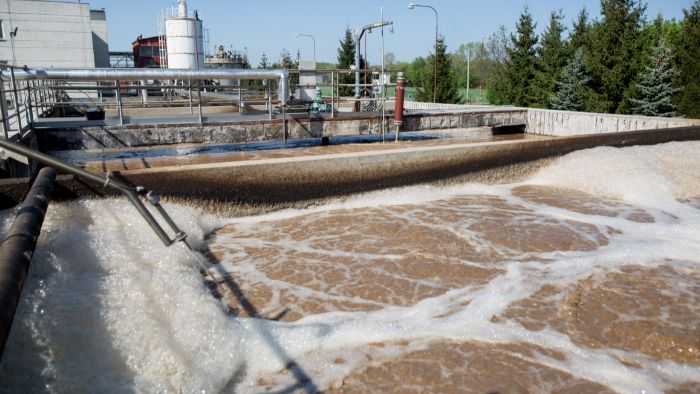
The challenge of creating circular recovery
If we take sewage as an example, Korving explains that there are still missing pieces of the puzzle to making treatment truly circular.
“First of all, we need to come to a clear definition of circularity in the sense of sewage treatment,” he begins. “We are developing a vision on that. It may not be the same as for other circular waste streams.”
For some waste streams, part of any treatment solution is preventing pollutants from reaching treatment plants in the first place.
“In the case of sanitation, you cannot prevent people from going to the loo or not taking their medicine. Prevention can only be applied to some aspects,” he explains. “Pathogens will be natural in sewage, so prevention of diseases is maybe the most crucial role of a sewage treatment plant.”
First of all, we need to come to a clear definition of circularity in the sense of sewage treatment
What we take out of water, beyond pathogens, is becoming of increasing interest. Nutrient recovery, for example, can open up many avenues for future products and uses. But, as Korving reminds us, for all the possibilities, these largely remain as “various thoughts that we are trying to connect into a coherent vision for circular sewage treatment.”
He adds: “Once we know what that is, we can check how we are doing now and what should be improved. Often, we tend to optimise and build further on the current activated sludge system. But maybe we should go back to the drawing board and start from scratch. Dutch water authorities are taking up this challenge and are building a consortium called ‘The sewage treatment plant of the future’, and also at Wetsus, we have projects working towards that goal.”
Bringing products to market
Each waste stream has potential for resource recovery. The challenge is often one of testing and scaling towards commercial viability. Of course, with that comes the challenge of funding. Although, as Korving writes in Resources in Water, ‘turning waste into a marketable product is no longer just a sustainability goal – in some cases, it can be a financial opportunity.’
But which product to focus on? Much will depend on your waste stream. For example:
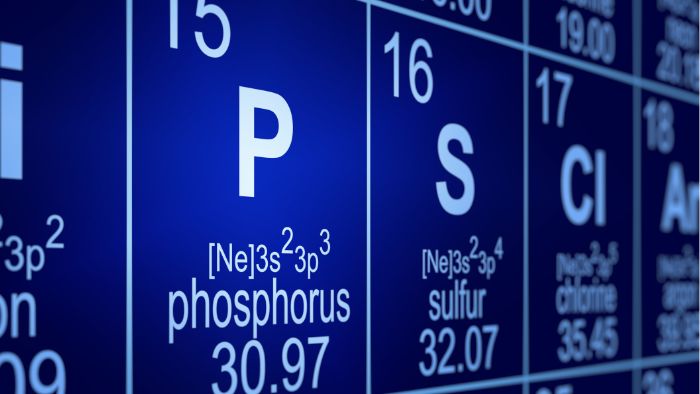
Sewage: In Europe, annual sewage volumes contain 324,000 tons of phosphorus. It is not difficult to see the potential for recovery when the EU currently imports 23 per cent of its phosphorus needs. Sewage also contains nitrogen, potassium, copper, zinc, and carbon. Wastewater plants have the potential to quadruple biogas supplies and to provide heat recovery for homes and businesses. The vast quantities of toilet paper flushed down our toilets can also be repurposed; cellulose can be separated, dried and reused, for example, as building composite materials.
Industrial waste: The food and paper industries generate approximately 20 per cent of all industrial wastewater. This contains high concentrations of biodegradable organic materials that can be used for biogas. However, there is also potential for bioplastic production, providing sustainable alternatives to fossil-based plastics. In other sectors, dyes can be recovered from textile wastewater, while valuable metals and rare earth materials can be recovered from mining and refining industries.
Drinking water: Sludge removed from drinking water production contains aluminium and iron hydroxides that can be used in agriculture or reused in wastewater treatment. Brine from desalination contains salts and minerals that can be recovered for reuse. Some plants even capture carbon during the desalination process, which forms another potential resource with commercial potential.
Commercialisation of resource recovery
Resource recovery from wastewater has huge potential. One limiting factor may be choosing which resource to focus on, and how to move from trial to commercialisation.
“We do see this maturation happening with various products, such as Caleyda=PHA, Kaumera, Cellulose, Struvite), where they are now getting to scale and getting ready for implementation,” explains Korving.
We do see this maturation happening with various products
Caleyda=PHA: Dutch company, Paques Biomaterials has demonstrated the viability of this technology at its plant in Dordrecht. The patented technology extracts and purifies polyhydroxyalkanoates (PHA) from recycled paper production process water. The result is a fully biodegradable alternative to plastic.
Kaumera: Kaumera is a bio-based resource extracted from aerobic granular sludge that originates from Nereda wastewater treatment processes. It can be combined with other substances to create lightweight biocomposites with many potential applications. One of its characteristics is that it can both retain and repel water, which opens up opportunities in agricultural, horticultural, textile and concrete applications. Royal HaskoningDHV launched a pilot plant in the UK in 2025, its first such plant outside the Netherlands, to explore and refine yields produced from the process.
Cellulose: Another Dutch innovation being trialled in the UK is the capture of cellulose from toilet paper in sewage wastewater. The project is a collaboration involving CirTec and Blackburn Wastewater Treatment Works. The recovered material has many potential uses, including construction materials and insulation. They also have potential for use in bioplastics. Perhaps the most interesting trial of the recovered resource so far has been its use in the construction of a cycle path in Friesland.
Struvite: Struvite has gone from being a problem for wastewater treatment plants to a potential revenue stream. The struvite crystals recovered from sludge are rich in phosphorous which can be used in fertiliser products. Currently, 19,000 tons of struvite are recovered annually in the US, almost exclusively by Ostara, which produces a fertiliser that sells for €250-300 a ton.
While there are barriers and limitations to what is achievable, the inclusion of resource recovery in future wastewater treatment plants and in upgrades to existing plants makes both economic and environmental sense. It is not too great a leap to suggest that resource recovery should be afforded a seat at the table of urban planning meetings to ensure circularity thinking and reuse of all resources, including water, is helping shape our futures.