
Thought leadership: Building a stronger investment ecosystem for water innovation
Innovation is widely recognised as one of the keys to addressing the challenges facing the UK water sector. From improving resilience and environmental performance to modernising infrastructure and enhancing customer outcomes, the industry will rely on new ideas, technologies and business models to deliver the change that is needed over the coming decades.
However, innovation alone is not enough. Turning great ideas into scalable solutions requires investment, commercial understanding and the right support networks. It requires innovators, utilities, investors and the supply chain to work together in ways that create both commercial and societal value.
These themes were at the heart of the latest episode of British Water's Thought Leadership series, where Stephen Slessor, the chair of British Water, welcomed entrepreneur, investor and business strategist Modwenna Rees-Mogg, CEO of Athla Capital Management, to share her perspectives on innovation, investment and the opportunities emerging within the water sector.
Although relatively new to the water industry, Modwenna brings extensive experience working with entrepreneurs, growth businesses and investors across a range of sectors. Her outside perspective offered a valuable opportunity to reflect on some of the challenges the industry faces, as well as the significant opportunities available to businesses looking to solve them.
 Knowledge partner British Water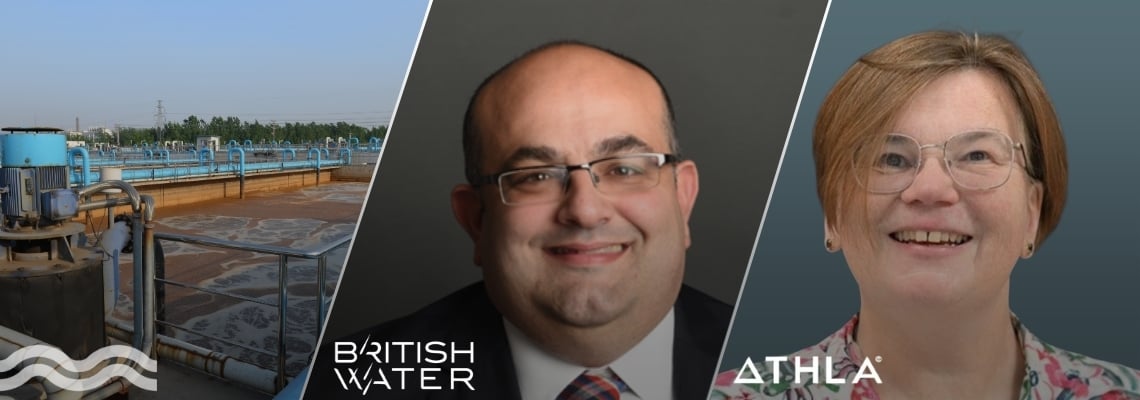
A sector rich in opportunity
One of the most striking observations from the discussion was the scale of opportunity that exists in the water sector.
While many investors are currently focused on emerging technologies such as artificial intelligence, Modwenna highlighted the importance of looking beyond the latest trends and recognising the value of solving real-world challenges. From her perspective, industries such as water offer significant opportunities for businesses capable of delivering practical solutions that address pressing operational and societal needs. The conversation explored how innovation does not always need to be revolutionary to create value. In many cases, incremental improvements, better products and more effective ways of addressing existing challenges can generate meaningful commercial returns while delivering tangible benefits for customers and society.
For a sector facing increasing pressures around resilience, environmental performance and infrastructure investment, this perspective is particularly relevant. Some of the most impactful innovations may not always be the most visible, but they can play a critical role in helping the industry achieve its long-term goals.
Connecting innovation with commercial reality
A key theme throughout the interview was the importance of ensuring that innovation remains connected to genuine customer and market needs.
Many entrepreneurs begin with a strong technical concept or a passion for solving a particular problem. However, successful businesses must also demonstrate that there is a market willing to adopt and pay for their solution. Understanding customer priorities, commercial drivers, and the wider operating environment is essential if innovation is to move beyond the pilot stage and achieve meaningful scale.
This is an area that resonates strongly within the water sector. The industry is home to a wide range of innovative companies developing solutions to address some of the sector's most pressing challenges. Yet bringing those innovations into widespread adoption can often be complex, requiring engagement with utilities, regulators, investors and end users.
The discussion highlighted the importance of balancing technical excellence with commercial awareness and ensuring that innovators remain focused on solving problems that matter most to their customers.
Understanding the investment landscape
Access to funding remains one of the most common challenges faced by growing businesses.
During the conversation, Modwenna shared insights into the different types of investors that support businesses at various stages of development and the importance of understanding their individual motivations, priorities and investment strategies.
Not all investors are looking for the same opportunities, and not all forms of investment are suitable for every business. Angel investors, venture capital firms and corporate investors often operate with different objectives and timescales. Understanding these differences can help founders build stronger relationships and identify funding partners that align with their long-term ambitions.
The discussion also highlighted the importance of viewing fundraising as a strategic business activity rather than simply a financial transaction. Raising capital requires preparation, effort and a clear understanding of what investors are seeking in return for their investment.
For many businesses within the water sector, developing this understanding can be an important step towards accelerating growth and attracting the support needed to bring innovative solutions to market.
The growing role of corporate investment
One particularly interesting area explored during the interview was the increasing role of corporate investment in supporting innovation.
Across many sectors, large organisations are establishing dedicated investment activities to support emerging businesses operating within or adjacent to their markets. These relationships can offer benefits beyond capital alone, providing access to industry expertise, commercial partnerships, routes to market and valuable customer insights.
The water sector already contains examples of this approach, both within the UK and internationally. However, there remains significant potential to strengthen connections between established organisations and innovative businesses seeking to scale.
By supporting innovation more directly, industry leaders can help reduce barriers to adoption while creating opportunities for new technologies and solutions to demonstrate their value in real-world environments.
Building confidence in water innovation
Another important topic addressed during the discussion was investor confidence.
The water sector faces a unique set of challenges and opportunities. It operates within a highly regulated environment, delivers services that are fundamental to society and requires long-term investment in infrastructure and resilience. These characteristics can create both opportunities and complexities for investors.
The conversation explored how confidence can be strengthened through greater collaboration, clearer market signals and stronger engagement between investors and industry stakeholders.
There was also discussion around the importance of demonstrating the commercial potential of innovation. While societal and environmental outcomes are increasingly important, investors ultimately need confidence that businesses can generate sustainable returns and create long-term value.
This highlights the need for innovators to develop strong business models alongside strong technical solutions.
Creating a more connected ecosystem
A recurring message throughout the interview was the importance of creating a more connected innovation ecosystem.
Successful innovation rarely happens in isolation. Entrepreneurs, investors, utilities, regulators, manufacturers and supply chain partners all play important roles in supporting the development and adoption of new ideas.
The discussion highlighted the value of building stronger connections between these groups and creating pathways that allow businesses to move more effectively from concept to commercial deployment.
This is particularly relevant as the industry seeks to address increasingly complex challenges that require collaboration across organisational and sector boundaries.
For British Water members, this reinforces the importance of the networks, partnerships and knowledge-sharing opportunities that help bring together different parts of the sector.
Inspiring the next generation
The interview also touched on the importance of attracting future talent into the sector.
Water may not always be the first industry that comes to mind for aspiring entrepreneurs, investors or technology innovators. Yet the sector offers opportunities to work on some of society's most important challenges while contributing to the delivery of essential public services.
As the industry continues to evolve, there is a growing need for individuals with diverse skills and perspectives, including those from technology, finance, manufacturing and entrepreneurial backgrounds.
Encouraging greater awareness of the opportunities available within the water sector will be essential to ensuring that the industry has access to the talent, ideas and leadership needed for the future.
Looking ahead
The conversation with Modwenna Rees-Mogg provided a valuable external perspective on the opportunities that are available in the water sector and the steps that may be needed to unlock greater levels of innovation and investment.
While challenges remain, there is also significant reason for optimism. The sector sits at the centre of some of the most important environmental, societal and economic issues facing the UK and beyond. As a result, there is growing recognition that investment in water infrastructure, technology and innovation will be critical to delivering long-term resilience and sustainability.
For innovators, entrepreneurs and established businesses alike, the opportunity is clear. The challenge now is ensuring that great ideas can access the support, investment and commercial pathways needed to achieve meaningful impact.
To hear Modwenna's insights in full, including her perspectives on entrepreneurship, fundraising, investor behaviour and the future of water innovation, listen to the latest episode of the British Water Thought Leadership series.


.jpg?h=628&iar=0&w=1200)