Better integration is key to optimising smart technology
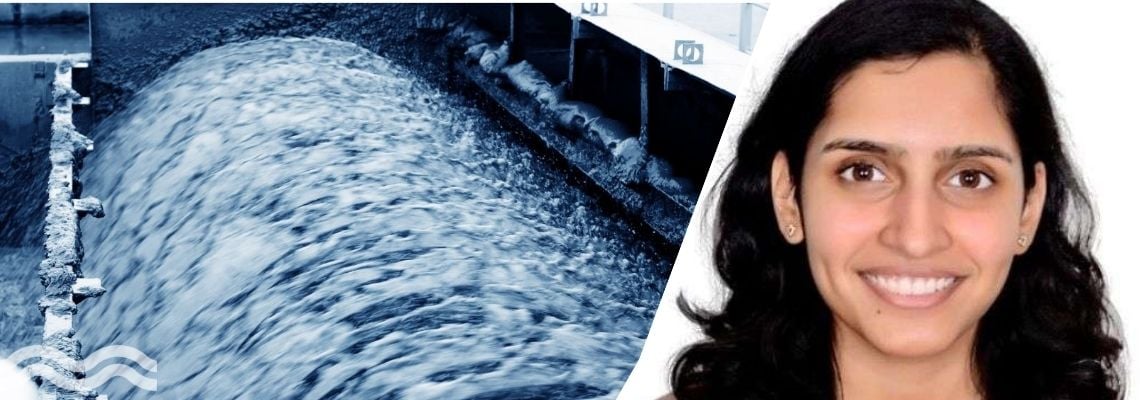
Describe the role of a water resource engineer
I build computer models of real water systems, mostly piped networks on the collection system side; I’m a hydraulic modeller. So, the computer models take the used water from houses and send it through the treatment plant.
My team builds computer models of those systems and uses them to run simulations featuring different rainfall events. These simulations can then be used to make planning-level decisions, such as whether to build new infrastructure, and what size it needs to be, or to investigate why certain areas keep getting flooded.
Essentially, these decisions often come down to working out why something has happened, or what changes need to be made to maximise the use of different parts of the system to get better outcomes.
What computer models do you use?
To build these models, someone in my role could use 10-15 different types of software, depending on the systems they are trying to simulate and what problems they are trying to solve.
The different types of systems include:
- Water distribution: drinking water reaching houses.
- Water collection: taking water from homes to the treatment plant; there will be different types of systems, such as sanitary flow.
- Stormwater collection: how water is moving through lakes and rivers.
- Site-level systems: for example, looking at how one pump station works, but in great detail.
Technology is evolving so fast, and most of the modelling software I was working with when I started my career eight years ago is obsolete. You have to be able to adapt to new software as it becomes available. And beyond the modelling, there is so much software that comes before and after you actually use the model: GIS stuff to visualise data, building dashboards, processing data, etc.
How is AI impacting your role?
Personally, I always focus on what the problem is, and then on what the best tool is to solve it. A lot of the time, AI ends up being the right answer for it.
We used to have limited capacity on our computers, which meant you could only run a handful of models and not use any machine learning. With advancements in computing and in the tools we use, we can now run machine learning to combine and optimise a solution from the many possibilities. So, we can run different simulations and use AI to home in on the most effective solution.
And now, we are at an interesting junction in the hydraulic modelling world, because we are moving from a purely physics-based approach to taking advantage of the increasing volume of data available and using more data-driven models.
You can feed all of the data sets that you think will be needed to find a solution or define an outcome, such as pipe flow measurements or water quality in a lake, and use data science models to help make predictions.
But we are also in new territory, where we might not have the right data sets for what we need to predict in the future, so people are experimenting with AI and data-driven models. We are at the early stages of this new approach.
With the rise of smart technologies, are we in danger of having too much data?
There can never be too much data. However, you can maybe be fooled by seeing volumes of data and thinking that you have to do something with it. The biggest challenge is using the data well, i.e. making the most of the data we already have. Utilities need to be aware of two things: the technology available and the problem they are trying to solve. Once they are aware of these, they should be able to connect the two.
It is about looking at the big picture, about what the utility will be doing tomorrow or next month and then deciding how much data will be needed and whether they have the right technology in place.
Where do we need to get more data from?
I would like to see more flow meters being installed. Just collecting data about what is flowing through your system at different points can help answer so many questions. We have all these pipe networks that can be as old as 100 years old that people built and then largely forgot about, and it’s only in the past 20 years or so that we’ve started trying to get a high-level system of what’s happening in those systems.
And the more sensors you put in there, the more you're able to understand what's happening in your system.
How did you get started in the water world?
My journey began during my undergraduate degree in civil engineering. While the scope of the degree was pretty broad, I really enjoyed the data science and analysis aspects, and the water resources classes heavily featured both of these from very early on.
I enjoyed working with data and building models to explain different things. There was a big focus on visualisation and the use of spatial analysis tools, more so in the water resources classes than the other classes, and I was also fascinated by the systems aspect. I found the water system fascinating. We were building simple Excel models to answer optimisation questions.
You're helping make decisions about how best to plan for resilient systems in the face of climate change
It felt like a very rewarding career because you're providing safe water to people. You're helping make decisions about how best to plan for resilient systems in the face of climate change. I found that very appealing from a personal standpoint.
So that’s how I got into smart water. Then, reading EPA white papers on digital systems, I realised there was a whole community out there trying to understand these systems and using technology to visualise, control and understand them, which I found fascinating. And that’s what led me to SWAN.
My first job was for a company called M3 Engineering in St Louis. The city had a decree to reduce CSOs, and there were all these major infrastructure projects that required hydraulic modelling to help with planning and designing the systems.
And being in that hydraulic modelling world, you realise that you need ways to process and understand all the data being generated, and then to communicate it to people. These challenges were appealing to me.
How is the workforce changing?
I'm a remote worker, so I can do a lot of work sitting in my home office. At the same time, it is really important to have that connection to more experienced professionals. Young professionals bring enthusiasm for new technologies and trying out different things, but they do not always have an understanding of what actually happens in real life, such as the roadblocks you hit when you implement something. In utilities, the people who have been working there for years understand things about the system that have never been documented.
So, we need to bring these two ways of working together: the experience and the enthusiasm.
How is the industry changing?
It used to be that the best skill you could have was knowledge of the system and how things worked, because running all these models and using all this technology took a long time.
There were very few powerful computers and very few technologies. And we have experienced an explosion of technologies, where you can build your whole career knowing how to run one software package in a particular way.
In a funny way, the speed of technological change means we have gone back to needing to have that real senior experience of understanding how systems work
And in a funny way, the speed of technological change means we have gone back to needing to have that real senior experience of understanding how systems work. Technology can automate so much of the simple work that it is the complex systems knowledge that we need.
So, the quicker young professionals can learn from that experience, the better. Technology enables you to do so much that you don’t need to spend a great deal of time learning the technology, so much as needing to learn how best to implement it.
How are young professionals being supported in the sector?
I am the chair of the Rising Smart Water Professionals (RiSWP) group, which is the young professional wing of SWAN. We meet once a month (virtually) and, basically, our goal is to support young professionals in the smart water sector. From providing them with the right resources to helping them upskill and create an impact in their community. We help to build networks of students and young professionals, both those who use smart tools and data-driven practices and those who want more education or help to integrate them into their workflows.
They discuss topics relevant to their work life related to smart water
We run several initiatives, like our mentorship series, where we bring in an expert in the field, and we'll have an online discussion with them that we then post on YouTube. The young professionals who attend these calls can then ask their own questions to the experts. These YouTube posts are available to all members, old and new, to re-watch. We get so much from these.
Another initiative is our ambassador programme: every year, we invite young professionals to apply for the programme and build a network of about 10 to 15 individuals who meet regularly to get to know each other.
They discuss topics relevant to their work life related to smart water. They can get advice, build friendships, learn more about SWAN, and about technologies and different frameworks for thinking about smart water, and then get involved in larger SWAN initiatives.
What happens next in the world of smart water tech?
For me, the main focus right now should be finding better ways to integrate smart technologies into systems within utilities, for example, how data is stored and shared. And we need to build a workforce of people who are comfortable working with data and technologies, who can bring departments together to understand where the data is coming from, what it is, and how it can be used to answer pressing questions.
We also need to be better at visualising data, building data structures, and bringing it together in dashboards that are designed to help communicate with customers and the people who work in utilities.
The data is there, so we need to become better at identifying ways in which we can use the data to modify how our systems operate in real time. We're already going in that direction. It's just the implementation, where we need to improve.
Smart technology can help us mitigate these events with the infrastructure we already have. They can help us to improve our resilience
Climate change is making extreme events happen more frequently, and we can’t always build our way out of problems. So smart technology can help us mitigate these events with the infrastructure we already have. They can help us improve our resilience.
In terms of hydraulic modelling, we need to understand what technologies are out there to help us improve the quality, efficiency and speed of our work. Whether that is through automation techniques, algorithms, or AI (such as neural networks), that help us deliver robust, thoroughly evaluated solutions to our clients.
We need to be able to communicate why this technology is beneficial to people, why it adds value. In this way, we can educate our clients, as well as the wider industry, while also sharing best practices to move the industry forward.

.jpg?h=628&iar=0&w=1200)