TECH DIVE: PFAS destruction
Around the world, countries are getting tougher on PFAS remediation in water.
Over in the US, the Environmental Protection Agency (EPA) is continuing to provide support for the smaller communities and water systems tackling PFAS in drinking water through its PFAS OUTreach initiative. This is intended to help affected systems, ‘reduce exposure now and position [themselves] for full compliance with enforceable drinking water standards in the coming years’.
Earlier in the year, the EPA finalised a rule that added sodium perfluorohexanesulfonate (PFHxS-Na) to its Toxics Release Inventory (TRI), which tracks and shares information about chemical releases and pollution prevention activities by factories and other facilities.
In Europe, the EU’s REACH regulations are under review with the European Chemicals Agency (ECHA) proposing a universal restriction on more than 10,000 PFAS. The EU has already begun tightening its rules, and recently released an analysis that revealed the costs involved in four scenarios for tackling PFAS: the cheapest scenario was to immediately cease all production and use of PFAS, which would involve remediation costs of €330 billion between 2024 and 2050.
France and Denmark have already announced bans on the production and use of the so-called forever chemicals, while the UK government has announced its first-ever PFAS plan, which aims to review its current guidelines.
Aquatech Online caught up with three companies providing PFAS remediation to find out how regulations were shaping the development of their solutions.
How are regulations affecting your PFAS offering in terms of technological developments?
John Brockgreitens, PhD, VP Product Development, Claros Technologies, told Aquatech Online that the ECHA proposals, “reflect growing concern that existing technologies may not adequately control PFAS, and as such, the industry can no longer solely rely on sequestration methods like carbon, resin or incineration.”
However, the company’s ClarosTechUV™ is designed to destroy up to 99.99 per cent of target PFAS species in high-flow aqueous streams, which means that no adjustments will be needed, and the company has been able to focus on enhancing process efficiencies.
Brockgreitens added: “This mandate has validated our foundational focus on total PFAS destruction. Because our technology breaks the carbon-fluorine bond, it is designed to handle the broad definitions of PFAS currently being debated in Brussels, including long-, short- and ultra-short chain compounds (like trifluoroacetic acid (TFA)), that many legacy treatment systems are not equipped to capture.”
Fajer Mushtaq, CEO and co-founder of Oxyle, agreed that not all existing technologies will be able to treat the broader class of PFAS that the regulatory landscape will encompass.
She told Aquatech Online: “Many treatment systems weren't built for these smaller, more mobile compounds. We identified this gap early and have specifically optimised our technology to eliminate these harder-to-treat compounds that other systems routinely struggle with.”
Chris Woodruff, COO & co-founder, Aquagga, told Aquatech Online that regulations are accelerating interest in solutions that do more than just move PFAS from one waste stream to another. “In the U.S., tightening standards and liability concerns are pushing treatment providers and site owners to think more carefully about residual management.”
He added: “In Europe, the regulatory landscape is especially dynamic, with growing scrutiny not only on legacy PFAS compounds but also on ultrashort-chain compounds such as TFA. That environment is increasing demand for treatment approaches that can address a broader range of PFAS and provide a more durable endpoint than separation alone.”
Aguagga’s HALT (hydrothermal alkaline treatment) technology, he explained, has been robustly validated on long, short, and ultra-short chain PFAS through numerous studies with industry and academic partners.
What will be the big changes in PFAS remediation in the coming 12 months
“We expect more attention on industrial wastewater, municipal wastewater residuals, landfill leachate concentrates, foam concentrates, and concentrated byproducts generated by separation technologies such as foam fractionation, regenerable ion exchange, and membrane systems,” suggested Woddruff. “In short, the industry is moving from ‘Can we remove PFAS?’ to ‘What do we do with the concentrated PFAS waste afterward?’”
According to Brockgreitens, the second half of 2026 and early 2027 are expected to see a definitive shift toward ‘true defluorination’ as the primary objective for industrial water treatment, versus current ‘capture and concentration’ technologies.
“We expect the EU REACH regulatory focus to expand from long-chain compounds to include the ‘Sum of 20 PFAS’ and highly mobile ultra-short chain species like TFA, which are increasingly central to European water quality discussions,” added Brockgreitens.
Integration of destruction technology directly into the industrial wastewater treatment train will increase, and industries such as semiconductor manufacturing, chemical processing, and technical textiles will focus on eliminating PFAS from their wastewater at the source. As Mushtaq said: “Discharge limits for industrial sources tightening, with focus moving increasingly towards source control rather than drinking water treatment and remediation alone.”
She added that, with the regulatory scope widening, short-chain and ultra-short-chain PFAS will “increasingly come into play, which will force a re-evaluation of what effective treatment actually looks like.”
Lucas Harvey, VP Global Sales, ClarosTechUV™“ The integration of cost-effective destruction technologies into existing treatment trains provides finality, cost stability, ensures compliance, and reduces the carbon footprint associated with hazardous waste transport.”
What new technologies might enter the PFAS remediation market in the next 12 months?
Several novel destruction technologies are expected to become commercially viable during 2026 and 2027. These include Hydrothermal Alkaline Treatment (HALT), Supercritical Water Oxidation (SCWO), and Plasma-based systems.
“Each of these will likely find its niche across the wide range of PFAS-contaminated materials and waste streams,” explained Brockgreitens. “However, for large-scale industrial wastewater, the market is demanding solutions that are highly effective, cost-efficient, and capable of being deployed directly on-site to lower operational costs.”
As regulators evaluate the socio-economic impacts of PFAS restrictions, technologies that provide a technically and economically feasible path toward zero-PFAS discharge at the source are expected to play a central role.
Harvey added: “A significant breakthrough in 2026 will be the commercial scaling of advanced photochemical processes. The European market is particularly sensitive to energy consumption and carbon footprints, giving ClarosTechUV™ a significant advantage over energy-intensive thermal incineration or high-heat chemical processes.”
For Mushtaq, the biggest change will come from the market working out what works: “Over the past few years, we have seen new and interesting innovations enter the market. What we predict over the next year (or more likely, several years) is a shakeout. With time, it will become increasingly clear which of these technologies can scale reliably, cost-effectively, and across a range of water chemistries.”
How are you meeting the challenge (if there is one) of scale in PFAS remediation?
To meet the challenge of scale, modular systems are becoming the go-to solution for both municipal and industrial wastewater treatment.
Mushtaq explained why modular systems solve the problem of scale: “Real-world wastewater is rarely one-size-fits-all. Our approach is built around modular systems that are fine-tuned and optimised to the specific conditions of each deployment. That flexibility is what allows us to scale while maintaining performance.”
Aquagga is addressing the challenge of scaling PFAS remediation solutions in two ways: “First, by scaling up our own modular destruction systems to handle larger and more varied PFAS waste streams; and second, by partnering with upstream concentration vendors to provide cradle-to-grave treatment solutions,” Woodruff said.
He added: “That combination helps customers manage both the bulk treatment challenge and the downstream liability associated with concentrated PFAS residuals. Our approach is designed to make on-site or regional destruction more practical, while reducing the cost and complexity of long-distance transport and disposal.”
For ClarosTechUV™, large-scale applications were always the intention: “While many alternative technologies are limited to small batch systems or low-volume ‘niche’ water challenges, Claros has always focused on large-scale industrial viability,” said Harvey.
Before adding: “Our modular architecture utilises standardised reactor units that are arrayed to meet specific floor space and flow requirements, reaching hundreds of gallons per minute at a cost-per-gallon that is economically viable for large industrial operators. This design is particularly well-suited for the European industrial landscape, where site space is often limited.”
TECH solutions: PFAS destruction
Claros Technologies
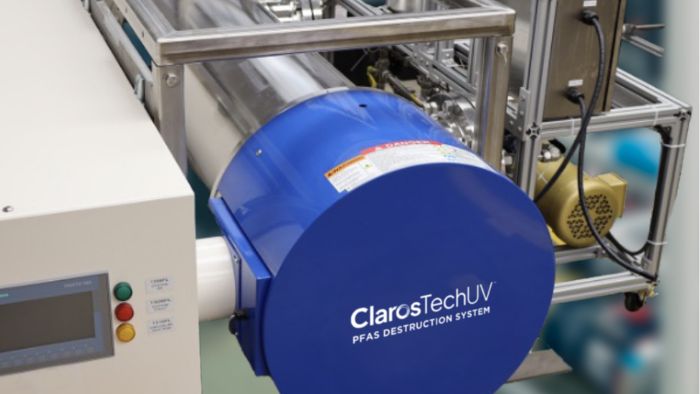
Product name: ClarosTechUV™ PFAS Destruction System
Solution: ClarosTechUV™ is a proprietary destruction technology. While we offer industry-leading PFAS analytical services through ClarosLabs, ClarosTechUV™ utilises a proprietary photochemical process to permanently destroy PFAS by breaking the carbon-fluorine bonds (true defluorination) of all target PFAS species (long, short and ultra-short-chain compounds.
Our technology is highly versatile and can be deployed across a wide range of aqueous PFAS waste streams. For many manufacturing facilities, our destruction process can be applied directly to the primary industrial waste stream. In cases involving high-volume, low-concentration water, existing concentration methods, such as Reverse Osmosis (RO), can be utilised to reduce the total volume and increase concentration, allowing ClarosTechUV™to provide final, on-site destruction of the PFAS.
Application: ClarosTechUV™ is designed for high-flow industrial wastewater, where many existing PFAS treatment technologies struggle to scale
The system is delivered as a modular, skid-mounted unit. Its small footprint allows it to be integrated directly into an existing industrial wastewater treatment train with minimal site preparation.
Recent product developments: Over the past year, we have significantly optimised UV to increase destruction efficiency while simultaneously supporting higher flow rates for industrial applications. A key milestone has been the successful scaling of our proprietary ClarosTechUV™ reactor, which has been specifically engineered to maximise the defluorination of target long-, short-, and ultra-short-chain PFAS compounds. These developments ensure that our industrial partners can achieve greater than 99.99% destruction even as feed water concentrations and PFAS species vary, providing a robust solution for high-volume wastewater treatment at the source.
https://clarostechnologies.com/
OXYLE
Product name: Oxyle PFAS Solutions (Overarching solution); Destruction system: OxLight
Solution: Oxyle engineers end-to-end PFAS destruction systems, optimised to each operator’s water chemistry, operating conditions, and treatment goals. Destruction forms the core of the system, while supporting stages are configured to optimise overall performance, efficiency, and integration with existing infrastructure.
PFAS destruction is delivered through OxLight, our proprietary photochemical reduction technology. OxLight degrades and defluorinates PFAS, including short- and ultra-short-chain PFAS such as TFA and PFBA that are difficult to manage with conventional systems.
Application: We are currently focused on treating industrial wastewater and groundwater, particularly where there are high concentrations of short and ultra-short chains.
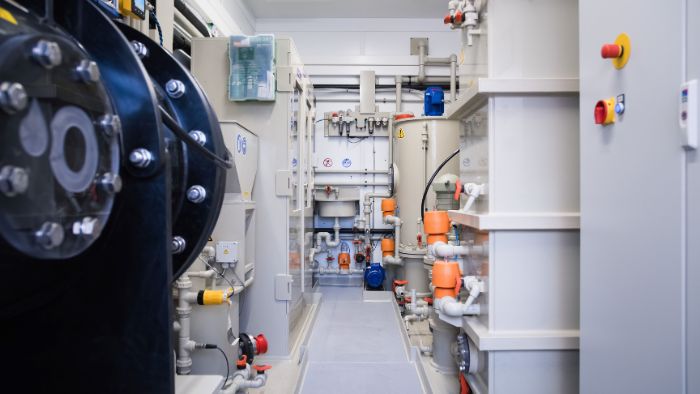
How the solution is deployed on site depends on a few factors, primarily what existing infrastructure looks like and whether it will be a permanent installation or a temporary remediation project. Our containerised, modular approach is designed precisely for easy installation and scale-up.
Recent product developments: Our focus has been on fine-tuning our process to better address the parts of the PFAS problem that conventional systems aren’t solving well. That means developing scalable and cost-effective solutions for short and ultra-short-chain destruction in more and more complex wastewater matrices. These include high COD, solvents, inorganics, etc, that are seen frequently in the chemical, pharma, and construction industries.
AQUAGGA
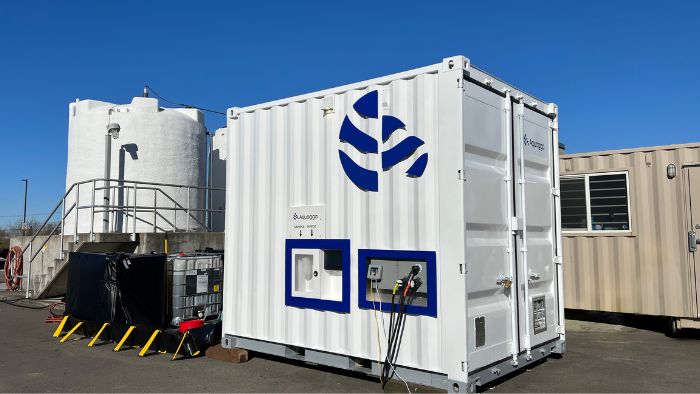
Product name: Aquagga hydrothermal alkaline treatment (HALT) systems – including Colt, Steed, and Stampede Series units
Solution: Destruction. HALT is often deployed as part of a broader treatment train, pairing with upstream concentration technologies, but Aquagga’s core offering is the destruction of PFAS-containing liquid waste streams.
Application: Industrial wastewater, legacy AFFF stockpiles, site remediation byproducts, landfill leachate.
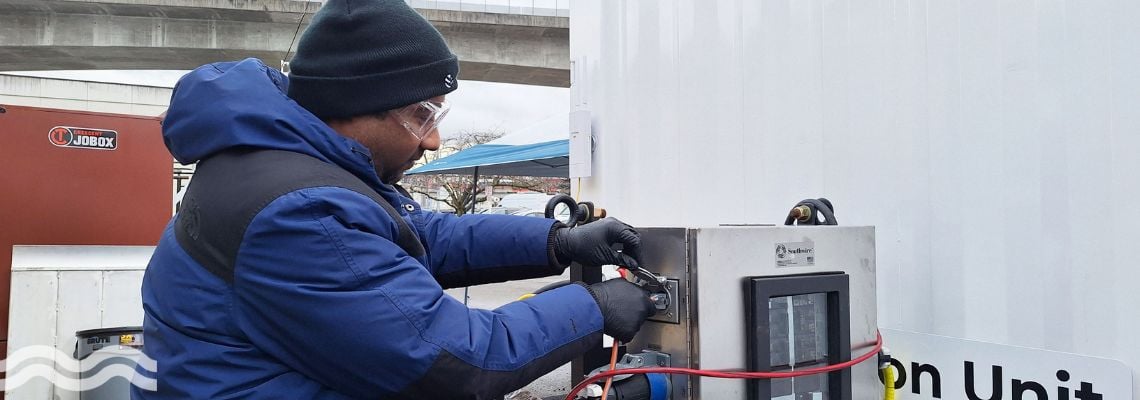
Aquagga’s HALT systems are modular and containerised for simple transportation and on-site integration.
Recent product developments: Over the past year, Aquagga has continued advancing controls, automation, and safety systems to support fully remote monitoring and more scalable field deployment. The company also completed demonstration projects across a wide range of PFAS-impacted matrices and operating environments, including projects at a wastewater treatment plant, a TSDF, and three DoD installations. These projects included treatment of municipal wastewater using foam fractionation paired with HALT, remediation by-products such as foam fractionate and regenerable resin still bottoms, AFFF, and AFFF-impacted surface water.
Together, this work has continued to validate the robustness of the HALT platform across real-world industrial, remediation, and government use cases.