
AI in water utilities: Lessons from China
Will artificial intelligence save the water industry? Will it iron out all of the sector’s inefficiencies and bring about a revolution in technology and production? Or is it nothing more than hype, a bubble waiting to burst?
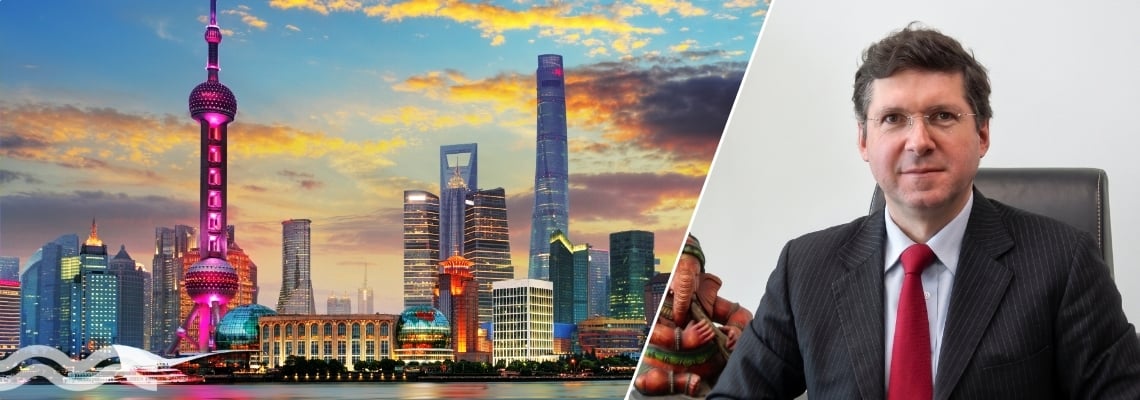
Bruno Lhopiteau, CEO of Siveco China and Bluebee Technologies, has spent 30 years in the Chinese infrastructure market and 20 years specifically in the water sector. In many ways, China offers a unique insight into AI and water: the country has invested billions into smart water, with thousands of sensors deployed and with an extremely competitive vendor landscape that has already begun separating hype from reality.
With his physics-based engineering background, Lhopiteau is well-placed to offer a sceptical and pragmatic lens on what AI can and cannot deliver. In this interview with Aquatech, he shares lessons from the Chinese market that will apply to utilities around the world.
How a long career shapes your view on AI
Lhopiteau is one of the longest-serving foreigners in the Chinese water market. His early career included mathematical modelling of mechanical systems. How does this background shape the way that he looks at AI applications in water utilities today?
“I have been working in the Chinese infrastructure market for close to 30 years and specifically in the water sector since 2004,” Lhopiteau begins. “There are not many foreigners doing this kind of work, especially providing digital solutions for government-owned assets. My company is treated more or less as a local firm. We worked early to address data sovereignty and regulatory compliance, before most local players did.”
With a background in mechanical engineering, what experiences have shaped his views of AI’s capabilities?
“During my MSc in Sweden in the 1990s, I spent a lot of time modelling the dynamics of rotating machinery,“ he explains. “Those were physics-based, data-constrained models of real systems. That experience still shapes how I look at today's AI tools and gives me a certain scepticism toward anything presented as ‘magic’.”
Lhopiteau’s business spans China and emerging countries worldwide. He believes we are in the middle of another geopolitical shift.
“After Covid there was a lot of fear in the West toward China,” he explains, “but more recently the tone has changed again. China is now widely seen as a high-tech giant. Chinese firms, including IT firms, are active outside the country's borders, and Western water companies are coming here to learn and to buy.”
What is the mood towards AI in the Chinese water sector?
AI in water is a major topic at the coming Aquatech China and Aquatech Asia events. What are Chinese water companies actually saying and doing?
“There is still genuine enthusiasm, but also a clear shift toward realism,” Lhopiteau begins. “Chinese utilities invested heavily in ‘smart water’ over the last 10 years: IoT, digital twins, AI pilots and the like. In 2026, it is now openly acknowledged that while many projects delivered impressive visualisations, their operational impact was weak.”
Money often went into non-core features or misguided IT developments that were never adopted in the field. AI continued the same pattern. On the supply side, he explains, Chinese suppliers from all kinds of backgrounds jumped on the bandwagon, with low differentiation resulting in cutthroat price competition. Meanwhile, large Chinese water groups also tried to spin out their own IT divisions to develop and sell software.
There is less appetite for digital hype, including AI hype, and more demand for solutions that demonstrably improve core operational KPIs
That approach largely failed, resulting in significant losses. The economic slowdown has added pressure, forcing water companies to refocus their spending. Many vendors have already disappeared.
“The tone now is more pragmatic,” Lhopiteau says. “People say, in effect: we have learned a lot, at scale, and we now have the technological building blocks. There is less appetite for digital hype, including AI hype, and more demand for solutions that demonstrably improve core operational KPIs.”
Lhopiteau is clear that companies that survived the downturn and escaped the price war will be stronger.
Hallucinations and security concerns
Common concerns in the West include AI hallucinations, workforce resistance, data sharing between competitors and cybersecurity. How do these issues play out in the Chinese water context and what are the real bottlenecks?
According to Lhopiteau, data sovereignty and cybersecurity top the list.
“Already a topic when I worked in nuclear power here in the early 2000s, only recently has China reached the level of having a usable full stack,” he says. “This experience and the resulting solutions (which at their core are based on open-source software) are useful for other nations that have similar needs.”
“For instance,” he continues, “the open-source approach we adopted for our asset management platform in 2009 was widely criticised at the time. Clients insisted on Oracle databases, Windows OS and other proprietary solutions as the most reliable choices.”
That decision, however, has had ongoing benefits.
“Today, that decision ensures we are part of the Chinese sovereign IT ecosystem, including its AI components,” Lhopiteau says, adding that the solution was readily transposable to the equivalent Western open-source environment, “so we can offer fully sovereign solutions everywhere, usually after passing local audits and registration steps when required.”
Specifically on AI, workforce resistance of the kind sometimes described in the West is largely absent.
The biggest bottleneck, mentioned in almost every serious discussion, is the lack of structured, clean, historically consistent data
“The dominant discussion is about labour shortages combined with the need to manage ever-larger and more complex infrastructure,” Lhopiteau says. Adding that technology is framed as a productivity multiplier, not a threat. Robots and AI are widely understood to be taking on work that humans will no longer want or need to do.
However, he explains that LLM hallucinations and ‘black box’ designs have prevented many projects from going beyond the proof-of-concept stage. In safety-critical or compliance-sensitive applications, they are simply unacceptable. Human expertise remains the final validator. For operational systems, traditional or physics-informed algorithms are preferred because they are more auditable and stable. China's regulatory emphasis on ‘secure and controllable’ technology reinforces this preference.
“The biggest bottleneck, mentioned in almost every serious discussion, is the lack of structured, clean, historically consistent data,” he explains. “Without that foundation, even the best algorithms deliver limited or misleading value.”
Cleaning and structuring legacy data is expensive and unglamorous, yet it is the highest-leverage investment most utilities can make before scaling AI.
“People used to say that with AI, no need for structured data anymore; the computer will make sense of it all. AI will take over ERP, EAM and everything. If true in theory, which I doubt, the cost of such massive AI (compute, but also integration, talent and ongoing model maintenance) has become visible and acts as a real constraint. Until recently, companies always seemed to assume AI was free.
“Recently, we have seen industry organisations doing useful work in helping the sector move past pure technology talk toward more realistic implementation,” Lhopiteau says. “The practical challenges are multidimensional: data security and quality, talent gaps, organisational inertia, legacy workflows and the need to justify operating expenditure.”
Operations people are increasingly in the driving seat, a necessary condition for success.
“I find myself very comfortable with these conclusions, since they are essentially what I have advocated for twenty years, annoying a lot of IT people and smart-water enthusiasts along the way,” he adds.
Predictive maintenance
While much of the public discussion in this area focuses on predictive maintenance, what have been Lhopiteau’s actual experiences and what does he see as having the most value?
“Predictive maintenance has forever been the headline that sells, but it is rarely the highest-ROI starting point,” he begins. “We have already discussed physics-based models as opposed to hallucinatory LLMs. Applications for predictive maintenance are very specific and very impactful. For example, I recently came across people working on AI-based oil analysis that could potentially transform this industry.”
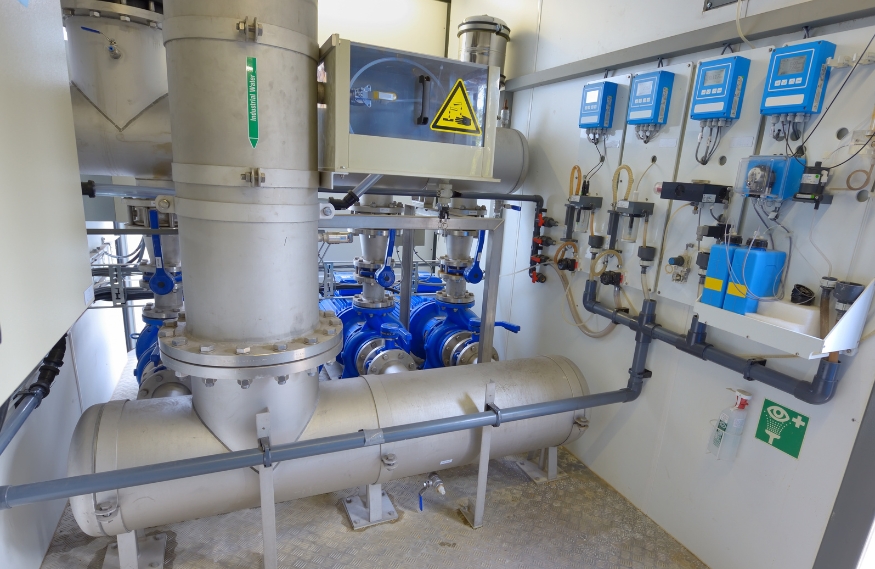
Lhopiteau works mostly at the platform level, enterprise-wide or plant-wide asset management. At this level, he says, “predictive maintenance is often misunderstood by IT people who lack industrial know-how. As a result, AI applications for maintenance tend to overemphasise real-time data from machines”, to the detriment of historical records.
When historical records are taken into account, vendors often assume clean, abundant, labelled failure data, which does not exist in most utilities. Text input in digital work orders, or even paper-based work orders, is still the norm.
“This brings us back to the foundational work I discussed earlier,” Lhopiteau asserts. “Our own Asset Health Management approach leverages those historical records, particularly underutilised inspection logs, to deliver precise and actionable insights into equipment health.”
This enables maintenance teams to optimise the maintenance strategy and ultimately improve performance. He adds: “These are strategic rather than tactical tools. But it all requires the foundational data work I mentioned.”
China and international water utilities
After several years of geopolitical tension, water utilities globally seem more open to engaging with Chinese suppliers once again. Water is a universal challenge: scarcity, ageing infrastructure, extreme weather and regulatory pressure. It rewards pragmatic cooperation over ideology.
“Chinese suppliers have accumulated experience at a speed and scale that is difficult to replicate elsewhere: large numbers of sensors deployed, hundreds of plants instrumented, rapid iteration through intense competition and real-world failures,” Lhopiteau says. “The survivors now offer battle-tested, cost-effective combinations of sensors, platforms and AI modules. The work China has done on data sovereignty is also becoming more relevant globally. For many emerging markets and even for some mature utilities under pressure to improve, these offerings are attractive.”
He adds: “At the same time, the best outcomes I have seen combine Chinese execution speed and cost discipline with international domain expertise, rigorous asset-management thinking and a strong focus on data governance and change management.”
Chinese suppliers have accumulated experience at a speed and scale that is difficult to replicate elsewhere
His advice to utilities everywhere is the same: “Treat AI as a powerful tool that amplifies good fundamentals, not as a substitute for them. Invest first in structured data, clear equipment hierarchies, consistent failure coding and solid O&M process discipline. Make the best possible use of international collaboration, including with Chinese players.”
Thanks to their background, Lhopiteau’s companies have been able to work with Chinese water giants, municipal and district-level players, as well as with Chinese involvement abroad in construction, O&M and sometimes investment, most recently in Saudi Arabia and Pakistan, for example. “This gives us what we believe is a unique 360-degree perspective on the Chinese water market,” he states. “Historically, in projects in the Middle East, Africa or elsewhere in Asia, we have been able to act as a bridge or consultant with Chinese builders and now with Chinese tech providers.”
The upcoming Aquatech Asia event in Bangkok and, of course, Aquatech China later this year will feature a strong Chinese presence alongside global players, exactly the kind of forum where these hybrid conversations can happen productively.
Aquatech China takes place from 28-30 October 2026 at the Shanghai New International Expo Centre (SNIEC), halls E5, E6, E7. Visit www.aquatechtrade.com/shanghai to find out more.