Scarcity and demand drive desalination growth in Asia
At the end of 2025, the Asian Development Bank (ADB) released a report that stated that more than 2.7 billion people in Asia and the Pacific had been lifted out of what it terms ‘extreme water insecurity’ over the past 12 years.
This amounts to 60 per cent of the total population. While this remains a remarkable statistic, it has to be viewed in context. For example, the region accounts for approximately 41 per cent of the world’s flood events. According to the report, saltwater intrusion, rising sea levels and storm surges are increasing, while wetlands, rivers, aquifers, and forests that sustain long-term water security are deteriorating.
And while every element needs to be addressed to ensure water security continues to improve, securing fresh, clean water continues to be a priority as demand increases.
Around the world, the use of desalination is increasing to do just that. Across Asia, desalination is vital for the future of water supply. Aquatech Online talks to John Ferguson, Asia Pacific regional manager at Danfoss, about the importance of desalination in Asia, the challenges faced and the ongoing opportunities.

Why is desalination important for the Asian water market?
As the ADB report makes clear, Asia has the largest concentration of water stress globally. On top of that, as Ferguson explains: “Rapid urbanisation, industrial growth and climate variability are pushing existing freshwater sources beyond limits.”
One answer is to make use of the natural resources available closest to where they are needed the most. Between 2000 and 2018, Asia’s coastal population increased by 25 per cent, adding an extra 125 million more inhabitants. “Coastal population density makes seawater a logical resource,” Ferguson states. “Desalination gives supply certainty that rainfall and rivers cannot.”
In total, Asia has 60 per cent of the world’s total coastal population.
However, coastal facilities also present problems. Take Thailand as an example; the location of any new desalination plant would need careful consideration. According to the World Bank, Thailand’s Eastern Economic Corridor contributes approximately 30 per cent to total GDP, and a quarter of the country’s employment. However, in the past three decades the country’s coastlines have lost approximately 126.4 million/m2 to erosion. Pollution and over-development are also growing concerns, and saltwater intrusion into freshwater sources presents further problems.
As the population grows, securing clean water will become more important.
What are the main drivers for increasing the use of desalination technologies?
According to Ferguson, there are five main drivers for the increasing use of desalination across Asia and the Pacific (APAC):
- Water scarcity in major cities and industrial clusters.
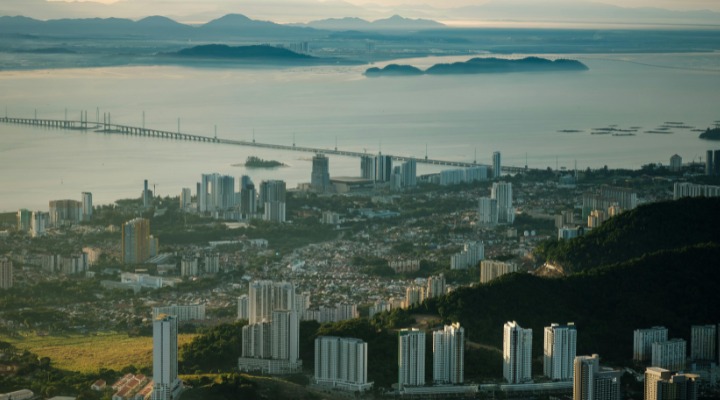
- The growth in water-intensive sectors such as semiconductors, power and mining: the APAC region accounted for just over 50 per cent of the global semiconductor production in 2024, with AI and electric vehicles set to increase demand exponentially. Leading semiconductor hubs include: Shanghai, Shenzhen, Taiwan, Seoul, Penang and Singapore.
- Climate variability reducing reliability of surface and groundwater: A 2025 study by WaterAid highlighted that many of the cities in south and southeast Asia are experiencing increased rainfall, bringing with it the increased risk of severe flooding. Many cities also face what the report calls a ‘whiplash’ effect where weather conditions shift from ‘droughts that deplete water sources to floods that overwhelm infrastructure, destroying sanitation systems and contaminating drinking water’.
- Policy shift toward water security and independence: For example, the Thai government has announced a three-year water management plan aimed at providing 4.5m households with clean water and increasing water reserves to 4.7bn billion m3. The plan, spearheaded by Prime Minister Srettha Thavisin, will cost the equivalent of €14.5bn.
- Falling cost per cubic metre driven by energy efficiency and scale.
What are the biggest barriers preventing wider adoption of desalination in Southeast Asia?
Cost and finances are the biggest obstacles to wider adoption of desalination across the APAC region.
“Energy cost is still the main barrier,” explains Ferguson. “It drives OPEX and public pricing pressure. Financing is close behind, especially for smaller nations with limited balance sheets. Regulation and environmental approvals can slow projects but are less of a blocker than cost.”
In areas where water stress is a visible part of everyday life, public acceptance is generally improving, adds Ferguson.
How can Asian governments balance desalination expansion with sustainability and resilience goals?
Desalination has traditionally been an energy-intensive industry. Each plant has a huge footprint, and there are also long-standing environmental concerns regarding brine discharge. Desalination provides a solution for water security in an age of data centre growth and ever-increasing demand for semiconductor production. APAC nations are experiencing both increasing water demand and scarcity, as well as intensifying climate-related problems. So how can APAC countries balance desalination expansion (for water needs) with the need to focus on sustainability and resilience?
Ferguson believes we need to focus on energy efficiency first. “That is where the biggest impact sits,” he says. “Link desalination plants with renewable power where feasible. Set clear discharge standards and monitor compliance.”
Link desalination plants with renewable power where feasible
To do this, he believes governments need to “encourage high-efficiency technologies through procurement frameworks, not just lowest CAPEX. Reuse and desalination should be planned together as part of one water strategy.”
But how would this look in practice?
“Desalination is the anchor supply,” he states. “It is drought-proof and predictable. Reuse, storage and demand management sit around it.”
The combination reduces reliance on a single source and smooths seasonal swings. “In practice, we see utilities using desal to cover baseload demand and reuse for industrial loops,” he adds.
What lessons can Asian water authorities learn from global desalination leaders when developing future water-security strategies?
Ferguson believes that the common thread linking global leaders in desalination is long-term policy consistency and their focus on lifecycle cost, not just initial price.
“Australia has a strong response to drought through rapid deployment of large-scale desalination, with a clear focus on energy efficiency and reliability,” he begins. From Singapore, he points out the country's “diversification across desalination, reuse and imports with long-term planning discipline”, while the Gulf states show that the cost of desalinated water per cubic metre can be reduced through scale and standardisation.”
Can emerging related technologies like brine mining create new opportunities in Asia?
Brine is moving from waste to resource, and the recovery of minerals and concentration processes create new value streams, particularly in mining and industrial clusters.
“The MAVEN project in Indonesia is a good example of brine handling and concentration at scale,” Ferguson says.
The Maven Brine Mining Project became the world’s first large-scale OARO commercial plant, capable of processing 27,120 m³/day of water and producing 220,000 tons of food-grade salt annually. MAVEN addresses Indonesia’s salt import challenges, offers a sustainable production process, and produces clean water at the same time.
“Reuse is already a major growth area,” Ferguson adds. “Industrial reuse and zero liquid discharge (ZLD) are expanding quickly across China, India and Southeast Asia.”
Lower energy consumption and higher system efficiency directly reduce environmental footprint
But what about the environmental concerns?
Ferguson states that higher efficiency systems reduce intake and discharge volumes, while better mixing and outfall design limits marine impact. At the same time, brine concentration reduces total discharge volume.
Regulation is tightening across the region. Discharge limits, salinity thresholds and environmental monitoring are becoming standard in most new projects.
“From a Danfoss perspective, the role is clear,” Ferguson explains. “Lower energy consumption and higher system efficiency directly reduce environmental footprint.”
How viable is desalination for meeting the water demands of tourism?
As tourism-dependent islands across Asia face seasonal water shortages, how viable are decentralised or small-scale desalination systems for long-term water resilience? Very viable and increasingly necessary, believes Ferguson.
“Small-scale, modular desal systems can match seasonal demand, reduce need for large infrastructure, they can be deployed quickly, and they work well with hybrid power including solar.”
The key, he states, is efficiency and reliability. “High-pressure pumps and energy recovery are just as important at small scale as they are in large plants. Without that, operating cost becomes the limiting factor.”
So, while desalination comes with environmental and energy costs, with increasing efficiencies, both of these ‘limiting’ factors become less of a concern for a technology that has the potential to increase water security and availability across the APAC region.
“We want to build something like Uber” - Adam Saffian Ghazali on transforming a future-ready water utility
Sustainable water management through decentralised greywater reuse in Asia
K-Water teams up with OpenAI for water management

Porsche accelerates start-up’s clean water goals