China's ambitious desalination plans go beyond water security
As the world of water heads to Shanghai for Aquatech China, it does so following the launch of the country’s Action Plan for the Development of the Seawater Desalination Industry. Issued by three of the government’s major ministries – the National Development and Reform Commission, the Ministry of Natural Resources, and the Ministry of Water Resources of China – the action plan sets a target production of 4.5 million tons/day for the country’s desalination industry.
In this article, we look at what this means for the Chinese desalination industry.

15th Five-Year Plan targets marine industries
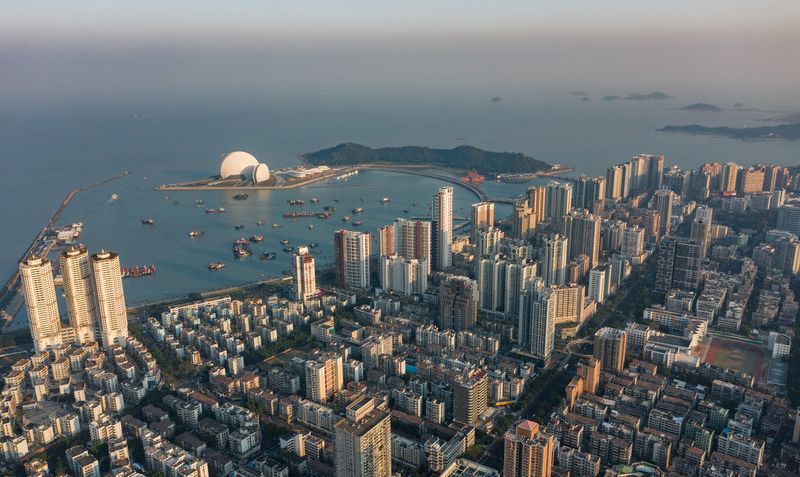
China’s 15th Five-Year Plan was issued in March, 2026 and sets out the country’s strategic framework for economic, social, technological, and environmental development during the period that runs to 2030, but also with long-term goals that extend for a further five years. Part of the plan is to develop the country's marine industries, which sources estimate were worth €1.3 billion (10 billion Chinese Yuan) in 2024.
Speaking at a roundtable hosted by Xinhua News Agency, Gu Wu, an official of the Ministry of Natural Resources, explained that the country would “stick to innovation-driven development and adopt more measures to cultivate new-quality productive forces in the marine sector.”
Seawater desalination is one of the ‘forces’ the country is expected to develop as part of the latest Five-Year Plan. One of the biggest shifts that comes from the Action Plan for the Development of the Seawater Desalination Industry is in political mindset. Seawater desalination is no longer simply a means of supplying water; it is now a strategic sector in itself, with technological development, advanced manufacturing, international cooperation, and water security, all now part of the plan.
China has vast potential for desalination
China has vast potential for developing its seawater desalination industry, both in terms of clean water output and industrial production. Mainland China has a coastline of approximately 18,000 km and a maritime area (including islands) in the region of 3 million km³
The Plan targets 1.5 million tons/day of additional capacity, bringing total capacity up to 4.5 million tons/day. It also aims to integrate desalination more thoroughly in regional and local planning processes.
The Chinese government also prioritised seawater desalination as part of its 14th Five-Year Plan (2021-2025) as a means of addressing water scarcity issues accelerated by rapid urbanisation and the demands from increasing industrialisation. The plan, written in 2021, aimed to promote the use of desalinated seawater in urban water supplies and to place China at the forefront of innovation and development of sustainable water solutions.
Building on these ambitions, the Action Plan for the Development of the Seawater Desalination Industry aims to go even further.
What the Action Plan aims to achieve
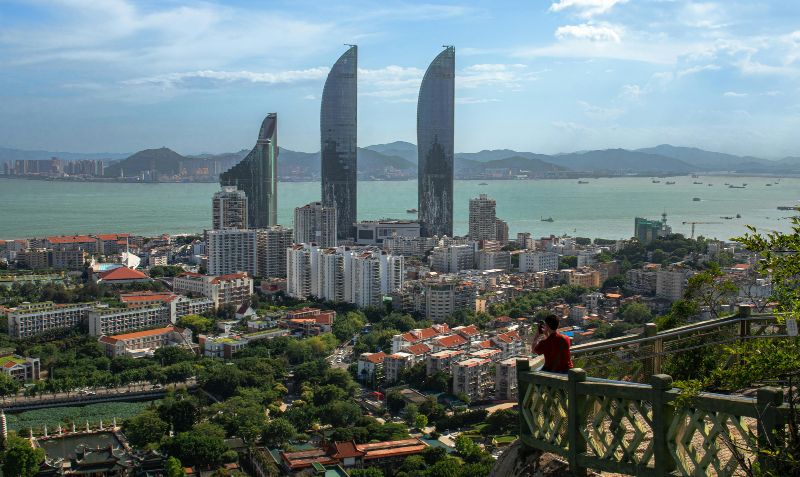
Developing the country’s seawater desalination industry has two main objectives.
First, it will increase the country’s water security by optimising the ‘water resource supply structure’,* which, in turn, will help to solve scarcity problems in coastal cities and island areas. The plan makes clear that capacity will increase for emergency urban water supply, as will supplies for daily life on China’s inhabited islands, and for coastal industrial parks.
Second, it will help the country achieve its objectives as a strong maritime nation by accelerating ‘high-quality development of the seawater desalination industry’ through prioritising innovation and productivity. Specifically, the plan aims to ‘promote deep integration of seawater desalination technology and industry innovation’. It is expected that this will lead to the entire sector being upgraded, the scale of supply increased, and usage cases expanded.
Targeting industrial applications
Increasing the volume of desalinated water used in industrial applications is a key component of the Action Plan.
As mentioned above, the proportion of seawater desalination water used in coastal industrial parks is set to increase, where local conditions allow. Crucially, desalination plants are not viewed in isolation; the Action Plan outlines a need to ‘optimise the layout of high-water-consuming industries such as petrochemical, steel, thermal power, and nuclear power in coastal areas, encouraging large-scale seawater desalination projects to be built collectively by parks or individually by companies, and supply water according to different enterprise needs’.
This integrated approach to desalination is further strengthened in the Plan with the instruction to ‘integrate desalinated seawater reasonably into water use planning, and strictly control high-water-consuming projects and new water withdrawals in industrial parks that have the capacity but do not fully use desalinated seawater’.
In addition, ‘newly built, renovated, or expanded industrial projects in coastal or island areas with scarce freshwater resources should prioritise using seawater desalination and other unconventional water sources’.
The Plan is clear: where possible and practical, industrial users near the coast must plan to use desalinated seawater in their processes.
Accelerating technological developments
Beyond increasing the supply and availability of water, the Plan sets a requirement for desalination to become a driver for technological innovation.
“Implement actions to fill gaps in scientific and technological innovation. Accelerate key R&D of high-performance reverse osmosis membranes, nanofiltration membranes, and new separation membranes, improving key performance indicators such as water flux, anti-fouling properties, and lifespan, and increase the domestic replacement rate.”
In addition, it requires the water sector to:
- Make every effort to overcome critical equipment manufacturing technologies for large-scale seawater desalination high-pressure pumps and 10,000-ton-level energy recovery devices, pushing their performance to reach international advanced levels.
- Promote comprehensive utilisation of brine according to local conditions, carry out research and demonstration on brine-based salt production, bromine and potassium extraction technologies, and build a 'desalination–resource utilisation' circular economy model.
- Support research on new seawater desalination technologies such as salinity gradient power, solar-thermal coupling, and short-process dual-membrane methods, and encourage research and demonstration of seawater extraction technologies for strategic mineral resources like lithium and uranium.
- Promote breakthroughs in ultra-large-scale seawater circulation cooling integration technologies suitable for nuclear power and their demonstration.
Promoting collaboration between regions and industries
Another innovative approach to desalination comes from the drive to develop a group of leading companies across the ‘industrial chain’ to foster collaboration and boost international competitiveness. These companies would represent key materials, equipment manufacturing, engineering, and facility operation and management.
Regions will be supported to develop their desalination capabilities as a complete marine industry, including plants, related equipment manufacturing, and ‘advancing the full chain of technology R&D, equipment production, and engineering applications’.
Collaboration across sectors is also encouraged – specifically with the chemical salt industry – and where resource recovery can be achieved, with both potassium and bromine extraction from seawater being mentioned.
Powering the industry through green power
Green power and low-carbon technologies are promoted by the Action Plan, with the industry encouraged to speed up adoption of both. For example, ‘waste heat utilisation, renewable energy coupling, seawater desalination chemicals, and green pretreatment’ are all mentioned. Seawater desalination plant operators are expected to increase their use of clean energy like wind, ocean, and solar. Where equipment fails to meet current standards, operators are encouraged to upgrade and renovate with low-carbon and green energy technologies and principles.
Monitoring of waste, brine discharge, energy consumption and water quality is also expected to improve and increase. This should happen at plant and company levels, and also through local oversight and departmental supervision.
Improving standards throughout the industry
The desalination chain will be improved through the establishment of a complete standards system, encompassing engineering design, construction, and operational management. These should be integrated with standards governing energy, water supply, and the ecological environment. Again, positioning desalination as part of a wider industrial ecosystem. It goes further, with a desire to see Chinese standards mutually recognised alongside and even influencing international desalination standards.
Specifically, the Action Plan states the need to develop or revise standards covering energy saving, smart control, new technologies and materials applications, ecological impact assessment of brine discharge, and nuclear power seawater cooling.
Promoting international cooperation
Future collaboration is not only encouraged within China and across related sectors, but also internationally. For example, the Action Plan encourages: ‘Practical cooperation with advanced international research institutions, companies, and so on, and engage in exchanges and collaborations across multiple levels and fields in technology R&D, equipment manufacturing, and talent development’.
Chinese companies are encouraged to expand international markets, to help support the building of desalination plants and to promote ‘the export of independently developed technical processes, equipment products, and operation and maintenance management experience to enhance international competitiveness'.
This outreach mirrors the country’s willingness to support international investment within China. Aquatech China, which takes place at the Shanghai New International Expo Centre from 28-30 October 2026, welcomes more than 500 exhibitors from more than 15 countries, helping to showcase both domestic and international experience, innovation, and business models. This year’s conference programme includes a dedicated summit forum on Membrane filtration and seawater desalination, with key discussions covering energy efficiency, AI-driven optimisation, system reliability and international water projects, showcasing the technologies shaping the future of water treatment.
Share your water technology stories with us
Do you have an innovation, research results or an other interesting topic you would like to share with the international water technology industry? The Aquatech website and social media channels are a great platform to showcase your stories!
Please contact our Sr Brand Marketing Manager Annelie Koomen.
Are you an Aquatech exhibitor?
Make sure you add your latest press releases to your Company Profile in the Exhibitor Portal for free exposure.