Essential Guide: Water Resource Management: objectives, policy & strategies
Water management is vital as rising demand, climate change, and human activity create growing challenges in an unpredictable environment. Ensuring future access requires innovative solutions and collective action.
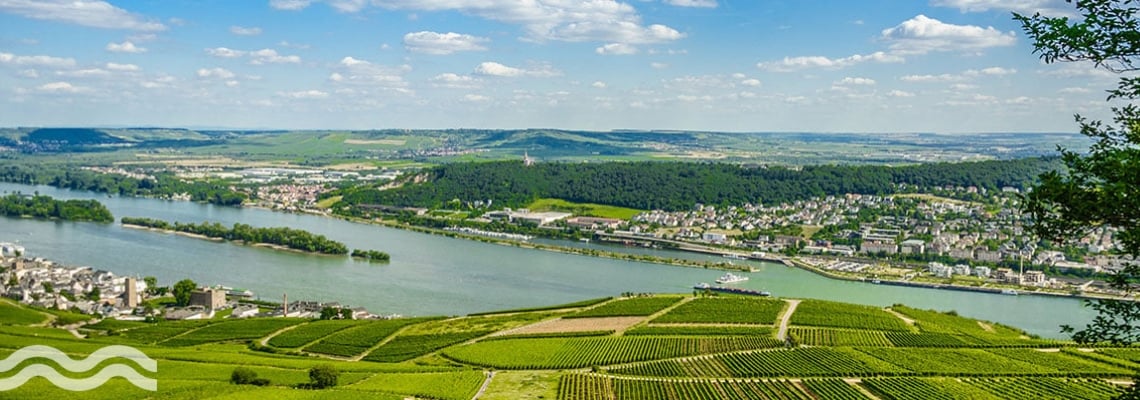
Today's water management differs significantly from the past, presenting a more formidable challenge in an increasingly unpredictable environment. Private and public stakeholders must collaborate to collectively manage the water cycle. Efficient water resources management facilitates effective oversight of water use across sectors, disciplines, and regions. This article explores the meaning, objectives and policy drafting of water resources management.
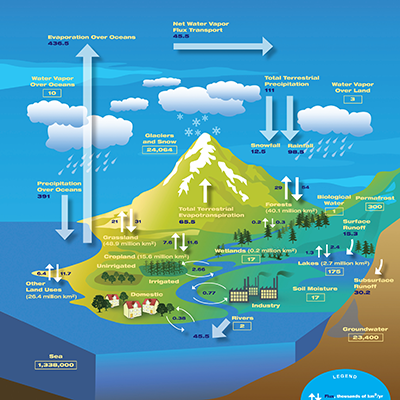
Image credit: American Press Association
What is water resource management?
The UN defines Water Resources Management (WRM) and Integrated Water Resources Management (IWRM) as empirical concepts derived from practitioners' on-the-ground experience.
While elements of this concept have existed since the 1977 global water conference in Mar del Plata, water resources management gained extensive attention and discussion after Agenda 21 and the World Summit on Sustainable Development in Rio in 1992.
The IWRM principles adopted at the International Conference on Water and the Environment in Dublin, Ireland, in 1992, are known as the Dublin Principles.
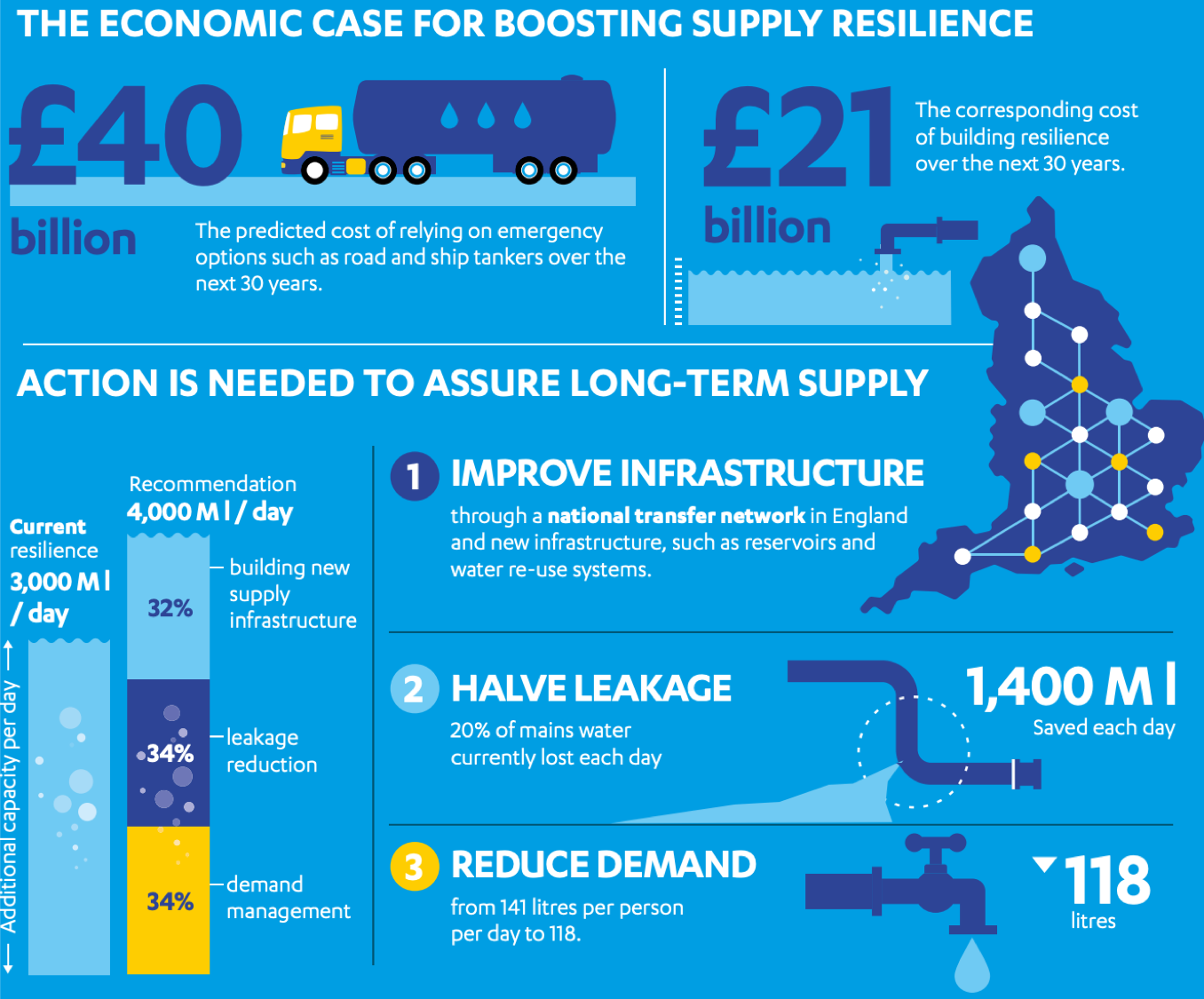
Image credit: International Water Association
These principles were later summarized by GWP:
“Integrated water resources management is based on the equitable and efficient management and sustainable use of water and recognises that water is an integral part of the ecosystem, a natural resource, and a social and economic good, whose quantity and quality determine the nature of its utilisation.”
Meanwhile the World Bank defines WRM as the “process of planning, developing, and managing water resources, in terms of both water quantity and quality, across all water uses”. It includes the institutions, infrastructure, incentives, and information systems that support and guide water management.
Water resources management, as highlighted by the World Bank, aims to optimise the advantages of water by guaranteeing an ample supply of quality water. This is essential for various purposes such as drinking water and sanitation services, food production, energy generation, inland water transport, and water-based recreation. Simultaneously, it endeavours to support the health of water-dependent ecosystems and safeguard the aesthetic and spiritual values associated with lakes, rivers, and estuaries.
Achieving water security with water resource management
Water resource management also entails managing water-related risks, including floods, drought, and contamination. The complexity of relationships between water and households, economies, and ecosystems, requires integrated management that accounts for the synergies and tradeoffs of water's great number of uses and values.
One of the goals of water resource management is water security. It is not possible to ‘predict and plan’ a single path to water security for rapidly growing and urbanizing global populations. This is due to climatic and non-climatic uncertainties. To help strengthen water security, there is a need to build capacity, adaptability and resilience for the future planning and management of water resources.
According to the World Bank, achieving water security in the context of growing water scarcity, greater unpredictability, degrading water quality and aquatic ecosystems, and more frequent droughts and floods, will require a more integrated and longer-term approach to water management. This is in essence what water resource management is about: bringing together multiple organisations, across different disciplines, to plan for future water usage holistically.
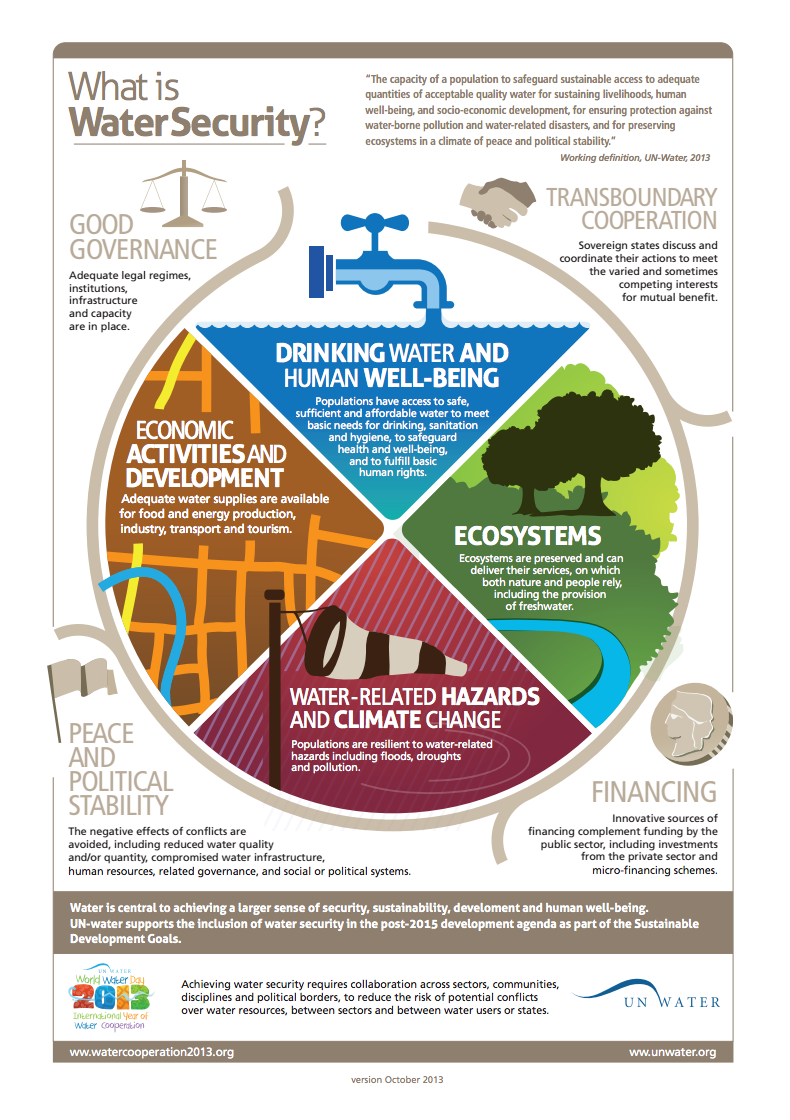
Image credit: UN Water
Objectives of water resource management
Water resource management objectives can vary depending on the region, current water conditions, and policy implementations. Common goals include promoting environmentally sustainable, economically efficient, and equitably allocated use of water resources. Additionally, objectives often aim to enhance benefits and mitigate risks associated with existing hydraulic infrastructure.
In these projects, a consistent objective is to integrate the policy approach into broader sectoral policies across the country, involving the development of social, technical, and administrative water resource management tools.
The three pillars of water resources management
The Global Water Partnership (GWP) emphasizes an Integrated Water Resources Management (IWRM) approach based on three pillars:
- Establishing an enabling environment with suitable policies, strategies, and legislation for sustainable water resources development and management.
- Putting in place the institutional framework to implement these policies, strategies, and legislation.
- Establishing the necessary management instruments for these institutions to effectively carry out their responsibilities.
Water resource management policy
What is water resource management policy?
When it comes to drafting a water resource management policy, it is important to what a policy is. Policy refers to a set of high-level decisions, made through consultation at the political level in a specific country - distinct from strategy implementation. Once established, policy provides the framework that shapes actions across sectors and contexts.
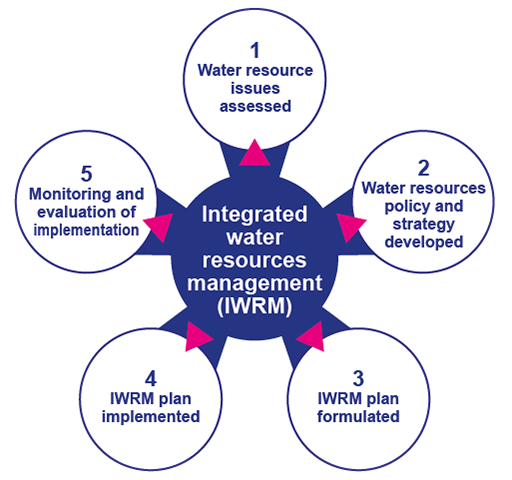
Image credit: The Open University
Water resource management requires not only a policy, but also a process or plan on how to implement it. Furthermore, policy should not be confused with legislation. After a policy has been adopted, legislation needs to be examined to see where amendments and changes are needed.
According to the OECD, water outcomes are often influenced by policies outside the water domain. As a result, increasing unity between water policies and other sectoral policies is a key component of an integrated approach to water resources management.
Moreover, there is no one-size-fits-all approach, nor one correct administrative model.
Implementing the right policy for water resources management
The GWP said: “The art of IWRM lies in selecting, adjusting, and applying the right mix of tools for a given situation. Agreeing on milestones and timeframes is critical for success. The implementation may take place on a step-by-step basis, in terms of geographical scope and the sequence and timing of reforms. Scope, timing, and content of measures can be adjusted according to experience. In developing a strategy and framework for change, it is important to recognise that the process of change is unlikely to be rapid.”
For policy-making and planning, water development and management should take into account the various uses of water and the range of people’s water needs, including:
- Stakeholders are given a voice in water planning and management, with particular attention to securing the involvement of women and economically-marginalized individuals;
- Other policies and priorities consider water resources implications, including the two-way relationship between macroeconomic policies and water development, management, and use;
- Water-related decisions made at local and basin levels are along the lines of, or at least do not conflict with, the achievement of broader national objectives; and
- Water planning and strategies are incorporated into broader social, economic, and environmental goals.
GWP added: “Putting sustainable and integrated management of water resources into practice must be anchored at all levels with the highest political commitment.”
Hydrology and water resources management
What is hydrology?
Hydrology is the study of the global water cycle and the physical, chemical, and biological processes involved in the different reservoirs and fluxes of water within this cycle. In general, hydrologists focus on terrestrial water, while recognizing that the global hydrological cycle includes exchanges of water between the land surface, ocean, atmosphere, and subsurface.

Image credit: Science
Water in the oceans and atmosphere is mainly the concern of oceanographers and meteorologists. Many hydrologists work at the interface between land surface water and the atmosphere, studying precipitation and evapotranspiration processes in the field of hydrometeorology.
Hydrology and water resource management
Water resource management, as outlined by S.J. Marshall in Earth Systems and Environmental Sciences, encompasses various hydrological disciplines, addressing the global water cycle, surface and groundwater, water chemistry, pollution, and aquatic biology.
Post-treatment, water supplies cater to diverse needs in industrial, municipal, agricultural, and ecological sectors. The intricate balancing act involves stakeholders, water policy, legal experts, and hydrologists who contribute to complex deliberations and negotiations. Applied hydrology plays a central role in engineering major waterworks, shaping civilization's water distribution systems from ancient Babylon to modern hydroelectric dams, reservoirs, and treatment facilities.
These tools aid governments in managing water resources to meet societal and ecological needs. Marshall emphasises water resource management's global challenges, including competition for limited resources, regional disparities, growing water demand, aquifer depletion, and climate-change-induced stress. Addressing these challenges requires innovative and sustainable approaches, fostering international cooperation in the coming decades.
Water resource management strategies: Three case studies
Effective water resource management strategies can help achieve successful results, as highlighted in these three examples, where appropriate programmes have been implemented.
1. Water utility level: 25 years and beyond at United Utilities
UK water utilities are required to submit a statutory Water Resources Management Plan (WRMP) every five years to set out their intended approach for at least the next 25 years.
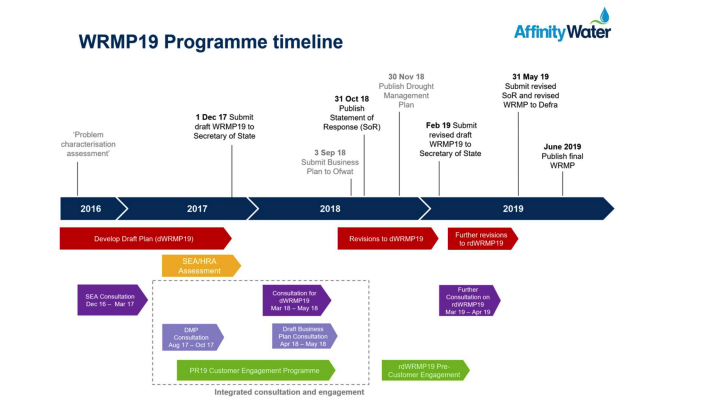
Image credit: Affinity Water
United Utilities is currently working on its 2030-2090 plan, which will set out how it will meet the demand that regional growth, population change, and the impacts of climate change create. Central to many of its plans is the need to reduce leakage. For example, the 2024 plan outlined the ambition to achieve ambitious government targets to halve the level of leaks and reduce water use per person per day to 110 litres by 2050. At the same time UU stated that the reduction in demand for water would contribute to its commitment to reduce carbon emissions.
This built on its earlier Water Resources Management Plan 2019, which targeted a 15 per cent reduction by 2025 and just over 40 per cent reduction by 2045. A significant focus of the plan was drought resilience, with the utility claiming to have tested its system against droughts more severe or extreme than historically experienced.
2. Regional level: Integrated Water Resources Management in Eastern Europe, the Caucasus and Central Asia
In Eastern Europe, the Caucasus, and Central Asia, competition for water resources had been intensifying. This competition was driven by increasing demands from agriculture, energy producers, industry, and cities. The pressing need was to ensure that these competing demands were met through a robust policy framework grounded in internationally recognized principles of integrated water resources management (IWRM).
After concerted efforts, there is evidence that the region was increasingly applying the principles of IWRM. This involved significant steps such as the revision of water codes, the establishment of river basin councils, and the development of river basin management plans. Additionally, there was a growing reliance on economic instruments to manage water demand and cover the costs of water services.
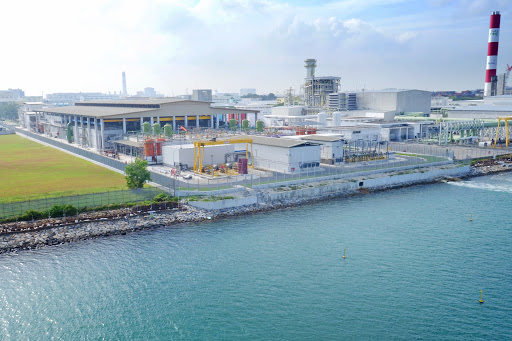
Image credit: Global water Tech Hub Alliance
City-state level: A sustainable approach to water resource management in Singapore
An island city-state off southern Malaysia, Singapore is a single water agency, known as PUB (Public Utilities Board). The water company manages the complete water cycle, from collecting, treating and supplying drinking water, to the collection and treatment of used water and turning it into NEWater.
Singapore set out its approach to water resource management using a ‘3 P’3 approach in parallel with its ‘Four National Taps’ development: local catchment water, imported water, NEWater and desalinated water.
The city-state now has a diversified water system: multiple desalination plants in operation, together with water reclamation, recently outlining increased treatment capacity at the Jurong Water Reclamation Plant and the Changi Water Reclamation Plant.
Aquaculture and water resource management
What is Aquaculture?
Aquaculture is defined as the breeding, rearing and harvesting of fish, shellfish, plants, algae and other organisms in all types of water. While this may seem distant from the water supply for consumption, agriculture and industry, it can be linked via water resource management.
A wide range of organisms are supported by aquatic ecosystems, including insects, fish, invertebrates and microorganisms. Tech biodiversity of aquatic systems is a major concern in many water conservation and restoration projects.
Understanding trophic systems and their health as a function of environmental conditions, including water turbidity and temperature, is the responsibility of some hydrologists.
Water plays an important role in both agriculture and aquaculture, as great quantities of water are used in both processes. As a result, water used in both agriculture and aquaculture has to be of sufficient quality so as not to be damaging to human health.
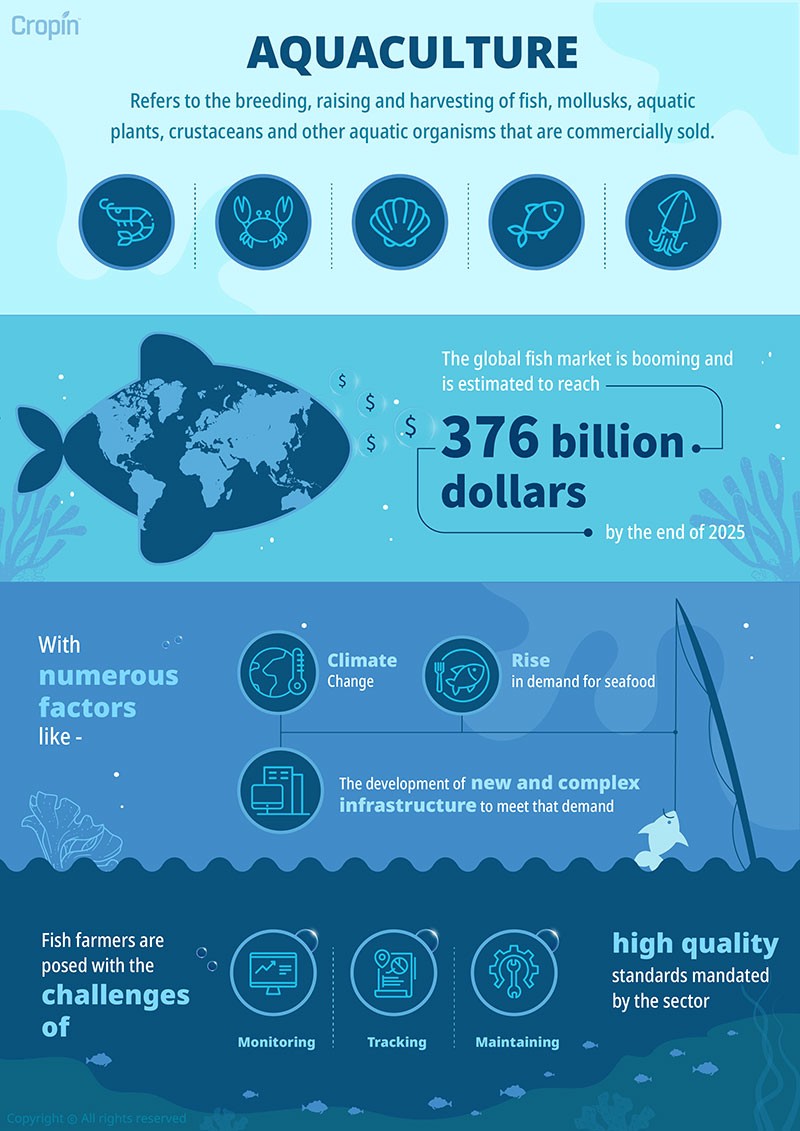
Image credit: Medium
Aquaponics for water resources management
Aquaponics is a sustainable, soil-less farming method that combines aquaculture (raising fish or other aquatic animals) with hydroponics (growing plants in water). Aquaponics utilises wastewater from facilities raising fish or marine animals to provide nutrients for soil-less plant growth, a method known as hydroponics. The plants purify the water, which is then returned to the marine animals.
A notable example is the National Oceanic and Atmospheric Administration’s Sea Grant Program, supporting the world's largest aquaponics operation in a 123,000 sq-ft Wisconsin greenhouse. There, various greens are cultivated using water piped from a neighbouring facility raising salmon and rainbow trout. The plants filter out harmful ammonia, and the purified water is recirculated to the fish-farming facility.

Image credit: Wisconsin State Farmer
Future developments
In 2024, the UN published a progress report on the implementation of integrated water resources management as part of its focus on SDG6 monitoring. Progress was measured against Target 6.5: "By 2030, implement integrated water resources management at all levels, including through transboundary cooperation as appropriate.”
Four key messages emerged:
- At the current rate, the world will not achieve sustainable water management until at least 2049. In 2030, at least 3.3 billion people are unlikely to have effective governance frameworks to balance competing water demands and cope with increasing pressures, including from climate change.
- Insufficient finance constrains the implementation of integrated water resources management, limiting institutional capacity, monitoring networks, and the application of management instruments. More effective revenue raising for water management and infrastructure is needed in 85 per cent of countries.
- Using IWRM approaches – cross-sector, participatory management at the basin scale – in climate change adaptation efforts, presents a great opportunity to build resilience to climate change impacts.
- Political commitments at the global level for sustainable water management have never been higher, but they have not been matched by the required finance or action on the ground. Recognizing IWRM approaches as being relevant to achieving other development objectives, including energy and food security, is critical to accelerating progress on sustainable development.
These messages point the way forward for water resource management. First, approaches need to be integrated, cross-sector and multi-disciplinary. Second, the political realisation that water is not simply an environmental issue, but a key cornerstone of the economy, needs to unlock financial arrangements that can drive coordinated action on the ground. Third, points one and two need to be accelerated because missing SDG targets has real consequences to people's lives.