Satellites and AI help put Europe’s water scarcity on the map
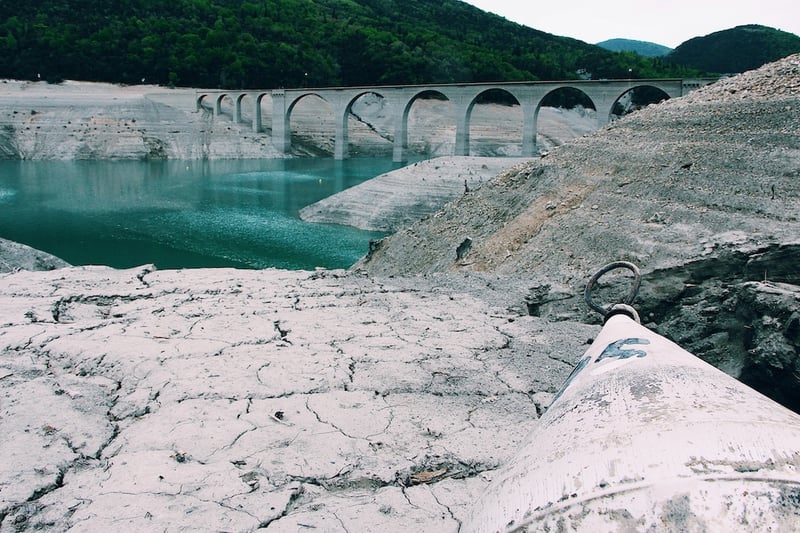
On the flip side, in 2025, Spain experienced severe and catastrophic flooding events, also linked to climate change.
You might point to Greece, or even southern Italy. Places that we go to ‘find the sun’. And, of course, you would be correct, to an extent. But what about traditionally wet places? Where water is abundant, and where we spend most of our days moaning about the rain? Somewhere like Ireland, for example?
Europe is getting drier; we are running out of water
While it’s a tradition in parts of Western Europe to moan about the rain and wish for sunnier days, two recent studies have shown that we must be careful what we wish for.
According to a study conducted by researchers at University College London (UCL), working in partnership with Watershed Investigations and the Guardian newspaper, groundwater reserves in Europe are dwindling. Researchers analysed satellite data covering 2022-24, which tracks changes in the Earth’s gravitational field that can be attributed to the weight of water stored in groundwater, rivers, lakes, soil moisture and glaciers.
Data reveal that parts of north and northwest Europe are getting wetter, while large parts of the south and southeast, including parts of the UK, are getting drier. Overall, the picture reveals a continent where water scarcity is going to become a very serious issue if nothing is done to prevent it.
While groundwater reserves tend to be more resilient than other water sources, the data revealed that when isolated from rivers, lakes, glaciers, etc, the same trend was being observed.
Back in May 2025, the EU’s European Drought Observatory found that as much as 41.2 per cent of Europe experienced some level of drought condition. While the alert covered traditional ‘hot’ countries like Spain and Greece, it also covered Poland and Ukraine, with concerns also for France, Germany and Ireland.
For these reasons, the European Commission has developed a water resilience strategy, which intends to ensure all member states can provide their citizens with a clean and reliable water supply.
Keeping track of river health
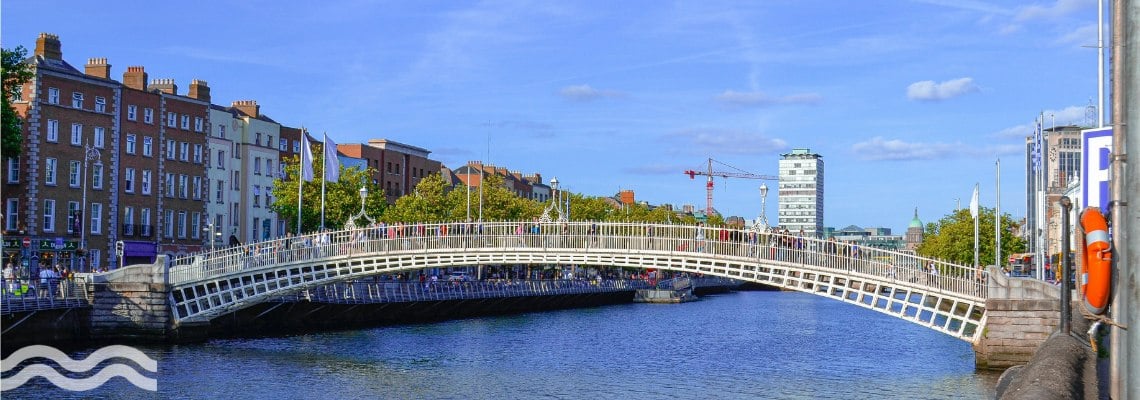
With Europe’s groundwater reserves dwindling, more pressure will be exerted on rivers for extraction. In Ireland, 80 per cent of all extraction for drinking and industrial use comes from surface waters. In the greater Dublin area, water extraction from the Liffey River is at an even higher rate. This makes rivers an increasingly important source of water. However, until now, tracking rivers, both in terms of volume and quality of water, has been a painstaking and time-consuming task.
Researchers at the University of Massachusetts Amherst have recently demonstrated that satellite data can be used to do just that – track the volume and quality of water flowing through any river wider than 50 metres.
Confluence, the open-source platform developed by the researchers, is free to use. These metrics are now available to water resource managers, planners, policymakers, climate scientists and hydrologists, and can help inform water management practices where scarcity is an issue, and where other sources, such as Europe’s groundwater reserves, are under increasing pressure.
“We don’t have all the water quality pieces we might want in Confluence, but it is unique in that it’s observationally driven software that is producing both estimates of river quantity and quality at the same time globally—and that’s never been done,” Colin Gleason, Armstrong Professor of civil and environmental engineering at the UMass Amherst Riccio College of Engineering, a hydrologist who led the international effort to incorporate various river discharge algorithms into the framework, told media at the system’s launch.
Pooling data from several sources into one usable system
Confluence leverages data from three satellite systems: Surface Water and Ocean Topography (SWOT), a €1 billion satellite mission launched by NASA and France’s Centre National d'Études Spatiales (CNES) to calculate river discharge, or how much water flows through a particular point in a river at a specific time, as well as LANDSAT and Sentinel-2, which provide data on suspended sediment.
“These are independent observations that we make from space,” Gleason added. “Confluence is unencumbered by what you think the river should be. It’s simply direct measurements of the river inverted to discharge and sediment, so it’s true to the actual physical state of the planet.”
Water scarcity: an Irish case study
As stated above, Ireland relies mainly on surface water. Just like in England, Ireland is a country of two halves when it comes to water. The eastern seaboard is much drier than the west of the country, with the greater Dublin area representing the greatest demand on water resources. As we have seen, more than 80 per cent of that demand is currently met by extraction from the Liffey.
Increased demand and changing weather patterns mean that supply is no longer able to keep up with demand. A situation seen across Europe and the wider world.
Uisce Éireann (Ireland’s national water utility) predicts that by 2044, as a result of economic growth, population growth and the impact of climate change, the Greater Dublin Area will need 34 per cent more water than is currently available. Last year, three counties were placed on their earliest-ever water usage restrictions.
An over-reliance on the Liffey and other rivers exposes Ireland to vulnerabilities caused by drought or pollution events. With increased demand and greater exposure to vulnerability, Uisce Éireann has begun work on projects that are aimed at reducing extraction levels.
Embracing new technologies to solve water challenges
One project involves the use of smart technology and AI to improve leak detection in the mains water network in the Dublin area, as part of an ambitious goal to reduce water lost to leakage. Talking to Aquatech Online in 2025, Alan Milton, head of water network management at Uisce Éireann, said: “We have ambitious targets to get down to 20 per cent lost in the greater Dublin area, 25 per cent nationally by 2030.”
He added: “We've got to do something a little bit different and embrace new technologies, like AI, to help us in that journey and with the ‘war on leakage’ as we call it.”
More recently, the utility has filed a planning application for what would be the largest-ever water project in the country: The Strategic Infrastructure Development planning application and Compulsory Purchase Order. Aimed at reducing the over-reliance on the Liffey, the project will extract water from Parteen Basin, upstream of Parteen Weir on the Lower River Shannon, utilising a maximum of two per cent of the long-term average flow at Parteen Basin.
Treated water will be piped 170km through counties Tipperary, Offaly and Kildare to a termination point reservoir at Peamount in County Dublin, connecting into the Greater Dublin Area water distribution network, helping to diversify water sources for Dublin, Meath, Kildare and Wicklow, all of which have suffered from usage restrictions over the past 12 months.
Capacity will also be built for offtakes to benefit other areas of Ireland, providing greater water security for communities, businesses and industry.