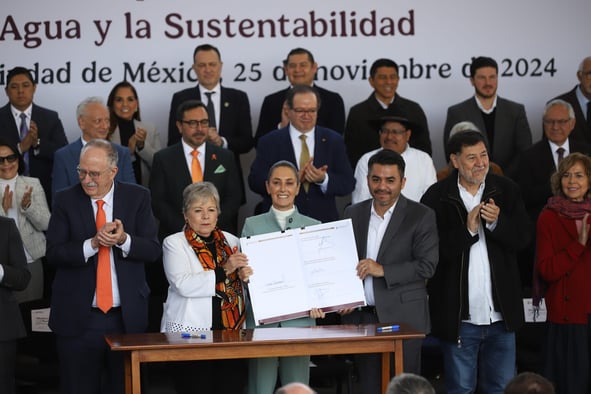
Arriving a little too late for last year’s round-up, Mexico’s president, Claudia Sheinbaum Pardo, announced a major change in intention and ambition in the water-scarce country. By signing into law the country’s National Water Plan 2024-2030, water was enshrined as a human right, a policy that would shape sustainability efforts in 2025.
At the beginning of the year, a report was published by EurEau, the European federation of national associations of water services, calling for the use of per- and polyfluoroalkyl substances (PFAS) in consumer products to end immediately.
In February, the European Parliament published its draft report on water resilience with key recommendations for the European Commission to consider as the strategy moves toward adoption.
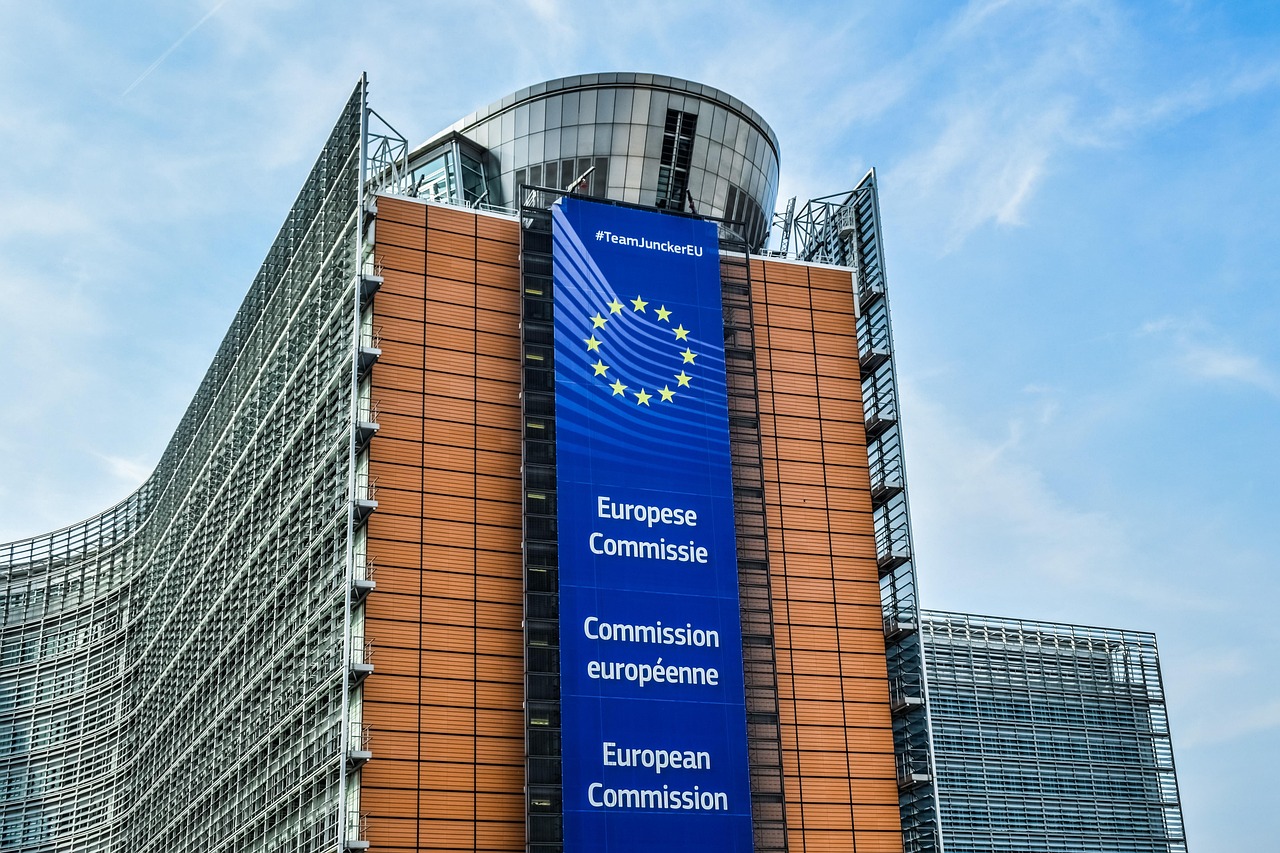
Water resilience was put at the heart of the European Commission's 2024-2029 five-year plan. Announcing the strategy, President Ursula von der Leyen stressed the need to adopt a circular economy approach to ensure the proper management of water sources, address scarcity, and enhance the digitalisation of the water industry.
The French National Assembly passed a law that will ban the use of PFAS in many products from 2026, making it the second European country to announce such a plan. The law assigns the cost of cleaning and destroying PFAS to the polluter rather than water utilities.
An open invitation was issued by a group of conservation groups asking for collaboration between corporate funders and NGOs in helping to overcome the barriers to, and maximise the impact of, water replenishment schemes. It followed the release of a report, Strengthening Corporate Water Replenishment: Leveraging lessons learnt to maximise the benefits for all, co-authored by Conservation International, The Nature Conservancy, WaterAid, Water.org, Wetlands International and WWF.

Members of the European Parliament (MEPs) voted to adopt recommendations for the European Water Resilience Strategy that puts water at the heart of the European Commission’s 2024-2029 five-year plan.
One of the most eagerly awaited questions for the US water sector, following the inauguration of President Trump for his second presidency, was what would happen to environmental controls, such as those covering the recovery and destruction of PFAS. In May, it looked like an answer was forthcoming as the US Environmental Protection Agency (EPA) announced a suite of new measures, including making polluters pay and appointing an official whose sole job was to lead on PFAS efforts.

However, by the end of the month, the EPA had announced that it was extending the date for water systems to comply with regulations outlining the removal of PFAS from drinking water and that it was reconsidering how it regulates a subset of the so-called forever chemicals.
With the European Commission setting a course for a water-resilient future, following a vote to adopt its Water Resilience Strategy, we wanted to find out more about the strategy.
The Chinese government targeted cleaner water resources with an action plan designed to protect and create beautiful rivers and lakes. The plan, which runs through to 2035, focuses on improving the quality of aquatic ecosystems as part of the broader Beautiful China initiative.

Eight nations facing severe water stress signed a charter agreeing to work together with the express aim of achieving global water resource sustainability and addressing escalating challenges within the sector.
With Mexico’s government on a mission to improve water security in the country, ahead of Aquatech Mexico, Aquatech Online talked to Marissa Mar Pecero, a consultant in water governance and a member of the National Water Advisory Council, to find out why the issue is so important and what action is being taken, including increasing the use of digital solutions.
As Mexico grapples with intensifying droughts and uneven water distribution, sustainable water management is emerging as a critical solution. However, Mexico’s problems are not simply a result of water scarcity but also a consequence of poor governance and infrastructure management, as Tamara Luengo Schreck told Aquatech Online. The founder of Aqueducto, a comprehensive consultancy firm specialising in water resource management, explained why sustainable practices are vital for ensuring the president’s vision is met.
Even before she was appointed as Mexico’s president, Claudia Sheinbaum had made water security a priority for her administration. Since becoming the country’s 66th president in 2024, Sheinbaum and her government have introduced numerous policies designed to improve infrastructure, with the goals of improving access to water of sufficient quality and quantity. These policies and the actions resulting from them are uniting all key stakeholders in improving the country’s water security, Paola Félix Díaz, general coordinator of the National Agreement for the Human Right to Water, and the head of International Cooperation at CONAGUA, told Aquatech Online.
Europe moved closer to a full ban on polyvinylidene fluoride (PVDF) membranes following an update to the European Chemical Agency’s (ECHA) dossier exploring the potential for banning the manufacture of all PFAS.
A report from Bluefield Research predicted Europe’s industrial water market will surpass €100bn by 2030 with a compound annual growth rate above 15 per cent. Factors driving market growth include the demand for more resilient and efficient water solutions to satiate the needs of technology, to address scarcity and to meet sustainability targets.
The World Health Organization and the United Nations Children Fund released a joint report highlighting the need to accelerate progress in providing people with access to drinking water, sanitation and hygiene (WASH) services.
For two decades, Europe’s Water Framework Directive has governed how water sources are protected. With a new digitalisation action plan for water on the horizon, an EU-funded water data management project released a policy paper highlighting how data can be turned into a strategic asset that can unlock smarter and more sustainable governance across all EU member states.
The European Commission further tightened regulations against PFAS, including restrictions on their use in firefighting foams, and updated a list of banned substances in surface and ground waters.
Water security measures in the US state of California were strengthened after its governor, Gavin Newsom, signed several bills into law. Together, they formed one of the strongest water planning frameworks in the state’s history. However, he declined to sign a further law that would have forced data centres to report on their water usage.
A group of leading companies called for the adoption of digital technology across the water cycle as part of their submission to the EU Action Plan on the Digitalisation of the Water Sector, which was a goal of the Water Resilience Strategy.
The Greek government announced that it would invest €2.5 billion in a plan to secure long-term water security in the country following prolonged drought and falling reservoir levels.









.jpg?h=628&iar=0&w=1200)