Counting the costs: Membranes in a time of war and legislation
Membrane technologies continue to advance. They have definitely come a long way since regulations were introduced in the 1990s, for example, in the UK and the USA, to specify their use in certain drinking water applications.
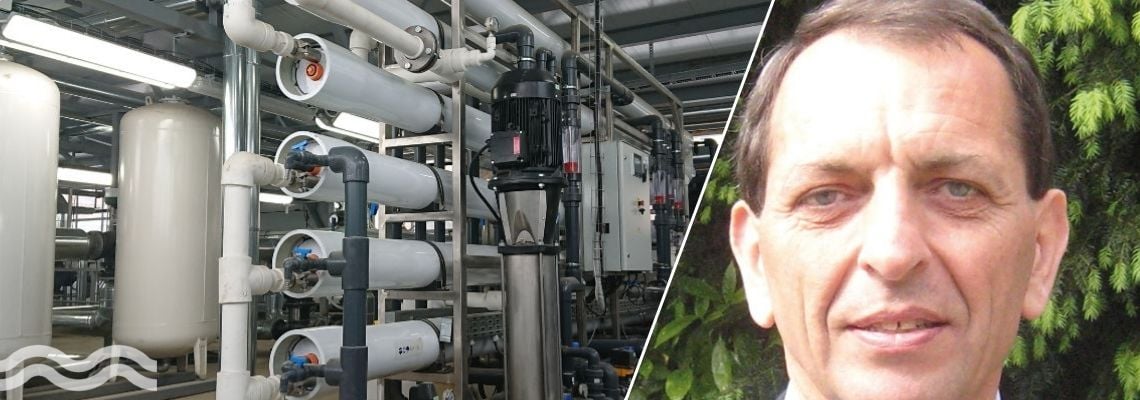
While polymeric membranes dominate ceramics in the market, there may soon be a surge in the latter’s popularity for two reasons, says Graeme Pearce, director of Membrane Consultancy Associates Ltd: war and impending regulation.
Here, he explains to Aquatech Online why the wars in Ukraine and Iran have affected membrane prices. He also shares his thoughts on what the European Union’s proposed restriction or ban on PVDF membranes will mean for the sector, highlighting some ongoing grey areas, before sharing his thoughts on recent developments in ceramics.
War, oil and the cost of membranes
“Before we talk about how war affects the price of membranes, we need some background from which recent price changes can be put into context.
“From 1997, when membranes were specified for some drinking water applications, the market opened up, competition was everywhere, and the prices dropped like a stone. So, when I talk about price and cost, I’m using this baseline. Before this, membranes were expensive, but were in some cases the only treatment option, so they could be considered a ‘cost-no-object’ purchase.
“Initially, it used to be that the materials for making a membrane would account for about half of the cost. The other half of the cost would be the direct labour and the operating costs of operating the membrane-making equipment. Materials would include the polymer itself, as well as the other plastics used in the manufacturing process.
“And both categories, to different extents, would be affected by the oil price because they both come from the petrochemical industry. But about half the cost of manufacturing membranes was strongly affected by oil prices.”
Membrane material types
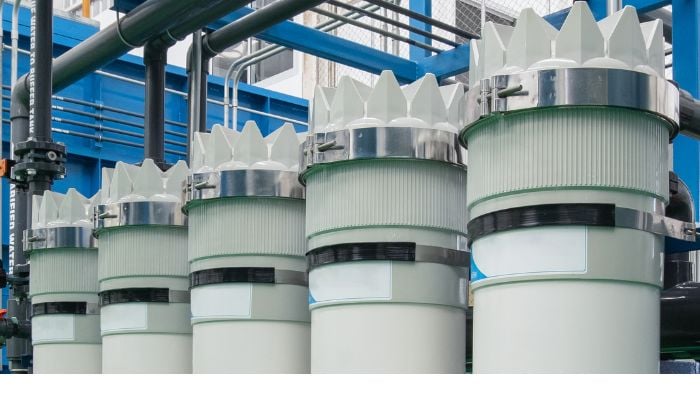
“Two materials have been favoured by the market over the years. Initially, polyethersulfone (PES) was the material of choice, but more recently, polyvinylidene fluoride (PVDF) has taken over much of the market share.
“Initially, PVDF was more expensive, but market conditions, sales volumes and a stable oil price saw prices come down until by around 2022 (after 25 years of membrane market competition) there was little difference between PVDF and PES manufacturing costs.”
How the war in Ukraine affected membrane costs
“War in Ukraine led to oil prices going crazy: plastic price indices went up by a factor of about 1.5. Suddenly, the price of materials, which had dropped to less than a third of the overall membrane price, was now back up to a half. And what was supposed to be a short war is still ongoing, and while oil prices stabilised a little, the polymer price indices stayed relatively high compared to 2022. The war had a direct and permanent effect on plastic prices.”
Will the war in Iran lead to price increases?
“If you look at the prices today, they have shot back up, again by a further factor of about 1.5 times the average of the last five years. All of that stabilisation has been wiped away again. This will likely lead to an increase in the price of polymeric membranes because suppliers can’t indefinitely absorb price rises. We’re getting to the point now where even if the war in Iran stops, prices will remain high for quite some time because of the longer-term impacts of the disruption.
“What that means is that we could potentially see something like a 10 to 20 per cent membrane price increase. I can't see where else the price can go. It has to respond to this pressure.
“Of course, conventional technologies and other options for water treatment may become more expensive as well, but they will not be hit as hard as polymeric membranes. One beneficiary of this situation could be ceramic membranes because they are not linked to petrochemical pricing. You do use a lot of energy in making a ceramic membrane, so it's not out of the woods completely, and they will have higher manufacturing costs. But I would be very surprised if prices had to increase nearly as much as they could for polymeric membranes.
It is very difficult to predict the future, but oil comes from very few places in the world
“This could be one driver for companies that have been considering ceramic membranes. Currently, these make up about 10 per cent of the market, and have always been more expensive than polymeric membranes, but that price differential has been coming down in recent years, and the recent price fluctuations might well be the trigger that sees more companies look away from oil-based products.
“I should add that this isn’t a performance-based assessment or comparison between the two types of membrane, simply that price is an important consideration. It is very difficult to predict the future, but oil comes from very few places in the world, and they all have their own sensitivities that affect market prices.
“Of course, ceramics aren’t completely independent of oil price fluctuations, and it is still a small market with only a few companies operating in it. We haven’t seen any of the big polymeric companies developing ceramic membranes yet. And I haven’t heard any rumours that they are considering doing so, but given the current situation with oil prices, I wouldn’t be surprised if one of the big polymeric players moved into the market soon.”
What impact will the EU’s restriction on PVDF have on the membrane market?
“The PVDF restriction or ban was first proposed in 2023. So it has been around for a while. The thing with EU regulatory bodies is that their proposals are very serious. They don't propose things lightly. It seems clear that the restriction or ban is going to come into force in some form.
“For context, PVDF is the membrane polymer of choice for approximately 65 per cent of the market. So, potentially, two-thirds of the market will fall foul of the proposal.
“There have been discussions about the timescale and which application areas might receive derogation, i.e. be given more time to source alternative materials, or spare parts for existing plants might have an extended exemption, etc. From my understanding, the discussions for water treatment applications are still ongoing.
“My personal viewpoint is that there will be a partial derogation granted for continued use, but the onus is now on suppliers to prove that PVDF is safe. However, to do that takes years because you've got to do health and environmental tests. So, I think, given the timescales and how difficult it will be to prove products are completely safe, there will come an acceptance that these membranes will need to be withdrawn.”
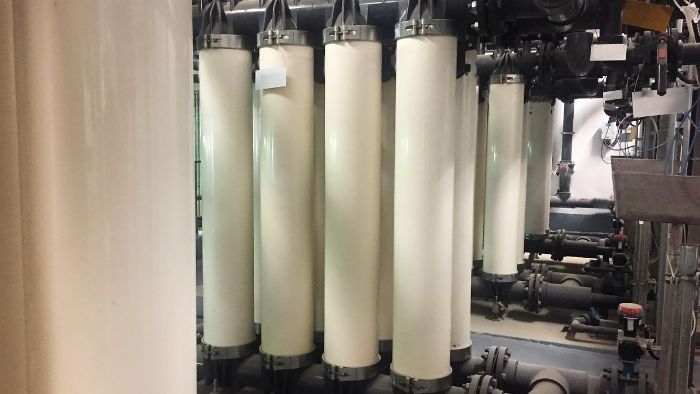
Alternative polymers for membrane construction
“Of course, you don't have to use PVDF. You could use PES as an alternative polymer. However, plants aren't adaptable from one to the other. You'd have to change your process design. For me, the sensible thing for the EU to do would be to allow PVDF to continue to be used on existing plants and allow replacements for a certain period of time, but new plants should choose something different. That would be a pretty obvious thing to do.
“PES currently accounts for approximately 25 per cent of the market share. However, this share changes from region to region. In Europe, PES has a much larger market share than in Asia, Australia or North America, where PVDF is strongly preferred.”
Commercial grey areas need to be resolved
“Commercially, things become complicated. With Europe’s polymer of choice being PES, you could argue that a ban on PVDF would make sense. However, some of the biggest PVDF polymer manufacturers are based in Europe, so it will be interesting to see whether these plants are still allowed to continue manufacturing for the export market or whether it will be a total ban. Another issue is whether a ban on ‘usage’ will cover manufacturing membranes using PDVF polymers that were made outside of Europe, as it seems the majority of environmental and health concerns are focused on creating the polymer, rather than the use of the polymer or any membrane made from it.
We could potentially see something like a 10 to 20 per cent membrane price increase
“One of the largest PVDF polymer makers in the world, Arkema, a French-based company, is already shifting production to its other sites around the world, and focusing its European sites on non-PFAS materials. So they are sort of voluntarily falling on their sword in anticipation. And I think this is one of the big consequences of the EU being serious about its legislation: it will see it through to a place where there are consequences. I've already heard users say that, because they're worried about the long-term future of their plant, and since there are alternatives, we might as well go with one of those.”
Consequences come with costs
“Switching from PVDF to PES or ceramics comes at a cost. You can’t simply replace one with the other, hit start and expect everything to be fine. Unfortunately, the operating philosophies of the two polymers are flipped around, and they have different design philosophies. So, you'd have to make physical changes to the plant.
“It would be possible, but it's quite expensive. You'd have to make software and control changes. And people who've looked at this in practical situations have often concluded that it would be better to start over again, recover what we can and put in a whole new plant that's purpose-built and designed.
“There are precious few examples in the ultrafiltration membrane world of like-for-like replacements that would allow you to retrofit a plant, and even then, it would be expensive.”
What next for ceramic membranes?
“Ceramics have been around for as long as polymerics, but never really took off until the last few years, maybe since around 2018, they've suddenly had a massive growth spurt with sustained high levels of growth.
“They are now starting to get a reasonable share of the market, based upon technologies that on the whole were developed a long time ago. Not only are they well proven, but their costs have become more competitive. So, gradually, their uptake is getting better.
“Now, the technology is changing. For example, Nanostone Water has started making membranes with smaller feed channels. In a polymeric membrane, the inside fibre dimension (effectively the feed channel) is normally around 0.8 millimetres (between 0.7 and 1 millimetre), whereas in ceramics, it's normally between 2 and 3 millimetres. So, in terms of the packing density and the amount of membrane area you can get in a given volume, the ceramics have a very difficult task because they have these very wide channels.
It's been known for a long time that you could reduce the channel to two-thirds of even half its size
“Historically, they had these wide channels because people operated them in crossflow. They needed high velocities through those channels, which meant bigger channels. Whereas in the water treatment market, we don't operate in crossflow. We operate in a dead-end with occasional backwash. So, you don't need these very big channels.
“It's been known for a long time that you could reduce the channel to two-thirds of even half its size, which would improve the surface area with no detrimental effect on the performance of the ceramic membrane.
“And now, Nanostone Water has actually done just that and introduced a higher packing density module into the market. The benefits include a reduction in the plant’s footprint and costs, without sacrificing performance, helping to make ceramic membranes more competitive in the market.
“Could ceramic membranes take a larger share of the market? I never thought PVDF membranes would be caught up in PFAS legislation, and there is no doubt that Nanostone’s achievements are a big step forward for ceramics. Factor in price rises linked to the ongoing conflicts in oil-producing regions, and it certainly creates a market environment that will be interesting to watch over the next few years.”