Hawaii turns to greywater reuse as groundwater levels decrease
Groundwater levels across the nine regularly monitored aquifers on the island of Oahu, the most populated of the three that make up the US state of Hawaii, were in alert status for much of 2025. This reflects a period of declining rainfall levels and abnormally dry conditions across the island.
Hawaii’s problems mirror those of many similar islands: reduced rainfall means ground and surface water levels are not being replenished to meet the increased demand from industry and a growing population.
While ocean-based desalination pilots are showing real promise as a potential future fresh water supply for island nations, they will also need to be part of a wider approach to water conservation and reuse.
After several years of navigating a planning and approval process involving key stakeholders, the state of Hawaii will implement its first on-site residential greywater reuse system.
The problem with water in Hawaii
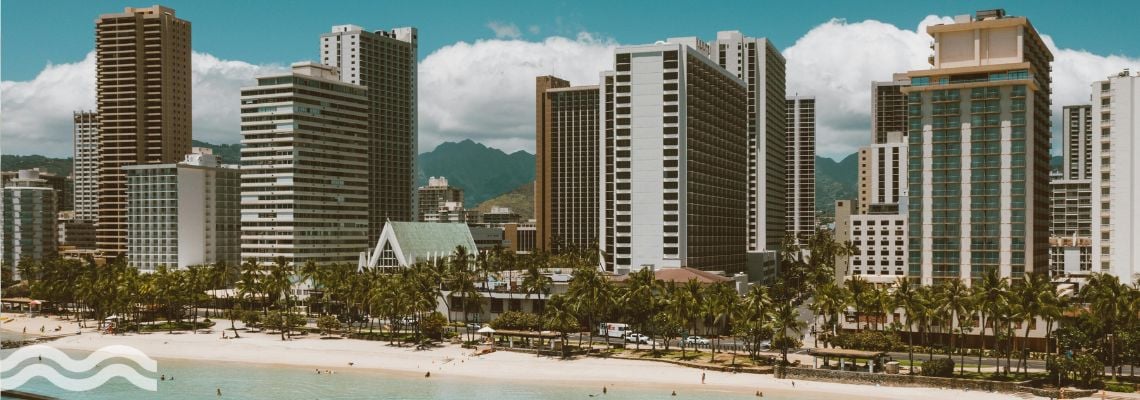
Like many islands surrounded by water, the state of Hawaii is not freshwater-abundant. Rainfall patterns across the island vary between mountainous regions and lowland regions. Some regions, like Kona on Hawaii’s Big Island, a coffee-growing area, have experienced declining rainfall since the 1980s. Research suggests that total rainfall has been decreasing for a century and that streams and rivers have seen a subsequent reduction in flow, affecting freshwater availability for both human communities and ecosystems.
Across the state, however, unpredictable weather patterns associated with climate change are making rainfall predictions increasingly complicated.
Groundwater decline on the island of Ohau
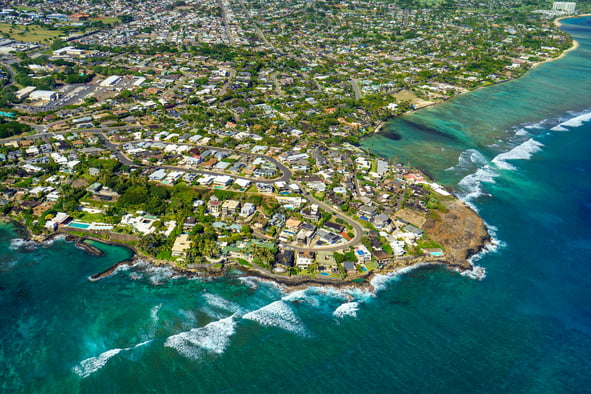
A microcosm of the issues facing Hawaii can be found on the island of Oahu. It is Hawaii’s most populated island and home to the state capital, Honolulu. However, according to the October 2025 Groundwater Levels Status report, nine of the island’s aquifers were experiencing low groundwater conditions, while rainfall fell to 53 per cent of the expected levels – a five-month average of 53 per cent of the normal expected levels. This trend spanned much of the year. However, in some months, the rainfall levels exceeded 190 per cent of the expected norm. For most of 2025, the island experienced at least some drought conditions, with some areas experiencing severe drought.
Preparing a 30-year master plan for water
In 2016, the Oahu Board of Water Supply (BWS) initiated a 30-year Water Master Plan that would evaluate the island’s entire water system to quantify future demands, identify infrastructure and resource improvements and provide an analysis of the financial costs involved in providing enough freshwater to meet demands.
According to figure in the plan, BWS ‘pumps an average of 145 million gallons of water and maintains infrastructure, including 2,100 miles of pipes, 90 booster pump stations, 94 water sources (wells, tunnels and shafts) and 171 water storage reservoirs’. The plan will help policymakers make decisions that balance financial risks against service resilience. It will be implemented using both the Infrastructure Investment Plan and the Long Range Financial Plan.
Conservation is key to saving water and money
One of the key focuses of the master plan is to increase efforts to conserve water. While noting overall consumption on the island has been declining since the 1990s, a ’10 things to note’ explainer notes that conservation is the key to saving both water and money on the island. It also notes:
“New real estate development opens up opportunities to install advanced water conservation measures such as ultra-high efficiency plumbing, smart-irrigation controls, sub-meters for multi-family structures, and greywater use.”
Involvement from key stakeholders
Conserving water in real estate developments will become a reality when Hawaii’s first on-site residential greywater reuse system is installed at Kuilei Place, Honolulu: a mixed-use development offering over 1,000 homes developed by Kobayashi Group, which is due for completion in 2027.
Despite the commitment to conservation in the island’s 30-year water plan, planning approval for the greywater reuse system took many years and involved the coordination of BWS, the Honolulu Department of Environmental Services, and the Hawai‘i Department of Health.
Once in operation, the system is expected to provide the blueprint for future greywater reuse approvals.
California reuse specialists providing the technology
Developer Kobayashi Group chose California-based Epic Cleantec to provide the site’s water reuse technology.
Talking to Building Industry Hawaii magazine, Aaron Tartakovsky, CEO and founder of Epic Cleantec, said: “As cities confront the combined challenges of increasing water scarcity, climate volatility and rising utility costs, recycling water at the building scale helps flatten peak demand, defer costly infrastructure upgrades and reduce the energy and emissions associated with water treatment and conveyance over long distances.”
Of the decision to engage Epic Cleantec, Alana Kobayashi Pakkala, CEO and partner at Kobayashi Group, told the magazine that the key stakeholders were very comfortable with the technology proposed for the water reuse project. Epic Cleantec specialises in on-site water reuse with several operational systems in residential and office blocks in California.
The reuse system involves four stages of biological treatment:
- Prefiltration - Coarse screening and grit removal, followed by equalisation and primary settling to manage solids loading and flow fluctuations.
- Biological treatment - Membrane bioreactor to achieve BOD (biochemical oxygen demand), COD (chemical oxygen demand) and nutrient reduction.
- Membrane filtration - Ultrafiltration membranes provide removal of bacteria, protozoa and viruses.
- Disinfection - Redundant UV (ultraviolet) disinfection with chlorine injection dosing, reducing output to local sewer systems.
Long-term benefits of water reuse
Projections suggest that Kuilei Place’s water reuse system will recycle up to 30,000 gallons of greywater every day. This could save as much as 11 million gallons of potable water each year, leading to annual savings of €136,000 ($161,000) for BWS.
These figures are impressive. Not only will the Kuilei Place’s water reuse system be a key pioneer project for Hawaii in terms of aiding water security on the islands as part of the 30-year plan, but the cost savings also offer support for the long-term water goals of the state government.