We're all going to have to invest in the long run
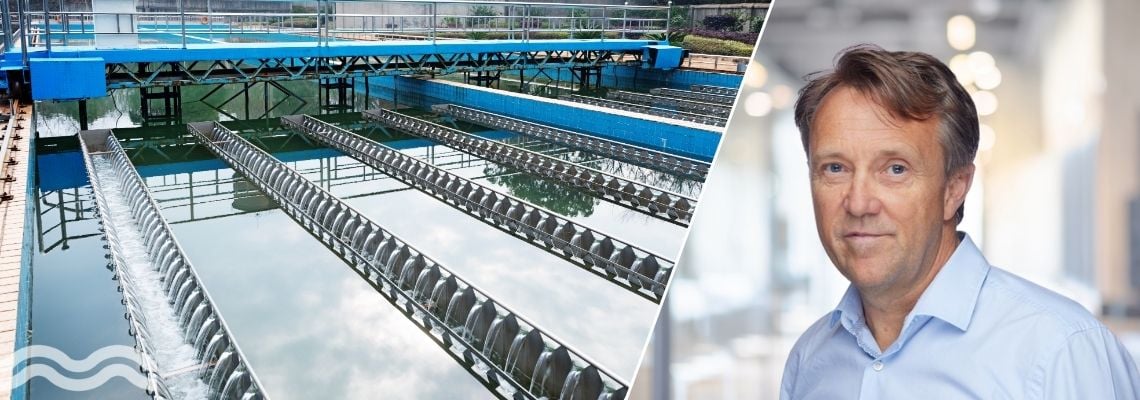
By his own admission, Wayne Byrne is not a 30-year die-hard veteran water investor. He does, however, bring a perspective to water investment that builds on a wealth of experience from previous roles and diverse industries.
Now, after almost 20 years building and selling water and cleantech companies, he has crossed to the other side of the table. Here he talks to Aquatech about his career, investments and innovations. Finally, the conversation turns to the trends he expects to see in the coming years and the importance of making the right connections.
Finding a path to water investing
“My take might be interesting for people, because I'm not a diehard 30-year water investor,” Byrne begins. “I'm coming from a company builder perspective.”
But before we discuss investment trends, he takes the conversation back to 20 years ago and a career in the ICT sector.
“I had come to an inflexion point in my career,” he begins. “I had an opportunity to move from the ICT sector. In my last role with SAP, I was doing a little consulting work, and there was an opportunity to move into the waste energy and management space.”
Through this, he discovered renewables in the form of anaerobic systems, and “got involved with a business that basically was leveraging clean feedstock”.
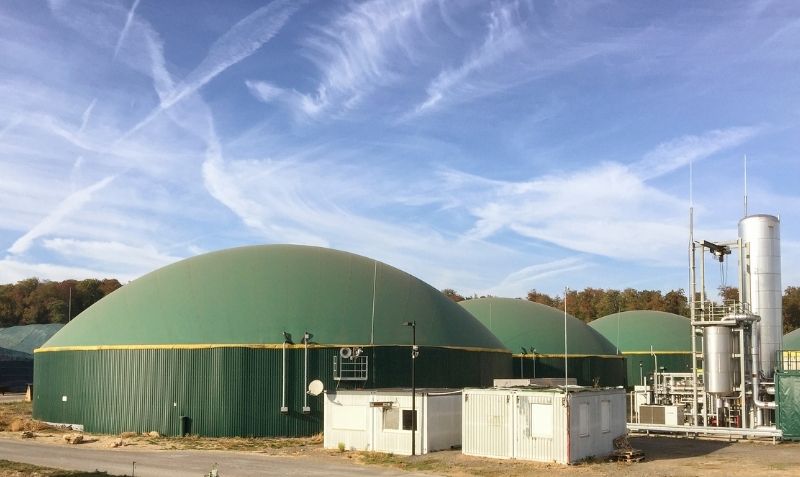
This was at a time when the British regulator was incentivising energy crops, and Byrne was active in building anaerobic biogas systems. Though he liked the sector, he saw an opportunity to take feedstock from wastewater treatment plants.
“And that,” he explains, “was my first touchpoint in the water sector. I continue to do quite a lot of project development work and operations, leveraging that. And that's how I got to know water.”
Next came an opportunity to migrate into an early-stage treatment technology that he helped spin out of a university in Ireland. That technology was OxyMem, which became a manufacturing business that, when sold to DuPont, was serving over 20 countries and employing more than 80-plus staff.
Capital, scale-ups and exits
After the sale, he remained with DuPont through the COVID period, while his thoughts turned to more entrepreneurial pursuits. By this time, he had raised a “reasonable” amount of capital – approximately €80 million in terms of debt and equity for various startup scale-ups, exiting four of them in the last 15 years.
“I saw myself as a kind of serial entrepreneur without a portfolio,” he remarks. “And during that time, I started getting a lot of outreach from entrepreneurs, not dissimilar to myself, just 10 or 15 years earlier in their journey, seeing whether I would be interested in helping out, supporting, or doing some advisory work. But unbeknownst to myself, I had started building up a portfolio of companies I was supporting.”
A Burnt Island (ad)venture
It was at this time that the opportunity arose to work with Burnt Island Ventures. Byrne got to know Tom Ferguson, Burnt Island’s founder and managing partner, at Imagine H2O. Ferguson had taken over the accelerator, and Byrne’s water business had participated in the accelerator back in 2015.
“I got to know the team, and when Tom told me what he was building, I was really excited about it and asked if there were any opportunities to work with them from a European perspective,” he says.
An offer followed to work as a venture partner, to help build a pipeline and deal flow, “which seemed very synergistic to what I was doing in terms of helping the ecosystem.”
Until then, Byrne’s experience of venture capital had been on the “other side of the table” as an entrepreneur, which he describes as “very transactional”.
“It’s been a great partnership,” he states, “and that's how I've learned an awful lot about the other side of the table. Raising money is something you think about every day, but the number of occasions it happens is light, relative to what you see on the other side of the table.”
Founder empathy and the importance of different insights
Today, he is an operating partner at Burnt Island, an experience that he says will provide the “bulk of the insights that I'll share with you today”. But that experience of sitting on the other side of the table means his insights come with a degree of “founder empathy” that lets him weigh both perspectives.
“One thing I credit Burnt Island with is that they have a deep understanding of the founder, because of the journey they went on,” Byrne explains. “Tom ran the world’s biggest accelerator for seven years. So, I think he comes with an aligned perspective. What I tend to offer is a perspective on the market opportunity and, often, on the individual’s resilience.”
Being so close to the founder’s mindset can have its disadvantages at times.
“I don’t get involved in the diligence of the founder team because I think I always imagine myself in it,” he observes. “And that's probably the hardest thing to understand: that you have to imagine a business where you’re trusting the founding team to take your capital and that they're going to go off and be good stewards of that capital.”
Water: from a specialist theme to a line item
And what about the journey that water has undertaken, in terms of investments?
“Something that has become evident to me over the last 15 years of being in water,” he begins. “Five years ago, if you wanted to raise a water round, you called the same eight people. Today the call list includes climate funds, deeptech funds, corporate venture arms and family offices who've worked out that water sits underneath their existing thesis whether they chose it or not."
He attributes this change to “all kinds of macro impacts”.
“So, water really is the fundamental molecule,” he states. “I mean, there's very little that you can make or build without it. And it's amazing how many investors weren’t tuned into that fact. We’re starting to see things play out in the mainstream where plants are competing with local communities for abstraction, and that's creating stress points for brands that can ill afford that type of friction.”
It's amazing how many investors weren't tuned into that fact
This is where he says there has been a shift.
“I think we've gone from it being important to specialists to being important to all generalists, and the interest is real. But a lot of it is still soft-circled rather than committed, so there's still a lot of hard work to do.”
Disagreements and disconnects: a troubled market?
As a market that is gaining more attention in the wider investment world, water should be in a good position to attract outside capital, but there is a disconnect that, as Byrne points out, is not helping the sector.
“PitchBook put water tech venture funding at about $1.3 billion for 2023,” he begins. “Antoine Walter’s Leviathan dataset puts it nearer $860 million. If the water market can’t agree on its own size to within forty per cent, it makes it really difficult for outside capital to get involved. How do we get more money into that?”
As a market that is gaining more attention in the wider investment world, water should be in a good position to attract outside capital, but there are several “disconnects” that, as Byrne points out, are not helping the sector.
“We're doing a push at the moment for fundraising in Europe,” he begins, “and the water market doesn’t even agree on the size of itself. How do we get more money into that?”
Whatever the size of the market, one thing agreed is that it is big and pervasive, making it difficult to quantify.
What has helped is the work of organisations like the World Economic Forum, which, as Byrne points out, “have done a superb job of helping external generalists come in and understand this market more and get more comfortable and confident around it.”
Fundraising and what moves the needle
But how does fundraising work in a market that is big and hard to quantify?
“At Burnt Island, we focus on competence and understanding, and so we try to build an appreciation for the thesis that we started with and how we're executing and how that's tracking,” Byrne explains. “There’s always an interest in the state of the nation when we're engaged with,” he adds. “It could be funds or large family offices or generous investors that want to have a more diversified portfolio.”
It is important to communicate in a way that does not hinder the investment process.
“You have to do it in a way that doesn't sweep them away with silly acronyms and a vernacular that puts them on the outside,” he explains. “You're trying to build some resonance, where some of the statements that you make are contextually correct for water, but they're also playing out in perhaps other investments.”
When discussing things that “move the needle” in water, Byrne explains that it is important to draw on a generalist understanding.
You don't have to be a water expert for that to resonate
“We would say that industrial water has, or is, overtaking municipal as the centre of gravity. The reason is that the abstraction side of things, or withdrawals in high-income countries, are largely industrial, not municipal. Then the wave of AI and data centres is going to increase that withdrawal further. They’re forecasting somewhere in the region of 1.1 to 1.7 trillion gallons of withdrawal by 2027. When you think about it, that scale is four to six times what Denmark would withdraw. It's significant,” he adds.
On the energy generation side, thermoelectric power accounts for more than 40 per cent of total US freshwater withdrawals. “That is super relevant,” Byrne says. “You don't have to be a water expert for that to resonate.”
When talking to potential investors, these themes will be contextualised by talking about relevant investments already in the portfolio.
“We can demonstrate that we’re making relevant investments that are capitalising on those shifts,” he explains. “We build around those thematics and demonstrate that we’re thoughtful about those investments.”
Burnt Island is not a venture builder, which means they do not actively pick out thematics and look for companies. “The right companies are showing up, and we're building understanding and appreciation for the market drivers that they're pursuing, and then we're seeing the clustering around that,” Byrne explains.
What else is driving investment
Regulations point to problems and actions that need to be taken. In many ways, this sets the “buying timeframe”, rather than it being driven by scarcity.
“If you look at Europe in particular and the UK, with AMP cycles, the European wastewater treatment directive, this defines that a problem exists, and sets an enforceable date by which time action needs to be taken,” Byrne begins. “And they have a great saying in Burnt Island, and it's that we want our portfolio companies to be skating to where the puck's going to be, not where it is. And using regulation as a driver is a nice way of hitting a really significant inflexion point.”
Emerging contaminants is a growing investment market, even where regulations have yet to catch up with the size of the problem.
There's great demand for compliance clock businesses, even before the regulations have landed
“We're seeing outsized activity in North America, given how slow regulations have been on that front,” he says. “But there's great demand for compliance clock businesses, even before the regulations have landed.”
Another significant opportunity comes from the so-called grey wave, where the ageing workforce is leaving the sector faster than they are being replaced. As Byrne puts it, “utilities are really losing institutional knowledge faster than they’re losing water.”
You don't have to be a sectoral expert to recognise that this can be a major driver for opportunity, especially for digital technologies.
A more subtle area of opportunity and growth is found in the climate adaptation and insurance markets.
“We don't see it just as a hardware play,” Byrne explains, “it’s the intelligence layer – the systems that move the needle without you having to be in the infrastructure. But the reality is, what's in front of us is in front of us, and it's well recognised, especially by corporates, and there is no turning the clock back on where we stand right now.”
Some of the mitigations in this space come in the form of early warning systems or risk allocation to assets that were previously poorly understood, which, as Byrne asserts, “is a huge advantage in the marketplace”.
Future investments: What's over the horizon?
Water is not a sector prone to surprises, which means the “problems that are going to be tomorrow's opportunities have been in our eyeline for the last 10 years”. Which means the investment opportunities looming on the horizon all look very familiar.
“If I were to pick a handful of buckets in terms of drawing capital,” Byrne begins, “the treatment side is definitely taking an outsized proportion of the capital, whether that be PFAS destruction or fouling-resistant membranes, green chemistry displacing chemical processes, resource recovery; they're terms that have been around for quite some time.”
According to Byrne, the treatment side of water takes more than “60 per cent of the investment dollars”. It’s clearly evidenced: if the capital's flowing there, there's clearly a need and a demand. He adds: “I would say, based on our own investments, that there are investable companies in that sector.”
Reuse and circularity will continue to feature highly, with industrial a particularly strong area. “Withdrawal pressures are pushing industrial use; dealing with brine concentration issues, ZLD is pretty hot, and energy and carbon recovery from wastewater remain pretty strong.”
Regions - where the money is going
Geographically, Byrne is clear that venture capital and project finance are two different animals. “MENA is the largest project market in the world – roughly 39.5 per cent of the global water and sewage project pipeline, about €337 billion ($391 billion),” he says. “But that’s project finance and EPC, not venture. Two different kinds of money with two different risk appetites.”
India is where decentralised reuse is being commercialised at a pace and at scale.
“The Indian marketplace is probably one of the most compelling markets in the world because what I've learned from my short time participating there is that because it is so competitive, if you can compete and if you can make a return in that market, then no market in the world should be beyond your reach.”
Problems that are going to be tomorrow's opportunities have been in our eyeline for the last 10 years
European wastewater directives are helping to push monitoring and analysis tools, as well as leak detection and real-time quality sensing.
“The quality sensing piece is not to be underestimated because an awful lot of the technologies that are available today come with such a significant lag,” Byrne states. “If you're going to push legislation or regulations through on quaternary treatment, then you need to know that there are emerging contaminants in that flow, and you need to know that you’ve dealt with them appropriately at the back end of that process. And I think that’s a huge opportunity.”
Access and supply will also continue to attract investment. “It’s probably what is keeping most hyperscalers awake at night,” he notes. “But the idea now that decentralised and off-grid supply is possible is a bit of a paradigm shift. You’re also starting to see some very interesting opportunities to address next-generation desalination.”
The case for investment
Byrne argues that while water may not offer the returns available from exposure to the AI market, it does not carry the same level of risk either. It also underpins all we do
“I think on a risk-adjusted basis, this is certainly a market that you would want to have exposure to,” Byrne explains. “We can absolutely help investors get comfortable on that front. As someone who's built water companies and sold water companies, I can say it's been good to me, and it's good to my investors. But again, an awful lot of that information isn't disclosed, and I can understand why.”
Ultimately, whether we like it or not, we’re going to end up with more exposure in this market if we're to end up with a positive outcome in the long run
As Byrne says, one thing we can all agree on is that cleaner, safer water that's available abundantly certainly makes for less social unrest, and makes for good social and economic outcomes for a country or a region. “And so, I think it is something that we’re going to have to invest more in.”
He adds: “I think there is evidence that there is going to be less capital available on the public side, and so it's going to have to come from the private side. And I think we're all ultimately, whether we like it or not, going to end up with more exposure in this market if we're to end up with a positive outcome in the long run.”
Matching investors with entrepreneurs
Matching investors with entrepreneurs is a curation problem, not a volume problem, Byrne explains. He refers back to the World Economic Forum — and specifically the work of Anna Huber and Megan Gerryts, through UpLink’s Aquapreneur Innovation Initiative — as an example of the importance of making the right connections.
“Investors aren’t short of decks,” he says. “They are short of a shortlist that someone technically credible has already filtered — someone who knows the difference between a pilot that worked and a plant that runs.”
“There's a great example of where I think they screened over a thousand submissions and identified 40 vetted startups. I think since 2023, or since joining the Aquapreneur ecosystem, they’ve raised over €77.5 million ($90 million), which is, on both sides, that's pretty compelling.”
He continues: “And I think they cite something like 250 strategic connections enabled and 50 ecosystem partners. And that's a huge part of it; when you think about bringing everyone together in a room, it's not just about meeting the investor. It's also the opportunity to meet with a potential customer or partner, because investors follow the evidence of demand.”
Events like the Innovation Forum, which takes place during Aquatech Amsterdam, are places where this curation occurs.
“If something like the Innovation Forum can be a catalyst for bringing together the innovator, the investor, but also the partners and the customers, that is the most compelling ecosystem. And I think it does that superbly well,” Byrne says.
“We’re always looking for that kind of evidence of traction that they’re on track to prove a product-market fit. The only way they can do that is to get exposure to the market and to customers who are willing to take on the risk of working with an entrepreneur. And it is a risk,” he concludes.
Share your water story with us
Share your water technology stories with us
Do you have an innovation, research results or an other interesting topic you would like to share with the international water technology industry? The Aquatech website and social media channels are a great platform to showcase your stories!
Please contact our Sr Brand Marketing Manager Annelie Koomen.
Are you an Aquatech exhibitor?
Make sure you add your latest press releases to your Company Profile in the Exhibitor Portal for free exposure.